

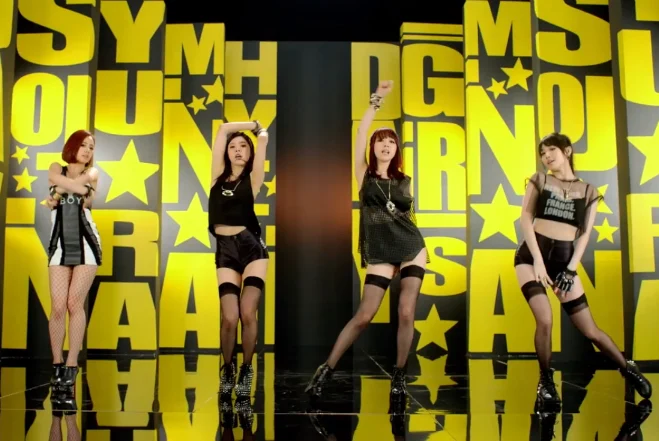
Girl’s Day and the Intersection of K-pop and Politics: An Analysis of Female President and the Era of Park Geun-hye

The political and cultural landscape of South Korea underwent a significant transformation between 2012 and 2013, marked primarily by the election of Park Geun-hye as the nation’s first female president. Park, a veteran representative of the conservative Saenuri Party (formerly the Grand National Party and now succeeded by the People Power Party), secured a narrow victory in the December 2012 presidential election. Her inauguration in February 2013 was hailed by some as a "watershed moment" for women’s rights in a country historically characterized by deep-seated patriarchal structures. This political shift coincided with a unique cultural phenomenon in the K-pop industry: the release of the single "Female President" by the girl group Girl’s Day. The song and its accompanying music video attempted to capitalize on the zeitgeist of female leadership, yet the juxtaposition between the political reality of the era and the entertainment industry’s portrayal of "empowerment" revealed a complex disconnect in South Korean social progress.
The Political Context: The Election of Park Geun-hye
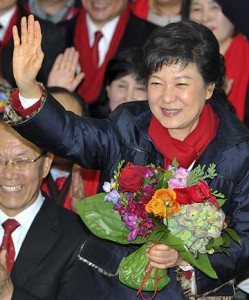
Park Geun-hye’s ascent to the Blue House (Cheong Wa Dae) was both historic and controversial. As the daughter of Park Chung-hee, the military strongman who ruled South Korea from 1961 to 1979, her candidacy was viewed through a dual lens. Supporters revered her father for spearheading the "Miracle on the Han River," which transitioned South Korea from a war-torn agrarian society into a global industrial power. Conversely, critics and the opposition Democratic United Party (Minju Party) viewed her as the beneficiary of a divisive legacy, accusing her of utilizing her father’s political machinery to maintain conservative dominance.
Despite these controversies, the symbolic weight of her victory cannot be understated. In a nation where Confucian traditions have long dictated gender roles, the presence of a woman at the highest level of executive power was theoretically revolutionary. At the time of her election, South Korea ranked poorly in various global gender equality indices, making her victory a potential catalyst for legislative and social reform regarding women’s participation in the workforce and governance.
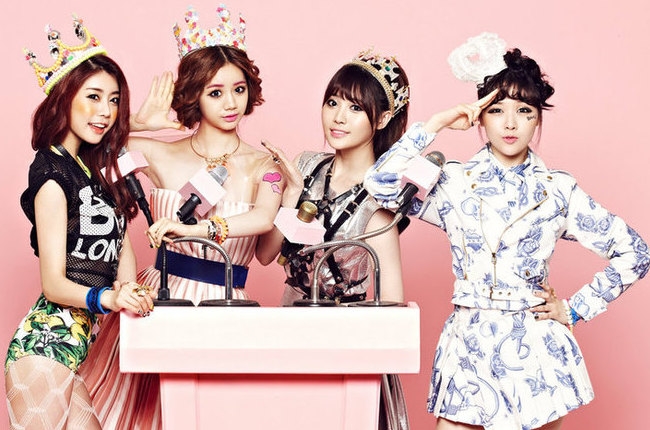
Chronology of the "Female President" Release
The timeline of Park Geun-hye’s early presidency and Girl’s Day’s comeback illustrates the speed at which the entertainment industry responded to political shifts:
- December 19, 2012: Park Geun-hye wins the 18th South Korean presidential election with 51.6% of the vote.
- February 25, 2013: Park Geun-hye is officially inaugurated as President.
- April 2013: Girl’s Day member Hyeri’s relationship with veteran idol Tony Ahn becomes public, significantly increasing the group’s media profile.
- June 24, 2013: Girl’s Day releases the repackaged album and title track "Female President."
- June–July 2013: The song reaches the top ten on the Gaon Digital Chart, peaking at number five, and the group receives their first-ever music show win on Inkigayo.
The release of "Female President" occurred during a period when Girl’s Day was transitioning from a "cute" concept to a more "mature" and "sexy" image. The group, consisting of members Sojin, Yura, Minah, and Hyeri, sought to leverage the national conversation about female leadership to bolster their brand.
Supporting Data: The Reality of Gender Inequality in 2013
While the title of the song suggested a celebration of systemic progress, statistical data from the 2012–2013 period highlights the immense gap between symbolic political representation and the lived reality of South Korean women.
- The Gender Wage Gap: According to OECD data from 2012, South Korea possessed the highest gender wage gap among member nations, standing at approximately 36.3%. This meant women earned nearly 40% less than their male counterparts for equivalent work.
- Labor Force Participation: While South Korean women achieved high levels of tertiary education—often surpassing men in university enrollment rates—their participation in the labor market remained low. The "M-curve" phenomenon was prevalent, where women exited the workforce in their late 20s and 30s due to marriage and childbirth, often failing to reintegrate into professional roles later in life.
- Corporate Representation: In 2013, women held less than 2% of board seats in South Korea’s top 100 companies, according to a report by the Ministry of Gender Equality and Family.
- Reproductive Rights: At the time of the song’s release, abortion remained illegal in South Korea except in cases of rape, incest, or extreme health risk to the mother. This legal framework was often cited by activists as a primary barrier to female bodily autonomy and economic independence.
Analysis of "Female President" as a Cultural Product
The song "Female President" opens with a direct reference to the national political shift, with lyrics stating, "Our country’s president is now a woman / So what’s the problem? Why can’t you do it?" However, critical analysis of the song’s full lyrical content and visual presentation suggests that the "empowerment" being marketed was largely superficial and focused on romantic agency rather than social or political power.
Lyrical Dissonance
The primary message of the song encourages women to take the initiative in romantic relationships, specifically by being the first to confess love or initiate a kiss. While breaking traditional dating taboos can be seen as a form of social liberty, critics noted that the song framed this as the ultimate expression of the "era of the female president." The lyrics oscillate between asserting confidence and expressing a sense of helplessness, with lines describing the female protagonist as feeling "like a baby" or "dizzy" in the presence of a man. This contradiction suggests that the group’s concept of empowerment remained tethered to male validation.
Visual Presentation and "Sexy" Concepts
The music video for "Female President" utilized tropes common in the K-pop industry’s "sexy" era. Features included high-gloss production, provocative choreography, and controversial styling, such as skin-toned outfits that created an illusion of nudity. A notable element of the video was a scene featuring members Minah and Hyeri (the latter dressed in masculine-coded attire) nearly sharing a kiss. While this was interpreted by some as a bold statement on gender fluidity or queer coding, others viewed it as a calculated attempt to generate "clickbait" style engagement and appeal to a male-dominated fan base.
Official Responses and Public Reaction
The reaction to "Female President" was polarized. Fans of the group (known as DAI5Y) praised the track for its catchy hook and the members’ increased confidence. The song’s success on music charts indicated that the "empowerment" branding was commercially effective.
However, social commentators and feminist scholars in South Korea expressed skepticism. Some argued that using the title "Female President" to sell a song about dating trivialized the struggles of women in the workforce. There were no official statements from the Blue House regarding the song, but the Ministry of Gender Equality and Family continued to face criticism during this period for failing to implement substantive changes despite having a female head of state.
In the broader K-pop industry, the song was seen as part of a trend where "girl power" was used as a marketing aesthetic rather than a political stance. This era of K-pop (roughly 2012–2015) was defined by intense competition among girl groups like AOA, EXID, and Girl’s Day to adopt increasingly provocative concepts to survive in a saturated market.
Broader Impact and Implications
The "Female President" era serves as a case study for the limitations of symbolic representation. Park Geun-hye’s presidency did not result in a significant narrowing of the gender wage gap or a dismantling of the "glass ceiling." In fact, her administration was eventually overshadowed by the 2016 political scandal involving Choi Soon-sil, which led to Park’s impeachment and imprisonment.
For the K-pop industry, the song marked a point of maturity for Girl’s Day, cementing their status as a top-tier group. However, it also highlighted the industry’s tendency to commodify political milestones. The "empowerment" narrative in "Female President" paved the way for future groups to explore similar themes, though later generations—such as those appearing after the 2018 #MeToo movement in South Korea—would adopt more direct and less romance-centric approaches to feminism.
In conclusion, while "Female President" by Girl’s Day captured a unique moment in South Korean history, its impact on the actual advancement of women’s rights was negligible. The song remains a artifact of a time when the nation grappled with the novelty of female leadership while simultaneously reinforcing traditional gender dynamics through popular media. The discrepancy between the song’s title and its content mirrors the broader societal challenge of the era: the difficulty of translating the success of a single woman into systemic progress for all women.