Girls’ Generation Triumphs at YouTube Music Awards as K-pop Secures Global Mainstream Recognition
Article Editorial Team
On November 3, 2013, the global music landscape witnessed a significant shift as the South Korean girl group Girls’ Generation, also known as SNSD, was announced as the winner of the Video of the Year award at the inaugural YouTube Music Awards (YTMA). Held at Pier 36 in New York City and directed by acclaimed filmmaker Spike Jonze, the event marked a pivotal moment for the Hallyu wave, placing the nine-member ensemble at the center of the international spotlight. The group’s victory for their hit single "I Got a Boy" was not merely a win for a specific artist but served as a definitive indicator of the changing dynamics in music consumption and the rising influence of digital fan mobilization on a global scale.
The victory placed Girls’ Generation in direct competition with some of the most established names in Western pop music. The nominees for Video of the Year included global superstars such as Miley Cyrus ("We Can’t Stop"), Justin Bieber ("Beauty and a Beat"), Lady Gaga ("Applause"), One Direction ("Best Song Ever"), Macklemore & Ryan Lewis ("Thrift Shop"), and Demi Lovato ("Heart Attack"). By securing the top prize against these heavyweights, Girls’ Generation demonstrated that the reach of K-pop had expanded far beyond the borders of Asia, echoing the massive viral success achieved by their compatriot PSY with "Gangnam Style" just a year prior.
The Mechanics of a Digital Victory
The YouTube Music Awards were unique in their methodology, eschewing traditional academy voting in favor of data-driven metrics. The winners were determined by the "shares" a video received across social media platforms, including Twitter, Facebook, and Google+. This criteria favored artists with highly engaged, digitally literate fanbases who were capable of rapid, large-scale coordination.
According to data analyzed following the event, the "I Got a Boy" music video, which was released on January 1, 2013, benefited from a surge in social sharing that outpaced its competitors during the voting period. While the nominees from the United States and Europe possessed higher overall "unique" view counts in certain demographics, the intensity of the sharing activity for Girls’ Generation was unparalleled. This highlights a critical distinction in the modern music industry: the difference between passive viewership and active advocacy.
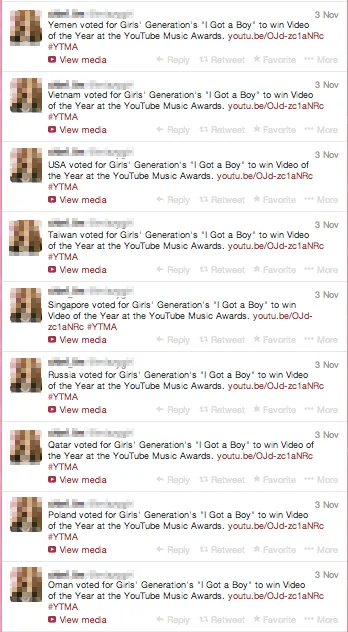
The voting process revealed a sophisticated level of organization within the Girls’ Generation fandom, known as SONEs. Observations of social media activity during the voting window indicated the implementation of "relay sessions." In these sessions, fan groups living in different time zones coordinated their efforts to ensure that voting activity remained constant 24 hours a day. This systematic team effort involved the use of various digital identities and a concerted push to maximize every possible voting opportunity. While critics pointed to the potential for "power voting"—where a minority of dedicated fans generate a majority of the engagement—the rules of the YTMA were designed to reward precisely this kind of viral velocity and social dissemination.
"I Got a Boy" and the Evolution of the K-pop Aesthetic
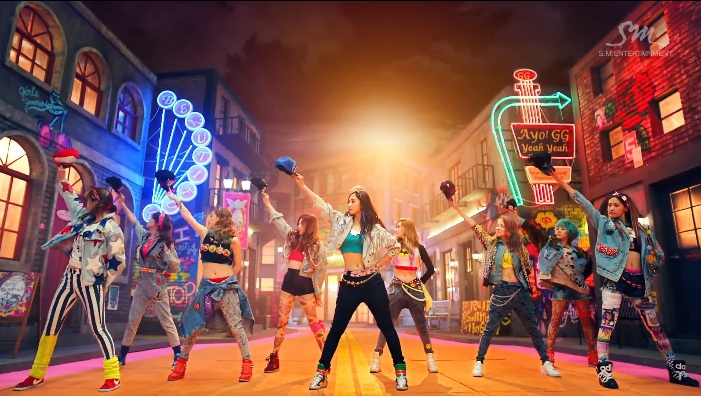
The winning video itself, "I Got a Boy," was a departure from traditional pop structures. Upon its release, the song received mixed reviews for its experimental "patchwork" style, which combined elements of bubblegum pop, hip-hop, dubstep, and rock into a single five-minute track. The music video was equally eclectic, featuring vibrant, high-contrast visuals, intricate street-style choreography, and rapid-fire costume changes.
Produced by SM Entertainment, the video showcased the high production values that have become the hallmark of the South Korean music industry. The complexity of the song and the visual spectacle of the video were tailored for a digital audience that thrives on re-watchability and detail-oriented content. At the time of the awards, the video had already surpassed 70 million views on YouTube, a testament to the group’s established presence on the platform.
Global Reactions and the Cultural Divide
The announcement of Girls’ Generation as the winner was met with a mixture of celebration and confusion. Within the K-pop community, the mood was one of vindication—a sign that Korean pop culture had finally earned its place in the global mainstream. Tiffany, a member of the group, accepted the award in person, delivering her speech in fluent English, which helped humanize the group for a Western audience and reinforced their readiness for international expansion.
However, the win also triggered a wave of "internal brouhaha" among fans of the defeated Western artists. Social media platforms were flooded with reactions from users who were unfamiliar with Girls’ Generation, some of which were marked by passive-aggressive undertones or overt xenophobia. Comments questioning "who these girls are" and suggesting the win was a "fluke" or the result of "bots" highlighted a significant cultural gap.
Industry analysts suggest that these reactions were a byproduct of the disruption of the traditional Western music hegemony. For decades, the global music narrative was dominated by artists from the US and the UK. The rise of a South Korean group to the top of a major American-hosted awards show served as a "culture shock" for listeners who were far-removed from the burgeoning K-pop scene. Despite the controversy, the win forced the industry to acknowledge that global popularity is no longer dictated solely by Western radio airplay or traditional media outlets.
Strategic Implications for SM Entertainment and the US Market
The victory at the YouTube Music Awards raised immediate questions regarding the group’s future in the United States. Girls’ Generation had previously made inroads into the American market with the release of an English version of their hit "The Boys" in 2011, which included a performance on The Late Show with David Letterman. Furthermore, SM Entertainment had secured a distribution deal with Interscope Records, the same label home to Lady Gaga and Eminem.
Following the YTMA win, the industry watched closely to see if SM Entertainment would leverage this momentum for a full-scale American debut. The win confirmed that the group possessed a "worldwide" presence, but it also underscored the challenges of breaking into a market that, while digitally connected to Asia, remained culturally insulated. The group’s longevity and the marketing prowess of SM Entertainment provided a solid foundation, yet the transition from a viral digital phenomenon to a staple of the American music industry required navigating complex logistical and cultural hurdles.
The Long-term Impact on K-pop’s Global Trajectory
In retrospect, the 2013 YouTube Music Awards served as a precursor to the massive global explosion of K-pop that would follow in the late 2010s. The strategies used by SONEs to secure the win—coordinated social media campaigns, time-zone-based voting, and digital advocacy—became the blueprint for other K-pop fandoms, such as BTS’s ARMY and Blackpink’s Blinks, who would later dominate the Billboard charts and other international awards.
The event also forced music journalists and critics to take a more informed approach to international music. The realization that a "smallish" (in the context of Western mainstream awareness) Asian group could outpace the world’s biggest pop stars prompted a shift toward more inclusive and globally-minded reporting. It encouraged listeners to show appreciation for the differences within the wider music industry and to make informed decisions based on artistic merit rather than geographical familiarity.
Girls’ Generation’s win was not an isolated incident but a milestone in a larger chronology of South Korean cultural exports. From the early "Hallyu 1.0" days of television dramas to the "Hallyu 2.0" era driven by social media and YouTube, the trajectory has been one of consistent growth. The group’s ability to build a solid base through their image, performance strength, and systematic management has allowed them to maintain relevance in an industry known for its high turnover rate.
Conclusion
The 2013 YouTube Music Awards will be remembered as the night Girls’ Generation proved that the digital landscape has no borders. While the win was fueled by a dedicated and highly organized minority, its implications were vast, signaling the arrival of a new era where global popularity is measured by engagement and social connectivity. As the music industry continues to evolve, the victory of "I Got a Boy" remains a testament to the power of the fan-artist relationship and the undeniable influence of K-pop on the world stage. Whether or not the expansion into the American market met every initial expectation, the win solidified Girls’ Generation’s legacy as pioneers who opened the door for future generations of Korean artists to be recognized as global icons.
Related News