The inaugural YouTube Music Awards, held at Pier 36 in New York City, marked a watershed moment for the global music industry when the South Korean girl group Girls’ Generation secured the prestigious Video of the Year award. The victory, achieved for their experimental hit "I Got A Boy," saw the group surpass established Western icons including Justin Bieber, Lady Gaga, Miley Cyrus, and Psy. This win not only underscored the burgeoning influence of K-pop within the international mainstream but also highlighted a significant shift in how musical popularity is measured and mobilized in the digital age. By leveraging a highly organized global fan base, Girls’ Generation demonstrated that the traditional barriers of the Western music market are increasingly permeable to non-English language acts who command high levels of social media engagement.
The Mechanics of the Inaugural YouTube Music Awards
The 2013 YouTube Music Awards (YTMA) were designed to celebrate the artists and videos that had turned the platform into the world’s primary destination for music consumption. Unlike traditional awards shows that rely on industry panels or strictly domestic sales data, the YTMAs utilized a metrics-based approach rooted in social media interaction. The "Video of the Year" category was specifically determined by the number of times a video was shared across social platforms like Twitter, Facebook, and Google+ over a specific voting period.
This methodology favored artists with highly active, digitally native fandoms. The nominees for Video of the Year included:
- Girls’ Generation – "I Got A Boy"
- Justin Bieber (feat. Nicki Minaj) – "Beauty and a Beat"
- Demi Lovato – "Heart Attack"
- Epic Rap Battles of History – "Barack Obama vs. Mitt Romney"
- Macklemore & Ryan Lewis (feat. Mary Lambert) – "Same Love"
- Miley Cyrus – "We Can’t Stop"
- One Direction – "Best Song Ever"
- Psy – "Gentleman"
- Selena Gomez – "Come & Get It"
- Lady Gaga – "Applause"
The inclusion of Girls’ Generation alongside these names was initially viewed by some Western commentators as an anomaly. However, the metrics told a different story. In the lead-up to the event, YouTube reported that the "I Got A Boy" music video had generated massive engagement numbers shortly after its release in January 2013, amassing tens of millions of views within weeks and maintaining a consistent presence in social media conversations.
A Chronology of the Win and the Ceremony
The journey to the YTMA stage began long before the November 3, 2013, ceremony. Following the global phenomenon of Psy’s "Gangnam Style" in 2012, the international music industry began paying closer attention to the Seoul-based music scene. Girls’ Generation, managed by SM Entertainment, was already a dominant force in Asia, having successfully expanded into Japan and attempted a U.S. crossover with "The Boys" in late 2011.
On the night of the awards, the atmosphere in New York was one of experimental chaos. Hosted by actor Jason Schwartzman and musician Reggie Watts, the show was broadcast live to millions of viewers worldwide. When the time came to announce the Video of the Year, the presenter revealed that the winner was indeed Girls’ Generation. Tiffany Hwang, a member of the group who was born and raised in California, took the stage to accept the trophy on behalf of the nine-member ensemble.
"YouTube is my best friend. Is YouTube your best friend?" Tiffany asked the crowd during her acceptance speech. She expressed deep gratitude to the fans, known collectively as "SONEs," and to SM Entertainment. Her fluent English and poised demeanor served as an effective bridge between the K-pop industry and the largely Western audience attending the event. The moment was historic, marking the first time a Korean group had won a major category at a global Western-led music awards ceremony.
Digital Mobilization and the Power of the SONE Fandom
The victory of "I Got A Boy" was a masterclass in digital strategy and fan mobilization. While Western stars like Justin Bieber and One Direction possess massive followings, the K-pop fandom model operates with a level of systematic organization that is often unparalleled. Observers noted that during the voting window, Girls’ Generation fans utilized "relay sessions," a tactic where fans in different time zones coordinated their efforts to ensure a 24-hour stream of social media shares.
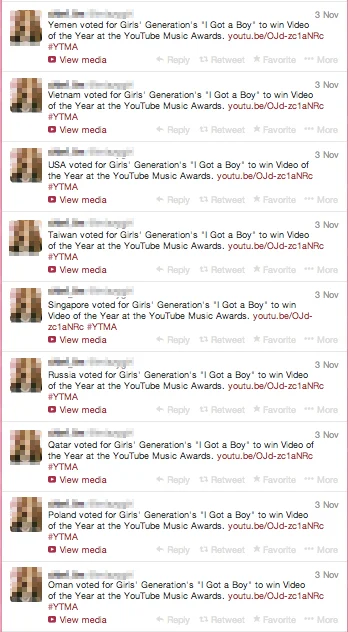
This "power voting" involved more than just clicking a button; it required fans to actively disseminate the video link across various platforms. Reports emerged of fans using multiple devices and accounts to maximize their impact. On Twitter, the feed for the YouTube Music Awards was dominated by a repetitive yet effective message: "I voted for Girls’ Generation’s I Got A Boy to win Video of the Year at the YouTube Music Awards."
This level of dedication raised questions about the nature of modern popularity. Critics argued that such concentrated efforts by a minority of fans might not reflect broader public taste. However, from a marketing and platform perspective, this engagement is exactly what makes K-pop a formidable force. The ability to generate high-velocity sharing is a key indicator of a brand’s digital health, and Girls’ Generation’s win proved that their audience was more engaged than those of their Western counterparts.
Western Backlash and the "Culture Shock" of Global Pop
In the immediate aftermath of the announcement, social media platforms experienced a surge of "reactionary" content. Many fans of the losing Western artists expressed confusion and, in some cases, outright hostility toward Girls’ Generation. Common refrains included "Who are they?" and "How did they beat Lady Gaga?" Some reactions veered into xenophobic territory, highlighting a lack of awareness regarding the scale of the music industry outside of the United States and Europe.
This friction highlighted a significant disconnect. While K-pop fans were celebrating a long-overdue recognition of their idols, much of the Western general public was experiencing a form of culture shock. The win served as a wake-up call that the "center" of the music world was shifting. The passive-aggressive exchanges between fandoms on platforms like Tumblr and Twitter underscored the tribal nature of modern music appreciation, where victory is often viewed as a zero-sum game.
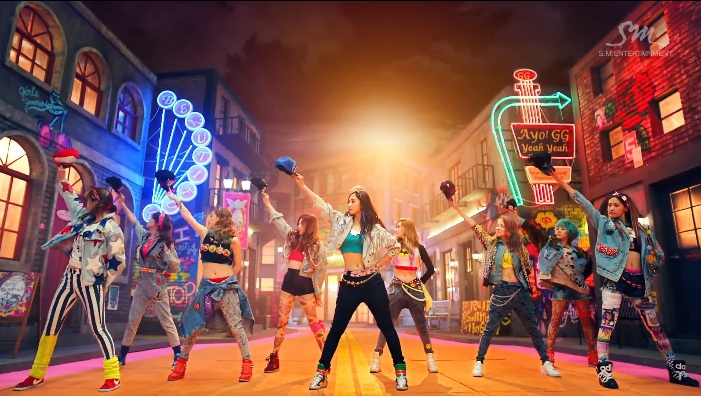
However, industry analysts pointed out that the surprise felt by Western audiences was largely due to a lack of exposure rather than a lack of merit. "I Got A Boy" was a musically complex track, blending elements of bubblegum pop, hip-hop, and electronic dance music into a fragmented, multi-sectioned structure that challenged the conventions of standard pop songwriting. Its high-budget music video, characterized by vibrant aesthetics and intricate choreography, was precisely the kind of content that the YouTube platform was designed to amplify.
SM Entertainment and the Strategic Longevity of Girls’ Generation
The success at the YTMAs was not a fluke but the result of years of brand building by SM Entertainment. Since their debut in 2007, Girls’ Generation—consisting of Taeyeon, Jessica, Sunny, Tiffany, Hyoyeon, Yuri, Sooyoung, Yoona, and Seohyun—had been meticulously groomed for stardom. They were the "nation’s girl group" in South Korea, holding a dominant position in the industry for over half a decade by 2013.
SM Entertainment’s marketing prowess played a crucial role. The agency had been early adopters of YouTube as a global distribution tool, bypassing traditional radio gatekeepers to reach fans directly in North America, South America, and Europe. By the time of the YTMAs, Girls’ Generation had already performed at Madison Square Garden and appeared on major U.S. talk shows like The Late Show with David Letterman. The YouTube win was a validation of this long-term investment in international expansion.
Implications for the Future of K-pop in the United States
The win at the YouTube Music Awards forced the American music industry to take K-pop seriously as a commercial entity, not just a viral novelty. It opened doors for further discussions regarding distribution deals and collaborations. At the time of the win, Girls’ Generation was signed to Interscope Records for their U.S. activities, and the award reignited questions about whether a full-scale American album was on the horizon.
While a sustained, chart-topping career in the U.S. remained a challenge for many K-pop acts due to language barriers and the complexities of the American radio system, the YTMAs proved that the digital landscape was a level playing field. The award showed that:
- Metric-Driven Success: Engagement and sharing are becoming as important as traditional sales and airplay.
- Fandom as Infrastructure: A dedicated, organized global fandom can overcome a lack of traditional media support.
- Visual Storytelling: High-quality music videos are the primary currency of the global music market.
The victory of Girls’ Generation paved the way for future K-pop acts, such as BTS and BLACKPINK, who would later achieve even greater heights on the Billboard charts and at Western award shows. It demonstrated that the "Korean Wave" was not a passing fad but a structural change in the global entertainment ecosystem.
Conclusion: A Landmark for Global Music Diversity
The 2013 YouTube Music Awards will be remembered as the night the "Internet’s music" officially challenged the "industry’s music." Girls’ Generation’s triumph was a testament to their individual talent, the vision of SM Entertainment, and the unprecedented power of the SONE fandom. While the win was met with a mix of celebration and controversy, its lasting impact is undeniable. It placed K-pop firmly in the international spotlight and forced a reevaluation of what it means to be a "worldwide" star in the 21st century. As the music industry continues to evolve, the lessons learned from the "I Got A Boy" victory remain relevant: in a connected world, the most powerful voices are often the ones that can mobilize a global community at the click of a button.