The inaugural YouTube Music Awards, held at Pier 36 in New York City, marked a definitive turning point in the globalization of the South Korean music industry as the veteran girl group Girls’ Generation secured the prestigious Video of the Year award. Their hit single, "I Got A Boy," emerged victorious against a field of heavyweights in the Western music industry, including Miley Cyrus, Justin Bieber, Lady Gaga, One Direction, and Macklemore & Ryan Lewis. This victory serves as more than just a trophy for the nine-member ensemble; it represents the culmination of a decade of Hallyu—the Korean Wave—and the sophisticated, systematic mobilization of digital fandoms that have come to define modern music consumption.
The win has effectively placed K-pop in a renewed international spotlight, drawing parallels to the viral phenomenon of Psy’s "Gangnam Style" in 2012. However, unlike the novelty-driven success of Psy, the triumph of Girls’ Generation highlights a different facet of the industry: the enduring power of a dedicated, globalized fan base. The current atmosphere surrounding the win is a complex blend of pride within the South Korean cultural sphere and a sense of bewilderment from Western audiences who are suddenly grappling with the sheer scale of K-pop’s reach.
The Mechanics of a Global Digital Victory
The YouTube Music Awards (YTMA) utilized a unique judging criterion that differed significantly from traditional industry awards like the Grammys or the MTV Video Music Awards. Rather than relying on a closed panel of industry experts or simple sales data, the YTMA winners were determined by social media engagement. Specifically, the "Video of the Year" category was decided by the number of times a video’s specific voting link was shared across platforms like Twitter, Facebook, and Google+.
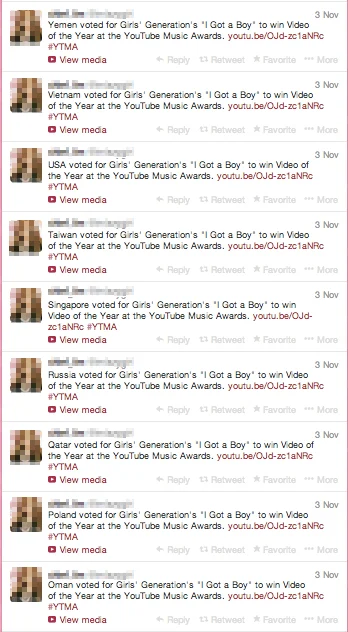
This format played directly into the strengths of K-pop fandoms, which are renowned for their high levels of organization and digital literacy. For Girls’ Generation, their fandom—known as SONE—initiated a massive, multi-tiered campaign to ensure the "I Got A Boy" video remained at the top of the sharing metrics. Observers of the voting process noted that the effort was not merely a collection of individual actions but a synchronized global operation.
Reports from social media tracking indicated the use of "relay sessions," where fan leaders in specific time zones would oversee voting periods to ensure a 24-hour cycle of engagement. When fans in Asia went to sleep, fans in Europe and North America took over the mantle. This systematic team effort involved fans casting votes under various digital identities, reflecting a level of dedication that transcends traditional music appreciation. While some critics have pointed toward "power voting" as a way to skew results, the data remains a clear indicator of worldwide popularity and the ability of an artist to command a loyal, active audience.
Chronology of a Milestone: From Release to Recognition
The journey to the YouTube Music Awards began on January 1, 2013, with the release of "I Got A Boy." The song itself was a radical departure from the group’s previous "bubblegum pop" hits like "Gee" or "Genie." It featured a multi-genre structure that combined elements of bubblegum pop, drum and bass, and hip-hop, often described by music critics as a "musical kaleidoscope."
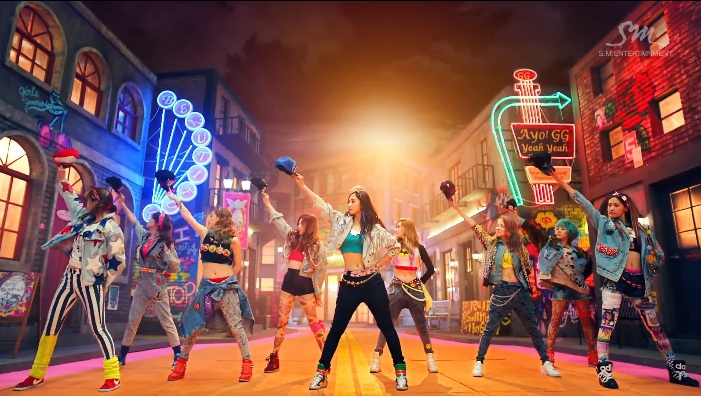
- January 2013: "I Got A Boy" is released and immediately tops the Billboard World Albums chart and the Gaon Digital Chart. The music video garners millions of views within the first 24 hours, setting the stage for its eventual year-end recognition.
- Mid-2013: Girls’ Generation embarks on their "Girls & Peace" World Tour, further solidifying their presence in markets outside of East Asia.
- October 2013: YouTube announces the nominees for the first-ever YouTube Music Awards. Girls’ Generation is the only Korean act nominated in the "Video of the Year" category.
- November 3, 2013: The awards ceremony takes place in New York. Tiffany, a member of the group, accepts the award in person, delivering an acceptance speech in English that thanks the fans and the platform for the global recognition.
The timeline suggests that the win was not a sudden fluke but the result of a year-long trajectory of sustained growth and strategic content delivery by SM Entertainment.
Supporting Data and Viewership Metrics
To understand the magnitude of the win, one must look at the digital footprint of "I Got A Boy." At the time of the awards, the music video had surpassed 70 million views on YouTube. While this number was lower than some of its competitors—such as Miley Cyrus’s "Wrecking Ball"—the engagement metrics told a different story. The ratio of shares-to-views for Girls’ Generation was significantly higher than that of their Western counterparts.
In 2013, K-pop videos on YouTube saw an average year-on-year growth in viewership of over 200% in regions like North America and Europe. The "I Got A Boy" video, with its vibrant aesthetics and high production value, served as a primary gateway for new listeners. Data suggests that while a majority of the voting shares may have come from a concentrated "power-voting" minority, the unique reach of the video spanned over 100 countries, proving that the group’s appeal was no longer localized to the Asian continent.
Industry Reactions and Cultural Backlash
The announcement of Girls’ Generation as the winner was met with a polarized response. Within the ceremony at Pier 36, the mood was one of celebration for the platform’s global diversity. However, the digital landscape told a different story. Fans of Western pop stars expressed confusion and, in some cases, overt hostility. Twitter was flooded with "Who is Girls’ Generation?" and "How did they beat Justin Bieber?"
This friction highlighted a significant cultural divide. For many Western music consumers, the "mainstream" is defined by US-centric charts and radio play. The YouTube Music Awards, however, operated on a truly global metric, where the massive populations of Asia and the hyper-connected nature of K-pop fans could outmaneuver the traditional gatekeepers of Western celebrity.
In response to the backlash, many SONEs and K-pop enthusiasts adopted a stance of "passive-aggressive" defense, pointing to the group’s long-standing success in Asia and their superior performance capabilities. Tiffany’s presence at the awards was a strategic masterstroke by SM Entertainment; as a native English speaker from California, she was able to bridge the cultural gap and present a relatable, professional face to an audience that might otherwise have dismissed the group as a foreign curiosity.
Broader Impact and Implications for K-pop
The victory of Girls’ Generation at the YTMA has profound implications for the future of the music industry and the "Hallyu" movement. Firstly, it confirms that the "worldwide presence" of K-pop is a measurable reality rather than a marketing exaggeration. It validates the business model of Korean entertainment agencies, which prioritize digital engagement and global accessibility through platforms like YouTube.
For Girls’ Generation specifically, the win raises questions about their future expansion into the American market. While the group has previously released English-language versions of their songs and performed on late-night talk shows in the US, a full-scale American debut has remained elusive. The YTMA win serves as a powerful "proof of concept" for labels like Interscope Records, which has a distribution deal with the group. It proves that there is a hungry, vocal, and technologically savvy audience ready to support K-pop in the West.
Furthermore, this event marks a shift in how "stardom" is calculated. In the digital age, the ability to mobilize a fandom to take action—whether through voting, streaming, or sharing—is becoming as valuable as traditional record sales. The systematic "relay sessions" and organized voting blocks pioneered by K-pop fans are now being studied by Western marketing firms as the gold standard for consumer engagement.
Analysis: Beyond the "Fluke" Narrative
It would be a mistake to categorize the Girls’ Generation win as a fluke or a glitch in the system. The group has spent years building a solid foundation through group image longevity, SM Entertainment’s marketing prowess, and rigorous training in various performance fields. Unlike many "one-hit wonders" of the digital era, Girls’ Generation represents a legacy of consistency in South Korea.
The tension observed between different fandoms following the win is a natural byproduct of a changing industry. As the world becomes more digitally integrated, the barriers between "local" and "global" are dissolving. For the music industry at large, the lesson of the 2013 YouTube Music Awards is clear: the next generation of superstars may not come from the traditional talent hubs of the West, but from any corner of the globe where an artist can foster a deep, interactive connection with their audience.
As Girls’ Generation continues to evolve, their YTMA victory remains a landmark moment that paved the way for future K-pop acts to enter the global stage not as outsiders, but as legitimate contenders for the title of the world’s biggest artists. The "I Got A Boy" win was not just an award for a single video; it was a declaration that the global music landscape had officially expanded.