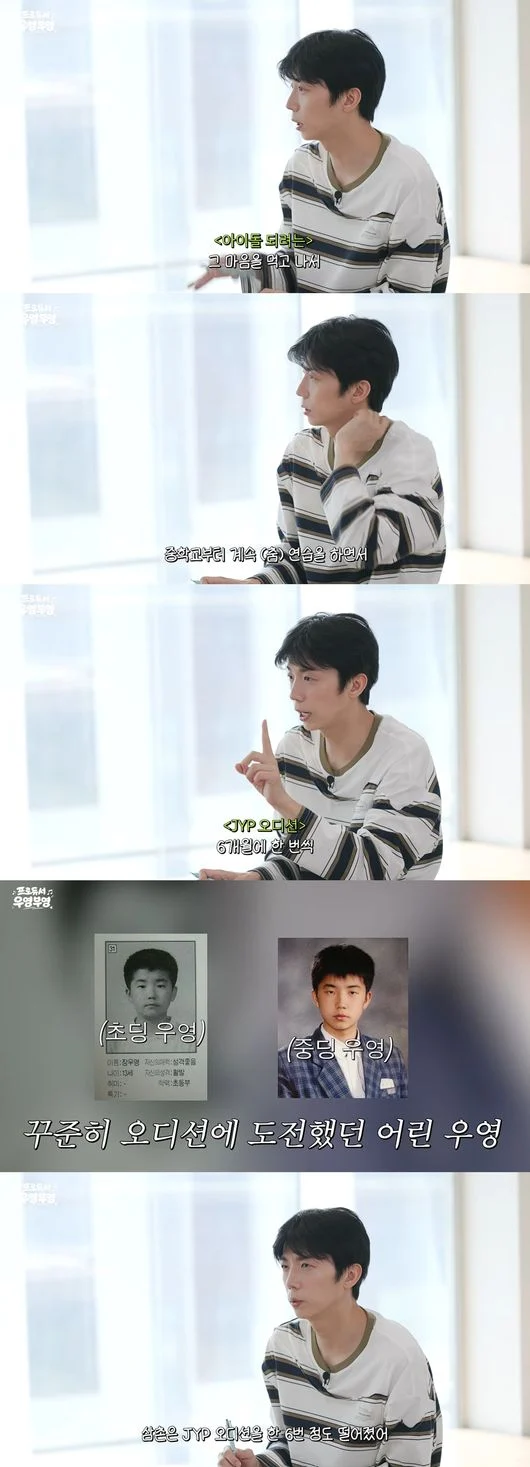
Jang Wooyoung, a prominent member of the enduring K-Pop group 2PM and a long-standing artist under JYP Entertainment, has recently offered a rare glimpse into the arduous journey of becoming a K-Pop idol, candidly revealing his numerous rejections before finally securing a spot within the esteemed agency. His powerful testimony, shared during an interaction with aspiring young idols, underscores the immense perseverance and resilience required to break into the highly competitive South Korean entertainment industry. The revelation came on August 24th, through a video titled "I Give It My All (Even Against Kids)" uploaded to Jang Wooyoung’s personal YouTube channel, providing invaluable insight into the often-unseen struggles behind K-Pop stardom.
In the heartwarming and inspiring YouTube segment, Jang Wooyoung engaged directly with children who harbor dreams of becoming idols, participating in dance activities and sharing personal anecdotes from his formative years. During a poignant moment, one inquisitive child posed a fundamental question about the genesis of his idol aspirations. Wooyoung reflected, pinpointing his initial desire to enter the entertainment world to an impressionable age, "It was around when I was 11 or 12 years old." This early resolve set him on a determined path, a path fraught with challenges that he now openly discusses. He elaborated on his persistent strategy, stating, "After deciding I wanted to become an idol, I kept practicing and took JYP auditions every six months." This systematic approach, driven by a self-imposed six-month improvement cycle, became the rhythm of his early pursuit.
A Grueling Gauntlet: Six Failures and a Seventh Triumph
The core of Wooyoung’s disclosure revolved around the sheer number of rejections he faced from one of South Korea’s "Big Three" entertainment powerhouses. "I thought it would take about six months to improve, so I kept auditioning twice a year," he recounted, detailing a period of repeated attempts that would deter many. He then delivered the impactful revelation: "I failed the JYP audition about six times. Then I passed on the seventh try and joined." This candid admission captivated his young audience and has since resonated widely across the K-Pop community, shedding light on the often-glamorized journey to stardom. His story serves as a potent reminder that even successful idols frequently navigate a landscape of setbacks and disappointments before achieving their breakthroughs.
The chronology of Wooyoung’s journey highlights a significant period of dedication and unwavering commitment. Born in 1989, his aspiration to become an idol at 11 or 12 years old would place his initial auditions in the early to mid-2000s, a pivotal era for the nascent stages of K-Pop’s global expansion. Given his twice-yearly audition schedule and six failures, his successful seventh attempt likely occurred over a span of at least three to four years. This timeline underscores not only his raw talent but also an extraordinary level of mental fortitude and self-belief. His eventual entry into JYP Entertainment culminated in his debut in 2008 as a member of 2PM, a group that quickly distinguished itself with an acrobatic "beast idol" concept and went on to achieve significant domestic and international success, cementing their status as one of K-Pop’s second-generation titans.
Navigating the JYP Audition Landscape: A Contextual Analysis
JYP Entertainment, founded by Park Jin-young in 1997, has historically been a formidable gatekeeper in the K-Pop industry. Renowned for discovering and cultivating some of K-Pop’s most iconic acts, including Wonder Girls, 2PM, Miss A, GOT7, TWICE, Stray Kids, ITZY, and NMIXX, the agency’s auditions are notoriously competitive. Each year, tens of thousands of hopefuls from across South Korea and around the world vie for a limited number of trainee spots. The selection process is rigorous, evaluating not only raw talent in singing and dancing but also potential for growth, stage presence, personality, and even physical appearance. The odds of success are astronomically low, making Wooyoung’s eventual triumph after six rejections all the more remarkable.
The K-Pop trainee system itself is a crucible, designed to forge multi-talented entertainers. Those who pass the initial auditions embark on years of intensive training, often living in dormitories and adhering to strict schedules that include vocal lessons, dance practice, language acquisition, media training, and etiquette classes. This demanding regimen, which can last anywhere from a few months to over a decade, is characterized by high pressure and constant evaluation. Many trainees are eventually cut, never making it to debut. Therefore, Wooyoung’s repeated attempts were not just about personal improvement but also about consistently proving his potential against a constantly evolving pool of new talent and the agency’s ever-high standards. His story humanizes the often-impenetrable process, illustrating that even those destined for stardom must first endure a gauntlet of skepticism and self-doubt.
Beyond Skills: Wooyoung’s Holistic Advice for Aspiring Artists
Beyond recounting his personal struggles, Wooyoung offered sagacious advice that transcended mere technical skill. When a parent present at the session inquired, "What should not be done to become an idol?" Wooyoung’s response highlighted a more holistic approach to artistic development and personal well-being. "Singing, dancing, and skills are obviously very important, but there are many things you should not do as well. I hope you don’t focus only on practicing singing and dancing," he advised. This perspective diverges from the common assumption that relentless technical practice is the sole key to success in the K-Pop world.
He further elaborated on the importance of a balanced life, urging the children to "enjoy the time with friends around you, your parents, and time at home as much as possible." This emphasis on personal relationships and mental health is particularly pertinent in an industry frequently criticized for its demanding environment and potential for isolation. Wooyoung concluded his advice with a heartfelt encouragement to cultivate a strong sense of self and purpose: "I hope you attach dreams like ‘What kind of songs do I like?’ or ‘What kind of singer do I want to become?’ one by one in the back." This guidance underscores the necessity of internal motivation, artistic identity, and genuine passion beyond the superficial allure of fame. For young aspirants, understanding their unique artistic voice and maintaining connections outside of their intense training can be crucial for long-term resilience and creative integrity.
Implications for Aspiring Artists and the Industry

Wooyoung’s candid confession carries significant implications for both aspiring K-Pop idols and the broader entertainment industry. For young dreamers, his story serves as a powerful testament to the value of persistence and the understanding that failure is often a prerequisite for success. It demystifies the path to idol-hood, moving away from a narrative of instant discovery to one of protracted effort and self-improvement. This realistic portrayal can help temper unrealistic expectations and instill a healthier mindset among those embarking on their own demanding journeys.
Furthermore, Wooyoung’s emphasis on holistic development—prioritizing personal well-being, social connections, and individual artistic vision alongside technical skills—offers a progressive outlook. In an industry increasingly scrutinized for its impact on mental health, such advice from a seasoned senior artist (sunbae) is invaluable. It suggests a growing recognition within the K-Pop community that sustainable careers are built not just on talent, but on a strong foundation of personal identity and mental resilience. This perspective can encourage agencies and trainees alike to adopt more balanced approaches to training and talent development.
The revelation also reinforces the competitive nature of JYP Entertainment and the K-Pop industry at large. While the "Big 3" (JYP, SM, YG) and now "Big 4" (adding HYBE) companies are often seen as guaranteed pathways to success, Wooyoung’s experience highlights that even exceptional talent can face repeated hurdles. This transparency helps external observers and prospective trainees understand the sheer scale of ambition and the emotional toll involved in navigating such a high-stakes environment.
The Enduring Legacy of Perseverance
Jang Wooyoung’s journey from a persistently rejected auditionee to a celebrated member of a globally recognized group like 2PM encapsulates the essence of resilience in the face of adversity. His willingness to share this vulnerable aspect of his past not only inspires but also educates, offering a more nuanced understanding of the K-Pop idol machine. As 2PM continues to thrive with a legacy spanning over a decade, Wooyoung’s story becomes a beacon of hope, illustrating that the path to achieving one’s dreams is rarely linear, often paved with rejections, but ultimately navigable through unwavering determination and a commitment to personal growth beyond the confines of mere performance skills. His advice to aspiring idols, focusing on a balanced life and a strong sense of self, resonates as a profound message for anyone pursuing a dream in a demanding field, reminding them that true success encompasses both professional achievement and personal well-being.