K-Pop Idol Makes Money For The First Time Years After Debuting
Article Editorial Team
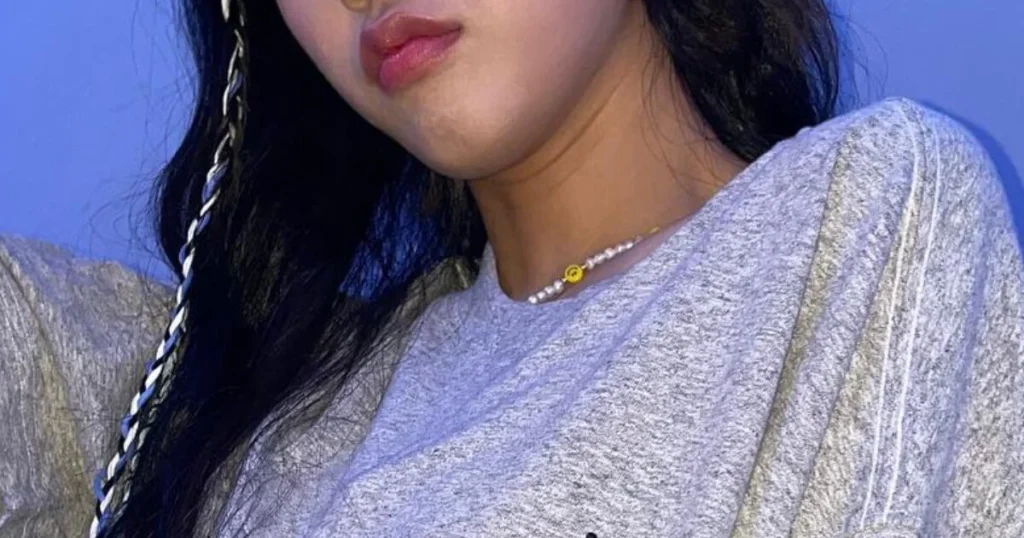
The highly competitive and often opaque financial realities of the K-pop industry were brought into stark relief recently when Mimi, a prominent member of the popular girl group OH MY GIRL, disclosed that her first significant personal earnings came not from her group’s activities, but from her individual YouTube channel, years after her official debut. Her candid revelation, made during an appearance on comedian Lee Eun Ji’s new YouTube show Mudaepo, featuring Swings and Kim Dae Ho, has ignited further discussion about the economic struggles faced by many K-pop idols, even those from well-established groups.
A Candid Confession: The "Negative" Reality of Idol Earnings
During the inaugural episode of Mudaepo, Lee Eun Ji directly asked Mimi about the moment she first earned what she considered "real money." Mimi’s response, delivered with a mix of frankness and slight weariness, painted a picture far removed from the glamorous image often associated with successful K-pop artists. "From my very first settlement, I was already in the negatives," she stated, elaborating on the substantial financial investment required to launch and sustain a girl group. "Girl groups cost a lot of money. Just by default, they cost a lot, and unless you do really well, most of the time, you’re in the negatives."
This declaration resonated deeply within the K-pop community and beyond, confirming long-held suspicions about the burdensome financial structures underpinning the industry. Mimi further explained that her initial lack of individual activities – such as solo endorsements, acting roles, or variety show appearances – meant that her share of the group’s earnings remained insufficient to clear her accumulated debut-related debts. Consequently, her first truly meaningful income stream emerged from an unexpected source: her personal YouTube channel, Mim PD. "In my case, I also barely had any individual activities, so my first proper earnings came from YouTube," she confirmed.
A Decade of Dedication: Mimi’s Journey with OH MY GIRL

Mimi, whose full name is Kim Mi-hyun, debuted as a member of OH MY GIRL in April 2015 under WM Entertainment. The group, consisting of seven members (initially eight), launched into a saturated K-pop market already brimming with established acts and promising newcomers. Their debut single, "Cupid," garnered attention for its unique sound and concept, but like many groups, OH MY GIRL faced an uphill battle to achieve widespread recognition and financial stability.
The initial years of a K-pop idol’s career are typically characterized by intensive training, rigorous schedules, and significant financial outlays by their agencies. These costs, which include vocal and dance lessons, housing, food, styling, makeup, music production, and promotional activities, are often treated as a debt that idols must repay from their future earnings. This system, while standard practice, means that many idols spend years working without receiving any net income, as their share of group profits first goes towards settling these "trainee debts." Even after debut, the costs associated with comebacks, music video production, and ongoing promotions continue to accrue.
For OH MY GIRL, the path to mainstream success was a gradual one. While critically acclaimed for their unique sound and intricate concepts, it took several years for the group to break into the top tier of K-pop. Their breakthrough came in 2019 with the Mnet reality show Queendom, which showcased their talent and versatility to a broader audience. This led to increased popularity and commercial success with subsequent releases like "Nonstop" (2020) and "Dun Dun Dance" (2021), which became major hits, earning them music show wins and solidifying their position as a beloved and successful group. Despite this eventual success, Mimi’s revelation underscores that even for groups that "make it," the personal financial journey for individual members can remain challenging for an extended period.
The "Negative" Reality: Unpacking K-Pop’s Financial Structure
Mimi’s experience is not an isolated incident but rather a symptom of a systemic issue within the K-pop industry. The financial model, particularly for rookie and mid-tier groups, places immense pressure on idols. Agencies invest millions of won into developing and promoting a group, and the contractual agreements often stipulate that these investments must be recouped before any profit-sharing begins. The revenue split, even after debt repayment, typically favors the agency, with common splits ranging from 50:50 to 70:30 (agency:idol) for group activities, and sometimes more favorable for individual endeavors.
The average K-pop trainee period can last anywhere from two to ten years, with costs accumulating throughout. Housing, food, health, fashion, and specialized training (vocal, dance, acting, language) all contribute to a substantial financial burden. For groups that do not achieve immediate, overwhelming success – which is the vast majority – it can take many years to simply break even. Many groups disband before ever seeing a profit, leaving members with no earnings and, in some cases, ongoing personal debt.

This financial precarity is exacerbated for members who, like Mimi in her early career, do not secure lucrative individual contracts. While group activities generate collective income, individual endorsements, acting roles, and solo music ventures often provide a more direct and substantial income stream for idols, as the revenue split might be more advantageous or less burdened by shared group expenses. Mimi’s situation highlights the vulnerability of members who rely solely on their group’s collective earnings in the initial years.
The Rise of Mim PD: YouTube as a Lifeline
It was against this backdrop of financial struggle that Mimi ventured into the realm of personal digital content creation. In 2019, four years after her debut with OH MY GIRL, she launched her personal YouTube channel, Mim PD. The channel offered fans a more intimate glimpse into her daily life, featuring vlogs that showcased her eating, relaxing, and engaging in various personal activities, often with a raw and authentic charm that resonated deeply with viewers.
This strategic move proved to be a pivotal turning point in Mimi’s financial journey. As she recounted on Mudaepo, "A lot of people enjoyed watching my vlogs, where I ate and showed my comfortable daily life. That was the first time I earned money from views, and to me, that was a really huge amount. I mean, it’s still a huge amount now. So YouTube is very precious and meaningful to me."
Her channel quickly gained traction, attracting a significant following drawn to her relatable and unvarnished persona, a stark contrast to the highly curated image often presented by idols. As of the latest figures, Mim PD boasts approximately 547,000 subscribers, a testament to her success as a content creator. The monetization of her YouTube content, primarily through advertising revenue and potential brand sponsorships, provided her with an independent and substantial income stream, finally allowing her to move out of the "negatives."
Mimi’s experience reflects a growing trend among K-pop idols who are leveraging digital platforms like YouTube, Twitch, and TikTok to connect directly with fans and generate alternative income. This allows them greater creative control, fosters a deeper connection with their audience, and provides a crucial financial safety net or even primary income source, independent of their group’s earnings or agency’s promotional plans. Other idols, such as f(x)’s Luna, Akdong Musician’s Suhyun, and EXO’s Baekhyun, have also found significant success and financial independence through their YouTube channels, proving the viability of this path.

Beyond the Stage: The Broader Implications for K-Pop
Mimi’s revelation carries significant implications for understanding the contemporary K-pop landscape:
-
Transparency and Idol Welfare: Her honest account adds to the ongoing conversation about transparency in idol contracts and financial settlements. It reignites calls for greater protections for idols, particularly regarding the repayment of trainee debt and fairer profit-sharing models. The industry has made strides since the infamous "slave contracts" controversies of the past, but Mimi’s story shows that financial precarity remains a harsh reality for many.
-
Empowerment through Digital Platforms: The success of Mim PD underscores the increasing empowerment of idols through individual digital content creation. This trend allows artists to diversify their income streams, build personal brands independent of their group’s identity, and exert more creative control over their public image. It offers a crucial alternative in an industry where collective success doesn’t always translate to individual financial stability.
-
Shifting Fan Perceptions: Such candid disclosures help demystify the K-pop industry for fans, moving beyond the polished, glamorous façade to reveal the intense labor, financial struggles, and personal sacrifices involved. This fosters a deeper, more empathetic understanding of idols as individuals rather than just products.
-
Agency Adaptation: K-pop agencies are increasingly recognizing the value of individual idol activities on digital platforms. While some initially viewed these endeavors with skepticism or as distractions, the undeniable success and fan engagement they generate are leading agencies to integrate them into broader promotional strategies, often facilitating and supporting idols’ personal channels.

Industry Responses and Future Outlook
While there hasn’t been an official statement from WM Entertainment specifically addressing Mimi’s comments, the broader K-pop industry continues to evolve in response to these internal and external pressures. The Fair Trade Commission (FTC) in South Korea has, over the years, implemented regulations to prevent overly restrictive or exploitative contracts, notably standardizing the maximum contract length to seven years. However, the intricacies of financial settlements, particularly concerning debt repayment, still vary widely and often remain a point of contention.
Mimi’s journey from being "in the negatives" for years despite being part of a successful group, to finding financial independence through her YouTube channel, serves as a powerful case study. It highlights both the enduring challenges within the K-pop financial ecosystem and the innovative ways idols are navigating these obstacles. As the digital landscape continues to offer new avenues for connection and monetization, it is likely that more idols will follow Mimi’s path, leveraging their personal platforms to secure their financial futures and connect with fans on a more personal level. This shift may ultimately lead to a more sustainable and equitable environment for artists in the ever-evolving world of K-pop.
Related News