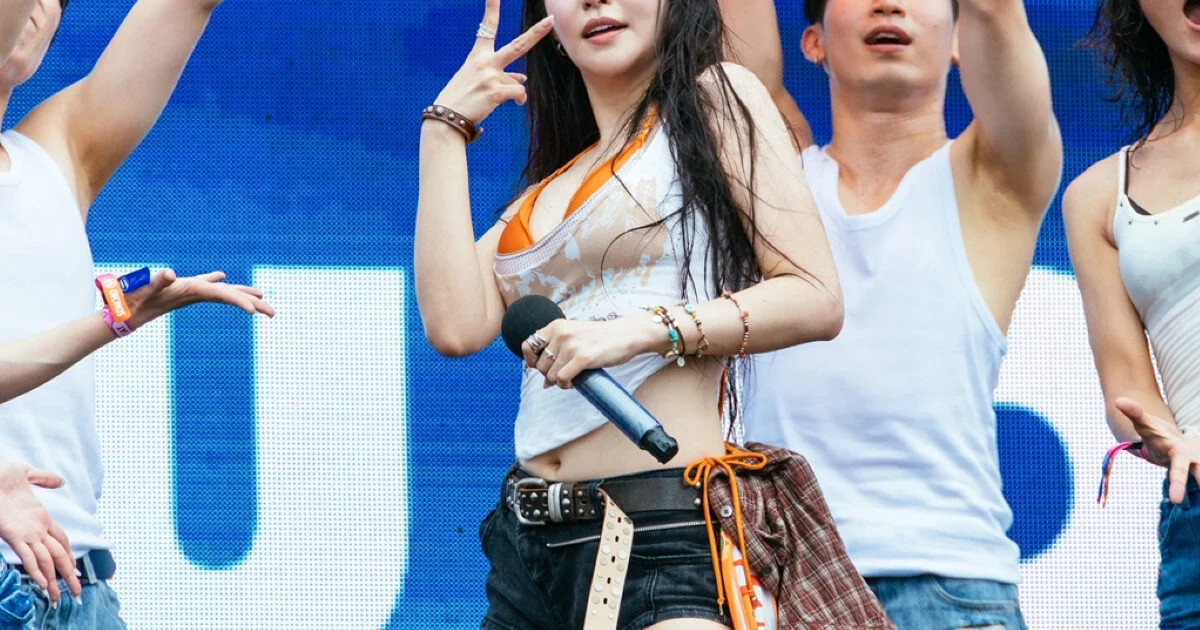
K-Pop idol Nam Yujeong, formerly a prominent member of BBGIRLS (previously known as Brave Girls), embarked on her much-anticipated solo journey with a performance at the Waterbomb Sokcho 2026 festival. The event, held on August 22nd at Hanwha Resort Seorak Sorano in Sokcho, Gangwon Province, marked her first official solo stage since her departure from the popular girl group. Despite delivering an energetic performance characterized by her trademark bright smile and bold styling, the public’s reception has been notably divided, with significant online criticism juxtaposed against reported positive live audience engagement. This inaugural solo appearance serves as a critical juncture for Yujeong, setting the tone for her independent career path in the highly competitive K-Pop industry.
The Waterbomb Stage: A Solo Debut Amidst High Expectations
The Waterbomb festival series has established itself as one of South Korea’s premier summer music events, renowned for its high-energy atmosphere, vibrant water-themed interactions, and a lineup featuring a mix of K-Pop idols, hip-hop artists, and DJs. Performing on the Waterbomb stage is often seen as a significant opportunity for artists to connect with a large, enthusiastic audience, particularly during the peak summer season. For Nam Yujeong, this particular stage held additional weight, not only marking her first solo appearance but also serving as the implicit announcement of her new chapter following her April 2024 departure from BBGIRLS.
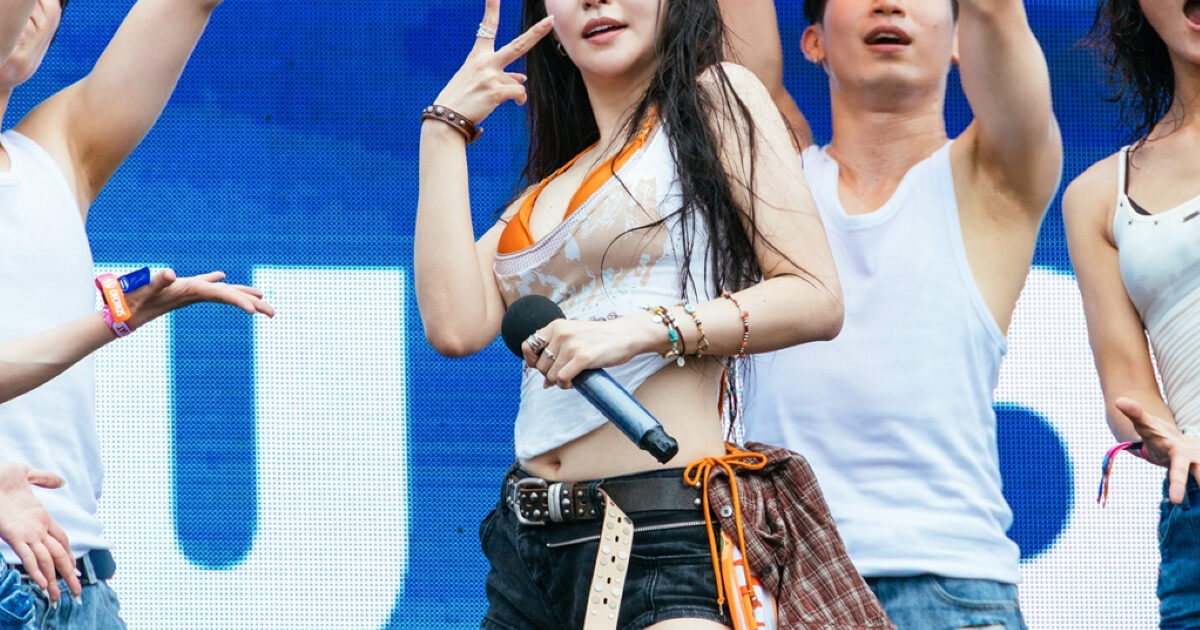
Yujeong graced the Waterbomb Sokcho 2026 stage with a confident presence, opting for a bold summer-appropriate ensemble consisting of short shorts paired with a sleeveless top. This styling choice aligned with the festival’s lively and often daring aesthetic, designed to withstand the celebratory water cannons and sprays that are a hallmark of the Waterbomb experience. Her performance was described as energetic, consistent with the vibrant image she cultivated during her time with Brave Girls and later BBGIRLS. The choice of Waterbomb for her solo debut underscored a clear intention to re-establish her presence as an individual artist capable of commanding a major festival stage.
A Journey from Group Success to Solo Endeavor
Nam Yujeong’s career trajectory offers crucial context to her recent solo debut. She initially joined Brave Girls in 2016, a group that, despite its talent, struggled for mainstream recognition for several years. The turning point arrived in 2021 with the "Rollin’" phenomenon. This unexpected resurgence, driven by a viral fan-made compilation video of their performances for military personnel, catapulted Brave Girls into unprecedented stardom. The song, originally released in 2017, soared to the top of major music charts, leading to widespread public adoration and a "miracle run" that captivated the nation. This period saw Nam Yujeong, along with her bandmates, become household names, celebrated for their perseverance and genuine personalities.
Following the expiration of their contracts with Brave Entertainment, the group rebranded as BBGIRLS under a new agency, Warner Music Korea, in 2023. This transition aimed to provide a fresh start and build upon their renewed success. However, the path proved challenging, and in April 2024, Nam Yujeong announced her departure from BBGIRLS, signaling her intention to pursue individual activities. This decision marked a significant turning point, closing a chapter that spanned nearly a decade and initiating the arduous process of carving out a unique identity as a solo artist in a genre where group solidarity often defines success. Her appearance at Waterbomb Sokcho 2026 therefore represented the culmination of months of planning and preparation for this new independent career phase.
Performance Choices and Immediate Online Reaction
For her inaugural solo performance, Nam Yujeong selected a setlist comprising three remakes of well-known hits: Jewelry’s "I Really Like You," Park Myung Soo’s "Prince of the Sea," and Uhm Jung Hwa’s "Invitation." The decision to perform cover songs rather than original material immediately became a focal point of online discussions once stage videos were released. Netizens quickly voiced their opinions, with comments such as, "Does she not have any of her own songs?" and "I thought she’d have her own style of music since she’s going solo." These reactions highlight a common expectation among K-Pop fans for solo artists, particularly those transitioning from successful groups, to showcase a distinctive musical identity through original compositions. The absence of new solo tracks at such a high-profile event seemingly left some segments of the audience feeling underwhelmed regarding her artistic direction.
Adding to the performance, BTOB’s Lee Minhyuk, credited as a featured artist, made an unexpected appearance during "Invitation," joining Yujeong on stage. While collaborative stages are common in K-Pop festivals, the overall focus of the online commentary remained heavily on Yujeong’s choices and perceived execution.
Beyond the song selection, criticisms extended to the quality of the performance itself. Comments surfaced regarding perceived shortcomings in her dance and vocal delivery, with some netizens suggesting, "The dance and singing didn’t meet expectations," and "She looked awkward, maybe from insufficient practice." Others speculated that "Her shortcomings were probably covered up by the other members during group activities," implying that the dynamics of a group might have previously masked individual weaknesses that became more apparent on a solo stage. This type of critique underscores the intense scrutiny K-Pop idols face, particularly during high-stakes solo debuts, where every aspect of their artistry is magnified without the collective support system of a group.
The Nuance of Netizen Commentary vs. Live Experience
It is crucial to distinguish between the immediate, often unfiltered, reactions found in online comment sections and the atmosphere of a live performance. While online forums provided a platform for critical voices, reports from attendees at Waterbomb Sokcho 2026 offered a contrasting perspective. Supportive voices online echoed these sentiments, stating, "The live audience reacted well," and "It was nice to see her on stage after a long time." These comments suggest that the energy and engagement experienced by those present at the festival might have differed significantly from the colder reception observed online.
The discrepancy between online and offline reactions is a recurring phenomenon in the K-Pop landscape. Online platforms, particularly those driven by anonymity, often amplify critical voices, creating an echo chamber that may not accurately reflect the broader public sentiment or the immediate experience of a live event. Live audiences, immersed in the festive atmosphere and the shared experience of music, tend to be more forgiving and appreciative of an artist’s effort and presence. For Yujeong, this dichotomy presents a complex challenge: how to navigate the immediate digital feedback loop while continuing to build a compelling narrative for her solo career, which will inevitably be judged by both metrics. The initial performance, despite the online critiques, undeniably marked her return to the spotlight, a fact that many long-time fans celebrated.
Challenges of Transitioning to a Solo Career in K-Pop
Nam Yujeong’s solo debut highlights several inherent challenges faced by K-Pop idols transitioning from successful group careers. Firstly, establishing a distinct solo identity after years of operating within a group’s established concept is a formidable task. Audiences often associate former group members with their past image and sound, making it difficult for artists to break free and showcase a new artistic direction. This pressure is compounded by the expectation for solo artists to be multi-faceted, demonstrating strong vocal, dance, and stage presence without the collective strength of multiple members.
Secondly, the production of original music is a significant hurdle. While covers can be a way to connect with an audience through familiar songs, the demand for original tracks that define an artist’s unique style is paramount for long-term solo success. Developing a cohesive musical identity, finding suitable producers, and investing in new material requires substantial time, resources, and artistic vision. For an artist fresh out of a group, this process is often still in its nascent stages, making initial performances a balancing act between familiarity and novelty.
Furthermore, the K-Pop industry is notoriously competitive, with a constant influx of new talent and established acts vying for public attention. A solo artist must not only compete with other soloists but also with the ongoing activities of active groups. Public perception, heavily influenced by online commentary and media narratives, plays a critical role in shaping an artist’s trajectory, making initial impressions incredibly important.
The Strategic Use of Cover Songs
The decision to perform cover songs at a debut stage, while criticized by some netizens, can be a strategic choice for several reasons. For an artist like Nam Yujeong, transitioning to a solo career, covers can serve as a bridge, allowing her to connect with a wider audience through familiar melodies while gradually introducing her individual artistry. Choosing well-loved classics like those from Jewelry, Park Myung Soo, and Uhm Jung Hwa can evoke nostalgia and instantly engage listeners, particularly at a festival setting where immediate audience participation is key. It can also demonstrate her vocal versatility and ability to reinterpret different genres.
However, the double-edged sword of this strategy lies in the audience’s expectation for originality, especially at a solo debut. While covers can be a temporary solution, sustained success in a solo career almost invariably requires original music that defines the artist’s unique brand and sound. The critical online reception suggests that while the live audience might have enjoyed the familiarity, a significant portion of the online community views the absence of original tracks as a missed opportunity to assert her solo identity.
The Role of Featured Artists in Solo Stages
The appearance of BTOB’s Lee Minhyuk as a featured artist during "Invitation" adds another layer to the performance. Collaborations are common in K-Pop and can generate buzz, introduce an artist to a new segment of fans, and elevate a stage performance. Lee Minhyuk, as a respected idol with a strong fan base, brought an element of star power and synergy to Yujeong’s stage. Such collaborations can be particularly beneficial for solo artists in their early stages, providing a shared spotlight and enhancing the overall production value.
However, in the context of a debut stage where the primary goal is to establish the solo artist’s unique presence, the featured artist’s role needs to be carefully balanced. While Minhyuk’s presence was likely intended to elevate the stage, the dominant online discourse remained centered on Yujeong’s individual performance and song choices, indicating that even a high-profile collaboration might not fully deflect scrutiny from the core elements of a solo debut.
Navigating Public Perception and Building a New Identity
Nam Yujeong’s Waterbomb Sokcho 2026 performance has undeniably initiated a crucial conversation about her solo future. The immediate, polarized reactions underscore the immense pressure on K-Pop idols embarking on independent paths. For Yujeong, the challenge now lies in navigating this complex landscape of public perception. She will need to address the critiques regarding original music and performance quality while simultaneously leveraging the positive engagement from her live audience and supportive fans.
Her agency and management will likely play a critical role in strategizing her next steps, which may include accelerating the release of original solo material, refining her stage presence, and engaging with fans to articulate her artistic vision. The K-Pop industry is dynamic, and public opinion can shift rapidly. An artist’s ability to adapt, learn from feedback, and consistently deliver compelling content is paramount for long-term success.
Looking Ahead: A Path Forward for Nam Yujeong
Despite the initial mixed reactions, Nam Yujeong’s Waterbomb Sokcho 2026 debut represents a brave and necessary step in her career evolution. It signifies her commitment to remaining an active performer and her determination to forge a new identity beyond her group’s legacy. The supportive voices, looking forward to her next endeavors, provide a crucial foundation for her to build upon.
Her journey will be a testament to the resilience required in the K-Pop industry, particularly for those who transition from collective success to individual artistry. The path ahead will likely involve continued experimentation with her sound, honing her solo stage craft, and strategically releasing original music that truly defines Nam Yujeong as a unique solo artist. Her debut at Waterbomb may have opened a dialogue, but it is her subsequent actions and artistic output that will ultimately shape the narrative of her solo career. The K-Pop community will be watching closely as she navigates this challenging yet potentially rewarding new chapter.