A candid revelation by 2PM’s Junho regarding a harrowing 12-day period without proper sleep, followed by TWICE’s Sana’s equally shocking admission of enduring days without showering or fully removing makeup, has cast a stark spotlight on the extreme demands faced by K-Pop idols, particularly during peak performance seasons. These personal accounts, shared on October 1st via the YouTube channel Ch117 in a video titled “Fox’s Devil, Senior Junho Appears,” have resonated deeply within the fan community and reignited discussions about artist welfare in the highly competitive and demanding South Korean entertainment industry.
The Genesis of the Revelation: A Senior-Junior Dialogue
The conversation, featuring veteran idol Junho of the iconic second-generation group 2PM and Sana of the globally acclaimed third-generation group TWICE, began with Sana recalling a rumor about Junho’s past struggles. She initiated the topic, asking, “Oppa, you said that during the year-end performances in the past, you didn’t lie down on a bed for a whole week.” Junho’s correction amplified the severity of the situation: “It was about 12 days.” Sana’s surprised reaction, “Almost two weeks,” underscored the unimaginable nature of such prolonged sleep deprivation to a wider audience. This dialogue provided a rare glimpse into the grueling reality often concealed behind the polished performances and glamorous images of K-Pop stars.
The Grueling Gauntlet of Year-End Festivals
Junho elaborated on the specific circumstances that led to this unprecedented period of sleeplessness. His account centered around the infamous year-end music festivals, a staple of the South Korean broadcasting landscape. These events—typically Gayo Daechukje (KBS Song Festival), Gayo Daejeon (SBS Gayo Daejeon), and Gayo Daejejeon (MBC Gayo Daejejeon)—are traditionally held consecutively on December 29th, 30th, and 31st. For popular groups like 2PM, who were at the zenith of their career, participation in all three was mandatory, often involving multiple stages, special collaborations, and elaborate choreographies requiring extensive rehearsal.
“Back then, the three programs Gayo Daechukje, Gayo Daejeon, and Gayo Daejejeon were held on December 29th, 30th, and 31st,” Junho explained. “After finishing the stage on the 29th, we had to prepare for the stage on the 30th.” This seemingly straightforward statement belies a complex and physically punishing logistical nightmare. Each festival requires unique preparations: learning new choreographies, attending costume fittings, participating in camera rehearsals, and enduring numerous sound checks. Idols frequently perform several songs across different stages, sometimes with different group configurations or special guest appearances, multiplying the workload exponentially.
The timeline described by Junho paints a picture of relentless activity:
- December 29th: Performance at the first year-end festival. Immediately after, preparation begins for the next day’s event.
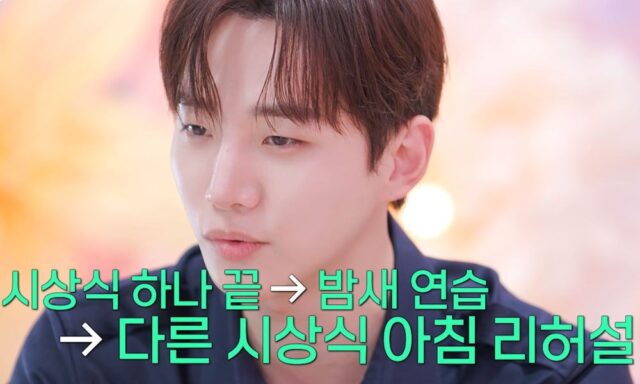
- Night of December 29th – Morning of December 30th: All-night practice sessions for the second festival.
- Early Morning December 30th: Early morning rehearsals, followed by various run-throughs and live broadcasts.
- December 30th: Performance at the second year-end festival. The cycle repeats for the final festival.
- Night of December 30th – Morning of December 31st: More all-night practices and rehearsals.
- December 31st: Performance at the third year-end festival, often concluding just before the New Year countdown.
This condensed schedule leaves virtually no time for rest, let alone proper sleep in a bed. Idols are shuttled between broadcasting stations, practice rooms, and temporary holding areas, often catching mere minutes of sleep in moving vehicles or on studio floors.
Beyond the Stage: The Hidden Toll of a Relentless Schedule
Junho’s account extended beyond the performance stages, revealing the full scope of an idol’s demanding life during such periods. “After the ceremony, we practiced all night and had an early morning rehearsal. After going through various rehearsals and live broadcasts, we repeated the process to prepare for the next ceremony, so we went back to the practice room,” he recounted. But the demands didn’t stop there. “I also remember doing commercial shoots, managing schedules, and traveling to various places by car for public broadcasts on stage. That went on for about 12 days. On top of that, we had to record, so I don’t have much memory of that time.”
The inclusion of commercial shoots and additional recording sessions highlights the multi-faceted nature of an idol’s career. Even amidst the most intense performance schedules, other contractual obligations and creative work continue. This constant pressure to be "on" — to perform, to record, to endorse products, to maintain a public image — pushes physical and mental endurance to its absolute limits. The phrase “I don’t have much memory of that time” is particularly poignant, indicating a state of extreme fatigue where basic memory formation is impaired, effectively erasing a significant chunk of their lived experience. This amnesia serves as a stark reminder of the toll such an environment takes on cognitive functions.
The Price of Success: Forgetting a Number One Hit
Sana further illuminated this phenomenon by sharing another anecdote she had heard about 2PM’s extreme sleep deprivation. “The oppas had a song that hit number one, but they didn’t even know what song it was. They were so sleep-deprived during recording that they couldn’t remember recording it.” This story, almost unbelievable in its implications, was confirmed by Junho.
“We recorded, and then while going to schedules and broadcasts, we would stop briefly at a rest area,” Junho recalled. “We heard a song with our voices, but we had no memory of recording it. We wondered, ‘What is this song?’ When we listened, it turned out to be the song we recorded, and it was hitting number one.” This surreal experience underscores the profound impact of chronic sleep deprivation. To achieve a number one hit – a monumental milestone for any artist – and yet have no recollection of its creation, speaks volumes about the dehumanizing pace of the K-Pop industry at its peak. It strips away the artistic satisfaction and personal memory associated with success, leaving only a blur of exhaustion.
Junho then generalized the experience, asking Sana, “Without specific memories, we kept not sleeping. When we did sleep, it was only in the car. As soon as we got in the car, we passed out, and when we got home, we just washed up. Have you had an experience like that too?”
Sana’s Unhygienic Revelation: A Shocking Corroboration
Sana’s response to Junho’s question shocked viewers and further solidified the grim reality. While Junho mentioned only washing up upon returning home, Sana revealed an even more extreme lack of personal care due to time constraints. “We didn’t even wash,” she confessed. She elaborated, “This might sound unhygienic but for three days, we couldn’t wash or fully remove our makeup. We only took off the base makeup and went back on stage that way. After music shows, we would get on a plane still wearing the same outfits.”
This revelation, initially met with surprise, quickly evoked widespread sympathy, despite Sana’s self-deprecating comment about it being "unhygienic." It highlights the immense pressure and lack of personal time, even for basic hygiene, that idols endure. The image of idols traveling internationally in the same sweaty stage outfits, with incomplete makeup removal, shatters the illusion of effortless glamour and exposes the harsh realities of their demanding schedules. Junho empathized deeply, admitting, “We were all sweaty but just stayed in those clothes; we did the same. That much time was not available.” This mutual understanding between senior and junior idols underscores that these are not isolated incidents but rather systemic issues within the industry.
The Broader K-Pop Industry Context: A System of Extreme Demands
These anecdotes from Junho and Sana are not isolated incidents but rather symptomatic of a broader culture of extreme demands within the K-Pop industry. From the rigorous training period, which can last for years and involve intense vocal, dance, and language lessons, to the relentless promotion cycles post-debut, idols are expected to maintain an almost superhuman level of dedication and performance.
Training and Debut: Before even debuting, trainees often live together in dorms, adhering to strict diets and practice schedules that can extend late into the night. This foundational period instills a discipline that carries over into their professional careers. Upon debut, the pressure intensifies as groups strive to gain recognition in a highly saturated market.
Comeback Cycles: A typical K-Pop group’s year involves multiple “comebacks” – the release of new music, complete with music videos, album promotions, and weeks of performances on various music shows (like M Countdown, Music Bank, Show! Music Core, Inkigayo, etc.). Each comeback requires extensive preparation, including recording, choreography learning, concept development, and styling.
Music Show Demands: Appearing on weekly music shows is crucial for promotion. Idols often wake up in the early hours of the morning for pre-recordings, attend live broadcasts throughout the day, and then return to practice rooms for future performances. This often involves traveling between different broadcasting stations across Seoul.
Global Expansion and World Tours: As K-Pop’s global reach has expanded, so have the demands. World tours, fan meetings, and international appearances add layers of intense travel, time zone adjustments, and continuous performance requirements, further exacerbating the issue of sleep deprivation and physical exhaustion.
The "Idol System": The K-Pop "idol system" is designed for efficiency and maximum output. Agencies invest heavily in their artists, expecting a significant return. This creates an environment where idols are constantly working, with little downtime, to maintain momentum, generate content, and satisfy fan expectations. The fierce competition means that any perceived lull in activity can be detrimental to a group’s standing.
Health and Well-being Concerns: The Human Cost
The stories shared by Junho and Sana highlight significant concerns regarding the physical and mental well-being of K-Pop idols. Chronic sleep deprivation can lead to a host of health issues, including weakened immune systems, increased risk of accidents, impaired cognitive function, mood swings, and long-term mental health problems such as anxiety and depression. The physical strain of demanding choreographies performed on minimal rest can also lead to injuries, some of which can be career-threatening.
The lack of basic hygiene, while seemingly minor, underscores a complete erosion of personal time and privacy. It reflects a state where idols are treated more as products or performing machines than individuals with fundamental human needs. The memory loss associated with extreme fatigue also points to potential long-term neurological impacts that are rarely discussed openly.
Industry Response and Evolving Welfare Discussions
While the K-Pop industry is renowned for its global success and innovative approaches to artist development, it has also faced criticism regarding its treatment of idols. In recent years, there has been a growing discourse about improving idol welfare, driven by public awareness and, in some cases, by former idols speaking out. Agencies have reportedly made efforts to provide more structured rest periods, better psychological support, and healthier working conditions. However, the intensity of the industry, particularly for top-tier groups like 2PM and TWICE during their peak periods, suggests that these improvements may still be a work in progress.
The revelations from established artists like Junho and Sana carry significant weight. They serve as a powerful reminder to fans, industry executives, and the public that the glamorous facade of K-Pop often conceals immense personal sacrifice. Their stories contribute to an ongoing conversation about finding a sustainable balance between artistic ambition, commercial success, and the fundamental human rights and well-being of the individuals who power this global phenomenon.
Fan Engagement and Empathy
The immediate reaction to Junho’s and Sana’s stories has been one of overwhelming sympathy and concern from fans. Many expressed shock but also a deeper understanding and appreciation for the dedication of their favorite artists. These candid moments humanize idols, allowing fans to connect with them on a deeper level beyond their stage personas. It also galvanizes fan communities to advocate for better treatment and more humane schedules for their idols, putting pressure on entertainment agencies to prioritize artist health. The fact that Sana’s "unhygienic" story sparked discussion indicates a shift from judgment to empathy, recognizing the extraordinary circumstances that led to such conditions.
Conclusion: The Enduring Challenges of K-Pop Stardom
The shared experiences of 2PM’s Junho and TWICE’s Sana offer a sobering perspective on the immense personal cost of K-Pop stardom. Their accounts of prolonged sleep deprivation, memory loss, and compromised personal hygiene during their most active periods are stark reminders of the extreme demands placed upon idols. While the industry continues to evolve and globalize, these stories highlight the enduring challenges of maintaining artist welfare amidst relentless competition and ever-increasing expectations. As K-Pop continues its global dominance, ensuring the health, well-being, and basic human dignity of its stars remains a critical, ongoing imperative for the industry and its stakeholders. The dialogue sparked by these candid revelations is a vital step towards fostering a more sustainable and humane environment for the next generation of K-Pop idols.