Korean Actress Han Ga In’s Unfiltered Tteokbokki Review Ignites Widespread Online Culinary Debate
Article Editorial Team

A recent candid culinary review by renowned Korean actress Han Ga In has unexpectedly stirred a vigorous debate across online platforms, spotlighting the passionate intersection of celebrity influence, beloved national dishes, and the nuances of home cooking. The incident, centered on a YouTube video released on July 23rd, saw Han Ga In, widely known as a self-proclaimed "tteokbokki maniac," meticulously evaluating various popular tteokbokki recipes, including a particularly famous rendition by fellow actor Ryu Soo Young. Her remarkably straightforward critique of a recipe many consider a staple has not only captivated public attention but also instigated a detailed examination of cooking methodologies and the subjective nature of taste.
Tteokbokki, a quintessential Korean street food, consists primarily of chewy rice cakes (tteok) bathed in a rich, spicy, and often sweet gochujang-based sauce. Its ubiquity across South Korea, from bustling street stalls to family kitchens, underscores its status as a beloved comfort food deeply ingrained in the nation’s culinary identity. The dish’s appeal extends beyond its tantalizing flavors; it represents communal eating, nostalgic memories, and a fundamental aspect of everyday Korean life. In recent years, tteokbokki has also gained significant international traction, becoming a recognizable symbol of Korean cuisine globally. Given its cultural significance, any public commentary, especially from a prominent figure, regarding its preparation or taste inherently resonates deeply with the public, sparking discussion and often fervent defense of preferred styles and recipes. The sheer diversity of tteokbokki recipes, ranging from traditional spicy versions to gungjung (royal court) style and various regional adaptations, further contributes to the passionate discourse surrounding its preparation. Each household and chef often prides themselves on a unique approach, making any critique a matter of personal and collective culinary pride.
The two central figures in this unfolding culinary saga are Han Ga In and Ryu Soo Young, both established actors in the South Korean entertainment industry, yet each bringing a distinct public persona to the fore in this context. Han Ga In, celebrated for her elegant screen presence in dramas like "Moon Embracing the Sun" and films such as "Architecture 101," has more recently embraced a candid and approachable image through her YouTube channel. Her self-identification as a "tteokbokki maniac" is not merely a passing comment but a genuine reflection of her deep affinity for the dish, lending credibility and relatability to her review. Her willingness to share unfiltered opinions, even on sensitive topics like food, has become a hallmark of her recent content strategy, resonating with an audience increasingly seeking authenticity.

Ryu Soo Young, on the other hand, has carved out a niche as a respected home cook and culinary personality. His appearances on various cooking shows, particularly "Fun-staurant," have garnered him widespread acclaim for his accessible yet delicious recipes. Among these, his "Lifetime Tteokbokki" recipe has achieved cult status, praised for its simplicity, consistency, and supposedly foolproof results, leading many to adopt it as their go-to method for preparing the dish. The moniker "Lifetime Tteokbokki" itself suggests a recipe so reliable and enjoyable that one would commit to using it indefinitely, reflecting a significant degree of public trust and endorsement. This context highlights the potential impact of Han Ga In’s review, as it directly challenged a recipe that has become a trusted fixture in many Korean households, elevating the discussion beyond mere taste preference to a matter of culinary efficacy and reputation.
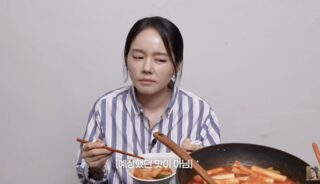
The chronology of the event began on July 23rd with the upload of Han Ga In’s highly anticipated YouTube video. In the segment, the actress embarked on a meticulous culinary journey, preparing and tasting five distinct tteokbokki recipes that had gained considerable popularity. Among these, Ryu Soo Young’s "Lifetime Tteokbokki" recipe was undeniably the most prominent, entering the challenge with a formidable reputation. After carefully following the recipe instructions and tasting the final product, Han Ga In’s response was notably devoid of the effusive praise often associated with celebrity endorsements. Her critique was precise and unreserved: "The flavors don’t harmonize. The saltiness and sweetness feel disconnected. It feels incomplete," she articulated, her expression conveying genuine discernment. She further elaborated, "It’s neither delicious nor bad—just ambiguous. I’m doubtful I could eat this for a lifetime." While the overall dish failed to impress her, she did offer specific praise for the fish cakes and broth, acknowledging their palatable quality, which indicated a balanced assessment rather than an outright dismissal.
Crucially, Han Ga In demonstrated a keen awareness of the potential ramifications of her frank assessment. Immediately following her critique, she proactively clarified her professional distance from Ryu Soo Young, stating, "We have no connection or even an acquaintance," a move designed to preempt any perception of personal bias or rivalry. She then took a measured step to attribute potential shortcomings to her own execution rather than solely to the recipe itself. "There may be issues with my cooking process," she conceded, adding a thoughtful analogy: "Like when making the same coffee with a machine, the taste can differ. It might taste fine when Ryu Soo Young makes it, but different when I do. It could really be a matter of cooking skill." This self-reflective statement, taking responsibility for the outcome, aimed to mitigate any insinuation of disrespect towards Ryu Soo Young or his widely acclaimed recipe, framing the review as a personal culinary experience rather than a definitive judgment on the recipe’s inherent quality. Ultimately, among the five recipes she prepared and tasted that day, Ryu Soo Young’s "Lifetime Tteokbokki" was ranked last, placing fifth, a verdict that significantly amplified the impact of her initial comments.
The broadcast of Han Ga In’s review immediately triggered a flurry of activity and diverse opinions across various online communities and social media platforms. Netizens, ever-vigilant and opinionated, engaged in spirited back-and-forth debates, dissecting every aspect of the video. A segment of the online community adopted a critical stance towards Han Ga In’s preparation, scrutinizing visual cues from the video itself. Commenters pointed out perceived discrepancies, noting, "The color and consistency differ from what Ryu Soo Young made on the show," and "The broth looks too watery." Others speculated on potential deviations from the original recipe’s intended balance, suggesting, "Usually, spoonfuls of the seasoning are heavily added to bring out the flavor, but it looks like too little was used for health reasons," and questioning, "Did she mismeasure the ingredients?" These critiques were sharp, with some even suggesting that Han Ga In’s review, particularly the final ranking, could be interpreted as disrespectful to Ryu Soo Young, given the widespread trust in his recipe. This faction argued that if the preparation was flawed, the critique itself lost its validity, placing the onus squarely on the reviewer’s cooking prowess.
However, a significant portion of the online discourse leaned towards a more understanding and nuanced perspective. The prevailing sentiment among many netizens acknowledged the inherent variability in home cooking, encapsulating it with phrases like "Handcrafted flavor really does make a difference" and "It seems to be an issue of cooking skill more than the recipe itself." This viewpoint largely wrapped up the matter as a light-hearted episode rather than a grave culinary affront. Many supported Han Ga In’s candidness, appreciating her willingness to share an honest, unfiltered opinion, even if it challenged a popular consensus. This positive reception of her authenticity underscored a growing demand for genuine content creators who prioritize sincerity over curated perfection. The online discussion, therefore, became a fascinating case study in how public opinion navigates celebrity influence, culinary authority, and the subjective realities of taste and skill.
The implications of this incident extend beyond a simple food review, touching upon broader aspects of celebrity culture, food media, and the dynamics of online discourse. Firstly, it highlights the double-edged sword of celebrity endorsements and reviews. While a celebrity’s positive affirmation can skyrocket a product’s popularity, a negative or even lukewarm critique, especially when delivered with Han Ga In’s characteristic candor, can spark considerable debate and scrutiny. It underscores the responsibility celebrities bear when their personal opinions, however genuine, are amplified to a massive audience.
Secondly, the debate profoundly illustrates the "science" versus "art" of cooking. While recipes provide a scientific framework—precise measurements, specific steps, and ingredient lists—the actual execution often involves an artistic touch, intuition, and experience. Factors such as the quality of ingredients, the heat of the stove, the type of cookware, and even subtle variations in technique can dramatically alter the final outcome. Han Ga In’s own acknowledgment of potential "cooking skill" issues reinforces this notion, suggesting that even a well-regarded recipe is not entirely foolproof in the hands of every individual. This incident serves as a reminder that cooking is not merely about following instructions but about developing a feel for the process.
Furthermore, the public’s passionate engagement reflects the deep-seated importance of food in Korean culture. Culinary traditions and popular dishes are not just sustenance; they are integral to national identity, social bonding, and personal comfort. A critique of a beloved dish or recipe can thus be perceived almost as a critique of a shared cultural experience, explaining the intensity of the online reactions. This emotional connection ensures that food-related content, particularly involving prominent figures, will continue to generate significant public interest and discussion.

Finally, Han Ga In’s approach to content creation on her YouTube channel, characterized by her straightforward and unfiltered honesty, is increasingly resonating with audiences in an era saturated with highly polished and often inauthentic media. Her willingness to express genuine opinions, even at the risk of controversy, positions her as an authentic voice, drawing in viewers who appreciate transparency. This incident, far from being a setback, could further solidify her image as a relatable and honest personality, reinforcing the value of authenticity in the digital content landscape. While the "Lifetime Tteokbokki" recipe might have experienced a momentary dip in its universal appeal among some, the overall discussion has likely served to make more people curious, prompting them to try Ryu Soo Young’s recipe themselves to form their own, informed opinions.
In conclusion, Han Ga In’s candid tteokbokki review has transcended a simple food critique to become a significant cultural moment. It has effectively illuminated the intricate interplay between celebrity influence, the cherished status of national cuisine, the nuanced art of cooking, and the dynamic nature of online public discourse. The episode stands as a testament to the power of authenticity in content creation and the enduring passion Koreans hold for their culinary heritage, demonstrating how a single YouTube video can spark a nationwide conversation on taste, skill, and reputation.
Related News