MAMAMOO’s Solar Sparks Widespread Debate with Playful ChatGPT Post, Highlighting Growing AI Ethics Concerns in K-Pop
Article Editorial Team
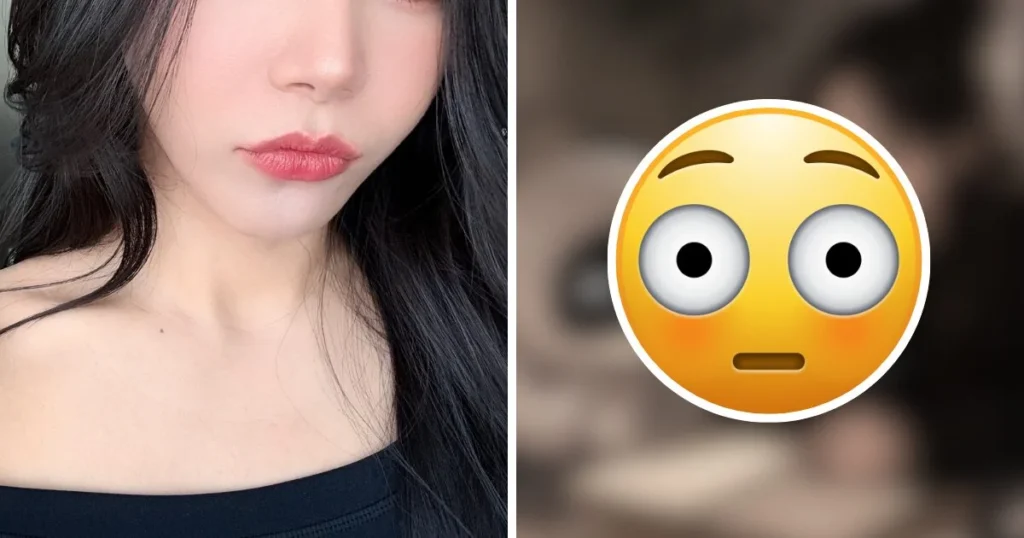
MAMAMOO’s Solar, a prominent figure in the global K-Pop industry, recently ignited a significant discussion among her fanbase and broader online communities after sharing a lighthearted post featuring AI-generated artwork on her social media. The incident, which occurred on July 27, 2026, swiftly drew mixed reactions, underscoring the escalating ethical debates surrounding generative artificial intelligence within the entertainment sector and among digital artists worldwide.
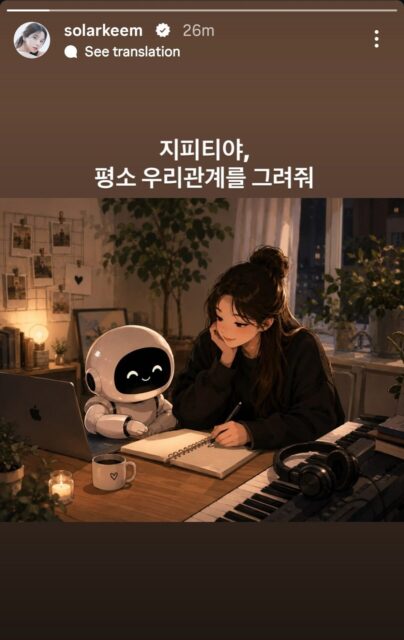
The controversy originated from an Instagram Story uploaded by Solar, whose real name is Kim Yong-sun. The post showcased an image that appeared to be AI-generated, depicting herself alongside a small, white robot. The accompanying caption, playfully addressed to the popular AI chatbot, read: "Hey (chat)GPT, please draw our relationship." The visual content and its caption suggested a casual, perhaps curious, interaction with AI technology, which has become increasingly ubiquitous in digital spaces. While seemingly innocuous on the surface, the post quickly resonated differently with various segments of her international fanbase, prompting a cascade of reactions that highlighted a deeper societal discourse on the responsible use of AI.
The Genesis of the Controversy: A Playful Post Turns Serious
The Instagram Story, featuring a stylized image reminiscent of digital art, immediately garnered attention from Solar’s extensive following. Many fans initially viewed it as a characteristic display of her innovative and experimental personality, often seen exploring new trends. However, a vocal segment of international fans expressed profound disappointment and concern. Social media platforms, particularly X (formerly Twitter), became the primary arena for these reactions, with numerous users sharing screenshots of Solar’s post alongside their criticisms.
Tweets from fans, such as one by user @LUCIDNIGHTM4RE stating, "sometimes even your goat is still a rich privileged uneducated woman at the end of the day," reflected a sense of disillusionment and a belief that Solar might be unaware of the broader implications of using generative AI. Other users like @swfstagram simply reacted with a concise "girl," indicating exasperation, while @wheeinthefandom urged, "Someone needs to tell her to stop, I’m so serious…," articulating a strong desire for intervention and education. These immediate responses underscored a prevailing sentiment among some fans that the use of generative AI by public figures, especially those with significant influence, carries a responsibility that extends beyond mere novelty.
Divergent Perspectives: The Heart of the Debate
The reactions to Solar’s post were not monolithic. While many international fans voiced strong objections, a significant portion of her fanbase, particularly in South Korea and among those less familiar with the ongoing AI ethics debates, perceived the post as a harmless jest or an innocent exploration of new technology. This divergence in interpretation highlighted a cultural and informational gap regarding the controversies surrounding AI-generated content.

Those critical of Solar’s use of AI primarily focused on several key issues that have become central to the global debate:
- Environmental Impact: Critics pointed to the substantial energy consumption associated with training and operating large AI models. The computational power required for generating complex images contributes to carbon emissions, raising concerns about the technology’s ecological footprint.
- Copyright and Artistic Integrity: A major contention revolves around how generative AI models are trained. Many models are reportedly trained on vast datasets of existing artwork, often scraped from the internet without the original artists’ consent or compensation. This practice raises serious questions about copyright infringement, intellectual property rights, and the potential for AI to devalue human artistic labor. Artists worldwide have expressed alarm that their unique styles and creations are being assimilated and repurposed by AI without acknowledgment or remuneration.
- Job Displacement: There are growing fears that generative AI could lead to widespread job displacement for human artists, illustrators, and graphic designers, as businesses might opt for AI-generated content due to its speed and lower cost.
- Ethical Sourcing: The lack of transparency in the data used to train AI models has also been a significant point of concern. The provenance of the data, including potential biases or unethical sourcing, contributes to a broader distrust of the technology among the artistic community and informed consumers.
These concerns were echoed in various fan comments, with users like @qwheeinflower pleading, "Yall who have access to her pls educate her on not using ai," and @sisimcardeluxe adding, "please someone inform her about the bad effects of using AI HUHUHU." Another tweet from @qwheeinflower reiterated, "Yeah but she keeps using generative ai which does more harm than good." These statements clearly articulated a desire for Solar, and by extension, other public figures, to be informed about the ethical ramifications of the technologies they engage with.
Understanding Generative AI and Its Controversies
Generative AI, particularly in the realm of image creation, refers to artificial intelligence systems capable of producing novel content, such as images, text, or audio, that did not previously exist. Tools like Midjourney, DALL-E, Stable Diffusion, and the image generation capabilities often integrated into large language models like ChatGPT, operate by learning patterns and styles from massive datasets of existing media. When prompted, these AIs synthesize new images based on the learned information.
The process typically involves:
- Training Data: AI models are "fed" billions of images, often scraped from the internet, including copyrighted works, stock photos, and personal art portfolios. This is where the core ethical debate regarding consent and compensation for original artists arises.
- Learning Patterns: Through complex algorithms (often neural networks), the AI identifies relationships, styles, and common elements within the training data.
- Generation: When given a text prompt (like Solar’s "draw our relationship"), the AI uses its learned knowledge to generate a new image that attempts to fulfill the prompt, often mimicking styles it has observed.
While the technology offers unprecedented creative potential and efficiency, its rapid advancement has outpaced the development of ethical guidelines and legal frameworks. The environmental impact is a critical, often overlooked aspect. Training a single large AI model can consume as much energy as five cars over their lifetime, according to some estimates, contributing significantly to carbon emissions. For instance, a study by researchers at the University of Massachusetts Amherst estimated that the process of training a single large AI model can emit over 626,000 pounds of carbon dioxide equivalent – nearly five times the lifetime emissions of the average American car, including manufacturing. As AI models become larger and more complex, and their usage more widespread, this energy demand is projected to soar, exacerbating climate concerns.
Legally, several high-profile lawsuits have emerged, such as Getty Images suing Stability AI for alleged copyright infringement, claiming the AI company "unlawfully copied and processed millions of images" protected by copyright. Artists have also initiated class-action lawsuits against AI art generators, arguing that their work has been used without permission to train these models. These legal battles highlight the urgent need for clearer intellectual property laws in the age of AI.
A Broader Industry Landscape: AI in Entertainment
The debate sparked by Solar’s post is not isolated but reflects a global conversation unfolding across various entertainment industries. In Hollywood, the 2023 SAG-AFTRA strike prominently featured concerns about AI’s potential to replicate actors’ likenesses without fair compensation or consent, threatening their livelihoods. Similarly, the music industry is grappling with AI-generated vocals and compositions, raising questions about authorship, royalties, and the definition of "original" music. Major labels have begun issuing warnings against unauthorized AI training on their copyrighted music.
Within the K-Pop landscape, agencies and artists have cautiously explored AI. Some have utilized AI for virtual idols, deepfake content in music videos, or even for data analysis to predict trends. However, the use of generative AI for visual art by prominent figures like Solar brings these abstract concerns into a tangible, personal context for fans, making the ethical dilemmas more immediate and relatable. The K-Pop industry, known for its high level of fan engagement and close idol-fan relationships, finds itself at a unique intersection where technological adoption must be carefully balanced with fan sentiment and ethical considerations.
The K-Pop Context: Idols, Social Media, and Fan Expectations
K-Pop idols exist in a highly scrutinized environment where their actions, both personal and professional, are amplified through social media. Fans, particularly the international demographic, often feel a strong sense of emotional investment in their idols, extending to expectations about their idols’ values and social consciousness. This dynamic means that actions perceived as ethically questionable, even if unintentional, can lead to swift and intense backlash.
The nature of social media further exacerbates this. A simple Instagram Story, intended as a fleeting moment of interaction, can quickly transform into a viral debate, crossing geographical and linguistic barriers within hours. The speed at which information and opinions spread leaves little room for nuance or immediate clarification, often allowing misunderstandings or strong viewpoints to solidify. For K-Pop idols, whose image is meticulously managed, navigating this complex digital landscape requires acute awareness of global socio-political and technological discourses.
The Call for Education and Corporate Responsibility
The recurring plea from fans for Solar to be "educated" on AI ethics highlights a significant gap in awareness, not just for individual celebrities but potentially for their management agencies as well. In the K-Pop system, agencies like RBW (MAMAMOO’s agency) play a crucial role in managing their artists’ public image and activities. This incident suggests a need for agencies to proactively address emerging technological ethics with their artists, providing guidance on what constitutes responsible and respectful use of new tools.
Developing clear guidelines for artists regarding AI use could become an essential part of celebrity management. This would involve understanding the intricacies of AI’s development, its potential impacts on various industries, and the ethical sensitivities of different fan demographics. For an industry that prides itself on creativity and originality, associating with technologies perceived as exploitative or environmentally damaging could pose significant risks to an artist’s brand and public perception.
Implications for Idols and Agencies
Solar’s ChatGPT post serves as a potent case study for the broader K-Pop industry and individual idols. The implications are multi-faceted:
- Brand Image and Fan Trust: Missteps in navigating ethical issues, even seemingly minor ones, can erode fan trust and damage an idol’s carefully cultivated brand image. In an industry heavily reliant on fan loyalty, such erosion can have long-term consequences.
- Sponsorships and Endorsements: As companies increasingly emphasize ethical sourcing and corporate social responsibility, idols associated with controversial technologies might face challenges in securing endorsements from brands that prioritize these values.
- Industry Guidelines: This event may prompt K-Pop agencies to develop more robust guidelines for artists’ social media use, particularly concerning new and potentially controversial technologies. This could include mandatory education sessions on digital ethics, copyright law in the AI age, and environmental impact.
- The "Global" Idol Identity: For K-Pop idols who command a global audience, understanding and respecting the diverse socio-cultural values and concerns of their international fanbase is paramount. What might be perceived as harmless fun in one region could be deeply problematic in another.
Looking Ahead: Navigating the AI Frontier in K-Pop
The incident involving MAMAMOO’s Solar is more than just a fleeting social media kerfuffle; it is a microcosm of the larger societal struggle to define ethical boundaries in the rapidly advancing world of artificial intelligence. For the K-Pop industry, which thrives on innovation and global appeal, this presents both challenges and opportunities.
Moving forward, idols and their agencies will need to engage with AI technologies thoughtfully, transparently, and with a keen awareness of their broader implications. This could involve actively seeking out AI tools that adhere to ethical standards, collaborating with artists to ensure fair compensation, or using their platforms to advocate for responsible AI development. The debate ignited by Solar’s post underscores that the conversation around AI is no longer confined to tech forums but has permeated mainstream culture, demanding attention and considered responses from influential figures across all sectors. As AI continues to evolve, the entertainment industry, and K-Pop specifically, will be at the forefront of defining how humanity interacts with these powerful new tools in a way that is both innovative and ethically sound.
Related News