
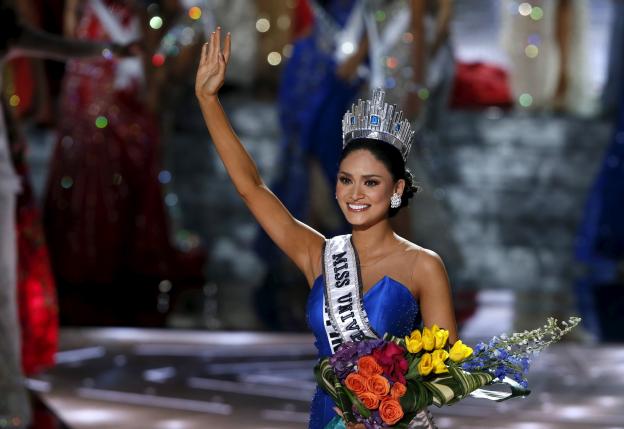
The 64th Miss Universe pageant, held on December 20, 2015, at the AXIS Theater in Las Vegas, Nevada, will be remembered as one of the most polarizing and widely discussed events in the history of international beauty competitions. While the primary narrative focused on a monumental live broadcast error by host Steve Harvey, a secondary story emerged in the days following the coronation that bridged the worlds of international pageantry and global pop culture. Pia Wurtzbach, representing the Philippines, was eventually crowned Miss Universe 2015, but her victory soon took on an additional layer of viral significance when digital archives revealed her long-standing status as a dedicated fan of the South Korean music genre known as K-pop.
The Historic Announcement Error and Immediate Aftermath
The conclusion of the 2015 Miss Universe pageant was marked by an unprecedented technical and human error that momentarily overshadowed the crowning of the new titleholder. Host Steve Harvey initially announced Miss Colombia, Ariadna Gutiérrez, as the winner. Gutiérrez was crowned, received flowers, and began her celebratory walk. However, several minutes into the celebration, Harvey returned to the stage to inform the live audience and millions of viewers worldwide that he had misread the results card.
The actual winner was Pia Wurtzbach of the Philippines, while Gutiérrez was the first runner-up. The televised correction led to a visible state of confusion on stage as the crown was removed from Gutiérrez and placed on Wurtzbach. This incident immediately became a global trending topic, sparking intense debate regarding pageant protocols and live television production standards. Despite the tension of the moment, the transition of the title was finalized, marking the Philippines’ first Miss Universe win in over four decades, the last being Margie Moran in 1973.
The Discovery of a Digital Footprint: The K-pop Connection
As the global media focused on the fallout of the Harvey error, the online community began a deep dive into the background of the new Miss Universe. Within 48 hours of her victory, fans on social media platforms, particularly Twitter, uncovered a series of posts from Wurtzbach’s personal account dating back to 2009 and 2011. These posts revealed that Wurtzbach was a passionate "stan"—a term used to describe dedicated fans—of the South Korean boy band Super Junior.
The tweets showcased a side of the beauty queen that resonated with millions of K-pop enthusiasts globally. Wurtzbach had frequently expressed her admiration for Choi Siwon, a prominent member of Super Junior and a major Hallyu (Korean Wave) star. In several posts, she referred to herself as "Mrs. Siwon Choi" and expressed excitement over the group’s music and performances. This revelation humanized the Miss Universe titleholder, transforming her from a distant figure of high fashion into a relatable participant in a global fandom. The discovery sparked a massive surge of support from the "ELF" community (Ever Lasting Friends), the official name of Super Junior’s global fanbase.
Chronology of the 2015 Miss Universe Controversy and Cultural Convergence
The timeline of events surrounding Wurtzbach’s coronation and her subsequent recognition by the K-pop community highlights the speed at which modern news cycles operate:
- December 20, 2015: The Miss Universe 2015 pageant concludes with the viral announcement error. Pia Wurtzbach is crowned after a public correction.
- December 21–22, 2015: International media outlets focus on the logistics of the error. Simultaneously, fans in the Philippines and South Korea begin sharing Wurtzbach’s old tweets regarding Super Junior.
- December 23, 2015: The hashtag #MissUniverse becomes intertwined with K-pop hashtags as the "ELF" community adopts Wurtzbach as a representative of their fandom on the world stage.
- December 25, 2015: Choi Siwon, then serving his mandatory military service in South Korea, acknowledges Wurtzbach’s victory and her fandom through an official social media post, further cementing the cross-cultural connection.
- January 2016: Wurtzbach officially responds to the K-pop community during her media tour in New York, confirming her continued appreciation for the genre and its artists.
Supporting Data: The Impact of the Hallyu Wave in the Philippines
The significance of Wurtzbach being a K-pop fan is best understood through the lens of the Hallyu Wave’s expansion in Southeast Asia. The Philippines has consistently ranked as one of the top consumers of South Korean cultural exports, including music, television dramas (K-dramas), and cosmetics.
According to data from the Korea Foundation’s 2015 "Global Hallyu Status" report, the Philippines saw a 15% year-over-year increase in the number of active K-pop fan clubs during the mid-2010s. Market research indicates that the synergy between Filipino social media usage—often cited as the highest in the world per capita—and the digital-first nature of K-pop fandoms created a fertile environment for Wurtzbach’s past interests to become a mainstream news story. The intersection of beauty pageantry, which is considered a national obsession in the Philippines, and K-pop fandom represented a convergence of two of the country’s most significant cultural interests.
Official Responses from the Entertainment Industry
The revelation of Wurtzbach’s fandom prompted official acknowledgments from the South Korean entertainment industry. Choi Siwon utilized his Instagram platform to congratulate Wurtzbach, posting: "Pia Alonzo Wurtzbach 🙂 Heartfelt Congratulations on your Miss Universe 2015 award, and please look forward to seeing you at the next SUPERSHOW! Looking forward to seeing you shining the world :^)"
Super Junior’s leader, Leeteuk, also commented on the event, noting that it was an honor to have a Miss Universe titleholder among their fanbase. These interactions were not merely social media pleasantries; they represented a strategic acknowledgment of the Philippines as a vital market for SM Entertainment, the agency representing Super Junior. The agency’s stocks saw minor but notable positive fluctuations in the wake of the global publicity, highlighting how celebrity interactions can influence market perceptions of brand reach.
Professional Analysis of Digital Permanence and Brand Identity
From a journalistic and public relations perspective, the "outing" of Pia Wurtzbach as a K-pop fan serves as a case study in digital permanence and the evolution of celebrity branding. In previous decades, a Miss Universe titleholder was expected to maintain a highly curated, almost untouchable persona. However, the 2015 event demonstrated that the modern audience values authenticity and relatability.

Analysts suggest that Wurtzbach’s refusal to delete her old tweets or distance herself from her "fangirl" past actually strengthened her personal brand. By embracing her interests, she bridged the gap between the traditional, often rigid world of beauty pageants and the dynamic, youth-driven world of digital pop culture. This transparency helped mitigate some of the negative press surrounding the pageant’s production errors, shifting the conversation toward her personality and personal history.
Broader Impact and Cultural Implications
The intersection of Miss Universe 2015 and the K-pop industry had several lasting implications for international cultural exchange. First, it highlighted the "soft power" of South Korea, demonstrating that its cultural products have reached the highest echelons of global society. When a woman crowned as the most beautiful in the world identifies as a fan of a Korean boy band, it validates the genre’s global legitimacy beyond its domestic borders.
Second, the event underscored the power of the Philippines as a cultural tastemaker in the Asia-Pacific region. The viral nature of the story ensured that the Philippines remained at the center of global entertainment discussions for weeks. It also paved the way for more direct collaborations between Filipino influencers and the South Korean entertainment industry, a trend that has only accelerated in the years since 2015.
Finally, the incident served as a reminder of the shifting dynamics of fame in the age of social media. The "humanizing" of Pia Wurtzbach through her K-pop fandom allowed for a more nuanced public image. It suggested that a professional, world-class representative could also be an enthusiastic consumer of pop culture, breaking down stereotypes associated with both beauty queens and music fans.
As Wurtzbach transitioned from her reign as Miss Universe into a career in acting, hosting, and advocacy, her K-pop connection remained a frequently cited anecdote in her biography. It remains a definitive example of how a singular event—a pageant coronation—can trigger a cascade of cultural revelations that resonate far beyond the stage in Las Vegas. The 2015 Miss Universe pageant was not just a story of a host’s error; it was a demonstration of how the digital age connects disparate worlds, turning a beauty queen into a global icon of the "ELF" community and a symbol of the modern, interconnected world.