Navigating the Intersection of Black Culture and K-pop Perspectives on Appropriation Representation and the Global Fandom
Article Editorial Team
The global ascent of K-pop has transformed the South Korean music industry into a multi-billion-dollar powerhouse, reaching audiences far beyond the borders of East Asia. However, as the genre expands its footprint in Western markets, it faces increasing scrutiny regarding its foundational influences and its treatment of the cultures from which it draws inspiration. Central to this evolution is the relationship between K-pop and Black culture, a connection that is both deeply rooted in the music’s DNA and fraught with recurring instances of cultural insensitivity. For Black fans, who constitute a significant and vocal portion of the international K-pop community, the experience of consuming this media is often a complex negotiation between genuine appreciation for the art and the lived reality of navigating appropriation, colorism, and historical ignorance.
The Architectural Roots of K-pop in Black Musical Traditions
To understand the current friction within the fandom, one must first acknowledge that modern K-pop is architecturally built upon Black musical traditions. From the early 1990s, when Seo Taiji and Boys introduced hip-hop and New Jack Swing to the Korean mainstream, the industry has looked toward R&B, soul, jazz, and rap as its primary creative templates. This influence is not merely aesthetic; it is structural. The training systems of major "Big Three" agencies—SM, YG, and JYP—historically recruited American producers and choreographers to craft the "idol" sound and image.
In recent years, the industry has seen a more explicit embrace of these roots. BTS’s RM (formerly Rap Monster) has frequently utilized his platform to recommend seminal Black artists such as D’Angelo, Prince, and India Arie, signaling a level of respect for the genre’s pioneers. Similarly, the impact of Michael Jackson remains a cornerstone of K-pop choreography and visual storytelling, evidenced by the tributes found in the works of artists like Taemin and Niel. Despite these points of genuine appreciation, a disconnect often emerges when the "concept" of hip-hop is treated as a costume rather than a culture.

A Chronology of Cultural Friction and Misunderstanding
The history of K-pop’s international expansion is punctuated by incidents that have sparked intense debate among Black fans. These moments often fall into three categories: visual appropriation, the use of racial slurs, and the trivialization of historical trauma.
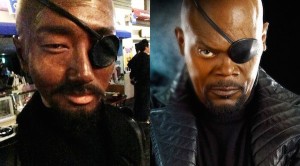
In 2013 and 2014, the industry faced significant backlash when members of established groups, such as Super Junior’s Yesung, were seen in blackface—a practice rooted in 19th-century American minstrelsy designed to dehumanize Black people. While many domestic fans defended these actions as "cluelessness" or "simple parody," international fans, particularly those in the African diaspora, identified it as a profound lack of respect for global racial history.

The issue of fashion has also been a recurring point of contention. The appearance of the Confederate flag in K-pop music videos and stage outfits—seen in various contexts over the last decade—highlights a specific type of cultural blind spot. In South Korea, the flag is often viewed through a lens of "Western rebellion" or "Americana" without an understanding of its ties to slavery and white supremacy. When fans raise these concerns, they are often met with the "Kanye West defense," wherein defenders cite Black artists who have used the imagery as a shield for K-pop idols. This creates a rift within the fandom, as Black fans argue that the actions of a single Black celebrity do not grant a universal license for the appropriation of harmful symbols.
The Roundtable Perspective: Appropriation versus Appreciation
In a recent discourse involving prominent voices within the Black K-pop fan community, contributors Camiele, Cjontai, and Taylore highlighted the nuances of "acting Black" as a marketing gimmick. They noted that groups like 4Minute and soloists like Keith Ape have occasionally crossed the line from homage to appropriation. Camiele argued that appropriation occurs when an artist uses another’s culture as a costume while claiming the right to use it however they see fit, often without doing the basic research required to understand the historical significance of the style.

A primary critique leveled by these fans is that as K-pop companies "desperately wish to crossover to the States," they often refuse to engage with the cultural sensitivities of the very markets they are targeting. This is particularly evident in the "hip-hop concept," which is frequently discarded once a group achieves a certain level of popularity. For fans, this reinforces the idea that Black culture is viewed as a "magic spell" for instant "coolness" or authenticity, rather than a respected art form.
Data and Demographics: The Invisibility of the Black Fan
While exact demographic data for the global K-pop fandom is difficult to pin down, market research indicates that the "Hallyu Wave" has found a massive audience in the United States, Brazil, and several African nations. Despite this, Black fans often report a feeling of invisibility within the fan-produced content that sustains the community.
In the realm of fan fiction and "reader-insert" stories, descriptions of physical traits often cater to a default Eurocentric or East Asian aesthetic. Taylore noted that specific details, such as a character "running his hands through hair," often fail to resonate with Black fans whose hair textures do not fit that mold. This lack of representation in fan spaces mirrors the "exoticization" of Black sensuality often seen in Korean media, where Black women are frequently compared only to global superstars like Beyoncé or Nicki Minaj, ignoring the diversity of the Black experience.
Official Responses and the Path to Cultural Competency
The reaction of Korean entertainment agencies to these controversies has been inconsistent, though some signs of progress have emerged. Seven Seasons, the agency formerly representing Block B, has been noted for its willingness to engage with international fans. When leader Zico or other members were called out for using racial slurs or mocking "Black style," the agency reportedly responded positively to educational efforts from fanbases.

However, the "let it slide" mentality remains prevalent among non-Black fans. This passive-aggressive dismissal—often labeling Black fans as "fake outraged"—perpetuates a hierarchy within the fandom where the feelings of marginalized groups are treated as secondary to the protection of an idol’s image.
The industry is currently at a crossroads. As K-pop becomes a truly global product, the "isolationism" that once shielded domestic artists from international criticism is no longer viable. The inclusion of Black producers like Teddy Riley, who worked with Girls’ Generation and EXO, and Rodney Jerkins, who contributed to SHINee’s discography, suggests a move toward a more collaborative and respectful exchange. Yet, the burden of education continues to fall largely on the fans.

Broader Impact and the Future of the Kaleidoscope
The tension between Korean artists and Black culture is not merely about "political correctness"; it is about the integrity of the music itself. For many Black fans, the decision to remain in the fandom is driven by a genuine love for the music’s quality and the talent of the performers. As Cjontai observed, the influence of Black artists is so pervasive that without it, the modern K-pop landscape—featuring R&B, hip-hop, and soul—would essentially cease to exist.
The future of K-pop’s global dominance may depend on its ability to transition from a model of imitation to one of informed collaboration. This requires a shift in how agencies train their idols, moving beyond vocal and dance lessons to include cultural competency and historical education. For the "kaleidoscope of colors" in music to truly shine, there must be a foundational respect for the roots of the sound.
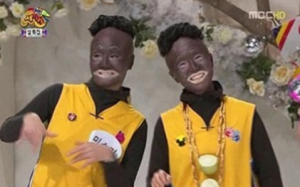
Ultimately, the voices of Black fans serve as a vital corrective in a rapidly globalizing industry. Their demand for respect is not an act of "bullying" or "cancel culture," but an invitation for K-pop to live up to its potential as a bridge between cultures. As the genre continues to evolve, the hope is that it will move past the era of the "minstrel show" and toward a future where the appreciation of Black culture is as deep as the music it inspires.
Related News