Rising Fifth-Gen Female Idol Pressures Fans To Stream Their Song
Article Editorial Team

The competitive landscape of the South Korean music industry has long been defined by the symbiotic relationship between idols and their dedicated fanbases, a dynamic that was recently highlighted by Woni, a member of the rising fifth-generation girl group RESCENE. During a candid interaction with fans on a private messaging platform, Woni garnered significant attention for her humorous and transparent approach to music chart rankings. What began as a standard message of gratitude for fan support quickly evolved into a lighthearted "demand" for continued streaming efforts as the group’s latest track began to climb the domestic real-time charts. This interaction has sparked a broader conversation regarding the transparency of chart ambitions in the fifth generation of K-pop and the evolving nature of idol-to-fan communication.
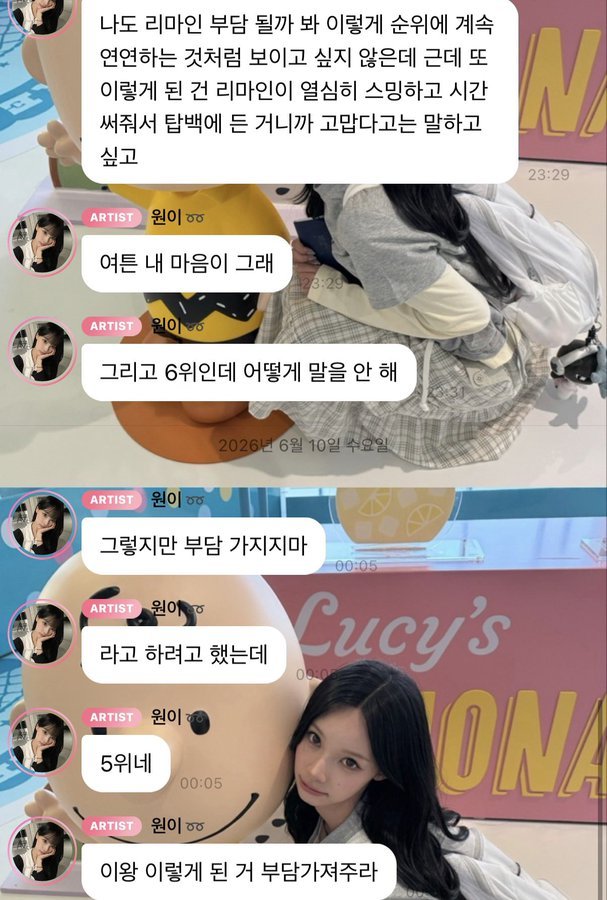
The exchange occurred during a period of active promotion for RESCENE, a group that has been steadily gaining traction since their debut under The Muze Entertainment. Woni initially reached out to her followers to express her appreciation for their dedication, acknowledging the labor-intensive nature of digital streaming—a practice where fans play a song repeatedly to boost its position on major South Korean music platforms such as Melon, Bugs, and Genie. In her opening messages, Woni adopted a humble tone, stating that she did not want to become overly fixated on numerical success, as such a focus could inadvertently place an emotional or logistical burden on the group’s supporters.
However, as the conversation progressed in real-time, the group’s chart position saw a sudden and significant uptick. Upon realizing that their song had broken into the upper echelons of the Top 100 and was currently sitting at number six, Woni’s rhetoric shifted. The idol noted the difficulty of remaining indifferent to rankings when success was so tangibly within reach. When the song moved up one more spot to number five during the chat session, Woni jokingly retracted her previous statement about avoiding pressure. "Ok, well, since we’ve gotten this far, please feel the pressure," she told fans, effectively turning a moment of professional anxiety into a shared comedic milestone.

The Rise of RESCENE and the Fifth-Generation Context
To understand the weight of Woni’s comments, one must look at the current state of the K-pop industry, specifically the emergence of the "fifth generation." While the definitions of K-pop generations are often debated by critics and fans alike, the fifth generation is generally categorized by groups that debuted from late 2023 onwards. These groups face a market that is more saturated than ever before, dominated by "Big 4" agencies—HYBE, SM, YG, and JYP Entertainment—which possess massive marketing budgets and established global distribution networks.
RESCENE, consisting of members Woni, Liv, Minami, May, and Zena, represents a contingent of groups from mid-sized or independent labels striving for visibility. Debuting in March 2024 with their single album Re:Scene and the title track "UhUh," the group quickly established a reputation for high-quality production and a sophisticated "floral" concept. For a group from a smaller agency, digital chart performance is not merely a matter of prestige; it is a critical metric for survival. High chart rankings lead to increased brand reputation scores, more lucrative advertising deals, and invitations to major year-end award ceremonies and music festivals.
The Mechanics and Stakes of Digital Charting
In South Korea, the digital music charts are the primary barometer of a song’s public impact. While physical album sales are often driven by collectors and "bulk buying" within the fandom, digital streaming reflects a combination of fandom power and general public interest. Platforms like Melon and Bugs have complex algorithms designed to prevent manipulation, making a Top 10 entry a significant achievement for any artist.
For fifth-generation idols, the pressure to perform digitally is immense. The "streaming culture" involves fans organizing "streaming parties" and following strict guides to ensure their listens count toward the charts. This process can be exhausting and expensive, leading to "fan burnout." Woni’s initial hesitation to pressure her fans reflects a growing awareness among idols of the sacrifices their supporters make. However, her eventual "pressure" comment highlights the reality that in the K-pop ecosystem, an idol’s career trajectory is inextricably linked to these metrics.

Chronology of the Chart Ascent
The timeline of RESCENE’s recent chart success provides context for Woni’s excitement. The group had been promoting their comeback with a focus on building a "steady seller" reputation. Unlike groups that see a massive spike on day one and then disappear, RESCENE’s growth has been characterized by "reverse running"—a term used in the Korean industry for songs that climb the charts weeks after their release due to viral clips or word-of-mouth.
- Initial Release: The track debuted outside the Top 100 on most major platforms, a common occurrence for groups without a massive pre-established global following.
- Viral Momentum: Through a series of high-quality "reels" and short-form video content, the song began to gain traction among non-fans.
- The Chart Break-In: On the day of the chat, the song entered the Top 20 on the Bugs real-time chart.
- The Real-Time Climb: During Woni’s interaction with fans, the song moved from number 12 to number 6, and finally peaked at number 5 during the 30-minute window of her conversation.
This rapid ascent in real-time is what prompted Woni’s shift in tone. For an idol watching their hard work manifest in real-time data, the excitement often overrides the standard PR-trained responses of "rankings don’t matter."
Industry Analysis: The Evolution of Idol-Fan Communication
Woni’s comments are indicative of a broader shift in how idols interact with their audience. In previous generations, the "fourth wall" between the artist and the fan was rarely broken. Idols were expected to maintain a certain level of mystery and were discouraged from discussing the "business" side of the industry, such as sales targets or chart rankings, to avoid appearing overly commercial.
However, the advent of direct-to-fan communication apps like Bubble, Weverse, and Fromm has fostered a more intimate and transparent environment. Fans today often view themselves as "partners" in an idol’s success rather than just consumers. By jokingly telling fans to "feel the pressure," Woni was acknowledging this partnership. She treated her fans as confidants who shared her stakes in the group’s success, rather than as a distant audience.
Market analysts suggest that this level of honesty can actually increase fan loyalty. When an idol is transparent about their goals, fans feel a greater sense of agency and contribution when those goals are met. This "gamification" of music consumption is a cornerstone of modern K-pop marketing, and Woni’s intuitive grasp of this dynamic has been praised by netizens.
Netizen and Public Reaction
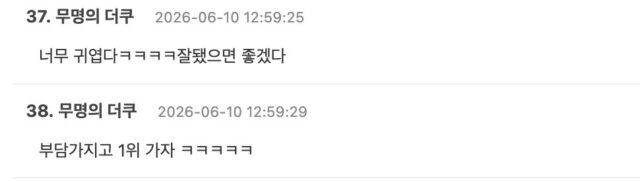
The reaction to Woni’s messages on South Korean community hubs like theqoo and Nate Pann was overwhelmingly positive. Netizens found her honesty refreshing and "cute," noting that her change of heart was a natural human reaction to seeing success in real-time.
"It’s so much better when they are honest about wanting to do well," one user commented. "I’d rather an idol tell me to stream because they’re excited about the rank than act like they don’t care when they clearly do." Another netizen remarked, "She went from ‘don’t worry about it’ to ‘actually, we’re so close, let’s go!’ in five minutes. That’s the most relatable thing an idol has ever said."
This positive reception is crucial for RESCENE. In an era where "fan service" can sometimes feel manufactured, authentic moments like these help build a unique identity for a group. It positions RESCENE not just as a talented musical act, but as a group with relatable, grounded personalities.
Broader Implications for the K-pop Ecosystem
The incident with Woni and RESCENE serves as a microcosm of the challenges and opportunities facing independent K-pop labels today. While the "Big 4" dominate the charts through sheer volume and infrastructure, smaller groups must rely on personality, viral moments, and intense fan engagement to carve out a space.
Woni’s "pressure" comment, while lighthearted, also underscores the precarious nature of the industry. For a fifth-generation group, a Top 5 position on a real-time chart is a lifeline. It ensures that the group will be considered for music show wins, which in turn leads to more public exposure. The fact that the public responded with encouragement rather than criticism suggests a growing empathy for the pressures placed on young artists in the digital age.
As RESCENE continues their promotional cycle, the momentum generated by this viral interaction is expected to sustain their chart positions. The group’s ability to turn a stressful metric into a bonding moment with their fanbase may well become a blueprint for other rising artists navigating the high-stakes environment of the Korean music industry.
In conclusion, Woni’s candidness has not only humanized the mechanical process of digital streaming but has also solidified RESCENE’s standing as a group to watch in the fifth generation. By bridging the gap between professional ambition and fan appreciation, she has demonstrated that in the modern K-pop landscape, transparency and humor can be just as effective as a high-budget marketing campaign. The "pressure" she jokingly placed on her fans has, in reality, transformed into a collective drive for the group’s continued ascent in the industry.
Related News