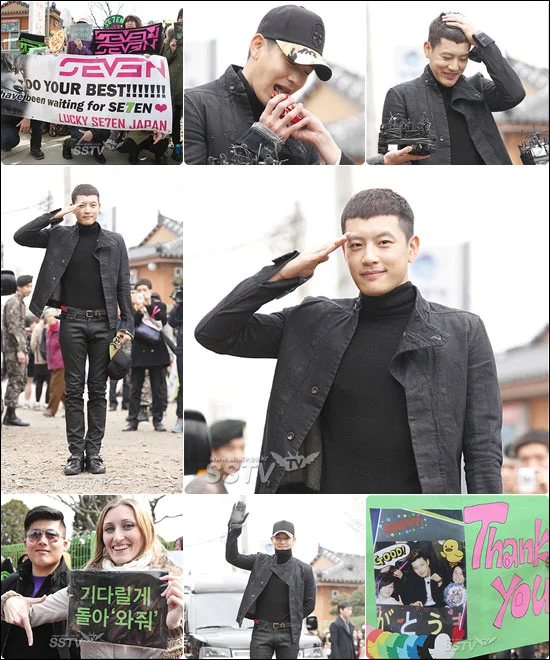
The South Korean Ministry of National Defense has officially announced the dissolution of the "celebrity recruit" system, a specialized unit within the Defense Media Agency, following a high-profile scandal involving prominent K-pop stars Choi Dong-wook (known as Se7en) and Lee Sang-chul (known as Sangchu of the duo Mighty Mouth). The decision follows an intense investigation triggered by an undercover report by the SBS current affairs program "On Site 21," which captured the soldiers engaging in activities that directly violated military regulations and ethical standards. This move marks the end of a 16-year-old program designed to boost troop morale and promote the military through public relations, as the government seeks to restore public trust in the integrity of the nation’s mandatory conscription system.
The Foundations of Mandatory Service in South Korea
To understand the gravity of the controversy, one must first consider the cultural and political weight of military service in the Republic of Korea. Under the Military Service Act, all able-bodied South Korean men are required to serve approximately 21 months in the armed forces (the duration varies slightly by branch). This requirement stems from the ongoing state of technical warfare between North and South Korea, following the 1953 armistice that paused but did not formally end the Korean War.
Military service is widely regarded as a fundamental rite of passage and a civic duty that transcends social class. For the general public, the "fairness" of this service is a sensitive issue. While exemptions exist for elite athletes who win Olympic medals or gold medals at the Asian Games, as well as for those with severe physical or mental health conditions, the vast majority of the population must serve during the prime of their youth. Any perception that the wealthy or famous are receiving preferential treatment is met with severe societal backlash, as it undermines the collective sacrifice of the nation’s young men.
The Rise and Fall of the Defense Media Agency PR Unit
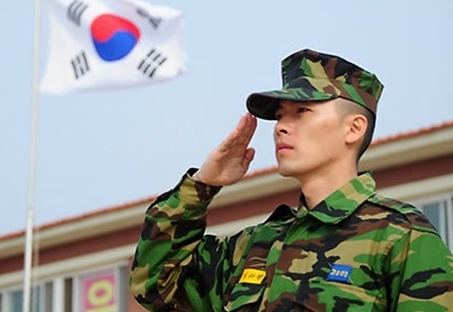
The celebrity recruit system, officially known as the Public Relations (PR) unit under the Defense Media Agency (DMA), was established in 1997. Its primary objective was to utilize the talents of enlisted entertainers to produce radio broadcasts, television content, and live performances for soldiers stationed in remote areas. For many years, the unit was seen as a "win-win" arrangement: the military gained high-quality promotional tools, and celebrities were able to maintain their public profiles while serving in a less physically demanding capacity than the infantry.
However, over the last decade, the unit became a lightning rod for criticism. Reports frequently surfaced regarding the "extravagant" lifestyles of celebrity recruits compared to their peers in active-duty combat units. While a standard soldier’s life involves strictly monitored schedules, limited communication with the outside world, and grueling physical training, celebrity recruits were often granted frequent leaves, permitted to wear civilian clothing for "promotional purposes," and allowed access to personal electronic devices.
Chronology of the 2013 Misconduct Scandal
The scandal that ultimately dismantled the unit began in late June 2013. On June 21, several celebrity recruits, including Se7en and Sangchu, traveled to Chuncheon to perform at a concert commemorating the 63rd anniversary of the Korean War. Following the performance, the soldiers did not return to their designated quarters according to military protocol.
On June 25, 2013, SBS’s "On Site 21" aired footage that shocked the nation. The investigative report showed Se7en and Sangchu leaving their motel in civilian clothes at approximately 2:30 AM. They were filmed using cellphones and eventually entering a massage parlor known for providing adult services. When confronted by SBS reporters outside the establishment at 4:00 AM, the two soldiers attempted to seize the camera and engaged in a physical altercation with the journalists.

The backlash was instantaneous and overwhelming. The Ministry of National Defense (MND) initially attempted to mitigate the damage by claiming the soldiers visited the parlor for "knee therapy," a defense that was widely mocked by the public. As the investigation deepened, it was revealed that the soldiers had also consumed alcohol—a strict violation of military law for on-duty personnel—and had bypassed multiple layers of supervision.
Supporting Data: The Disparity in Service Conditions
The "On Site 21" report and subsequent audits by the Ministry of Defense provided quantifiable evidence of the disparities between celebrity recruits and regular soldiers. Data released during the investigation highlighted several key areas of concern:
- Vacation and Leave: Statistics indicated that celebrity recruits received significantly more days off than active-duty soldiers. On average, a regular soldier received approximately 43 days of leave throughout their entire 21-month service. In contrast, some celebrity recruits were found to have taken over 150 days of leave, nearly triple the standard amount.
- Infrastructure and Perks: The celebrity recruit headquarters was found to be equipped with amenities unavailable to regular units, including private gyms, gaming consoles (PlayStation), high-speed internet access, and a wardrobe of civilian clothing.
- Disciplinary Leniency: Prior to the Se7en incident, the singer Rain (Jung Ji-hoon) had been involved in a 2013 controversy for meeting his girlfriend, actress Kim Tae-hee, while on official duty. His punishment was a mere seven days of confinement, a sentence many viewed as a "slap on the wrist" compared to the severe penalties a regular soldier would face for similar unauthorized movements.
Official Responses and the Decision to Abolish
On July 18, 2013, the Ministry of National Defense held a press conference to announce the results of their special audit. The Ministry admitted that the PR unit was "poorly managed" and that the celebrity recruits had "damaged the image of the military."
The Ministry announced the following disciplinary measures:

- Seven celebrity recruits, including Se7en and Sangchu, were sentenced to military prison (confinement) for periods ranging from 10 to 11 days for violating service regulations.
- The Public Relations unit was officially abolished.
- The remaining 15 celebrity recruits who were not under investigation for the massage parlor incident were reassigned to standard field units to serve out the remainder of their terms as regular soldiers.
In an official statement, a spokesperson for the Ministry said, "We have decided to abolish the celebrity recruit system as it has failed to meet its objective of promoting the military and has instead caused unnecessary friction and a sense of inequality among our troops."
Broader Implications and Societal Impact
The abolition of the celebrity recruit system has had a lasting impact on how the South Korean public perceives fame and national duty. The scandal served as a turning point, signaling that the "Hallyu" (Korean Wave) status of a star does not exempt them from the rigorous standards of the military.
Impact on the Entertainers’ Careers
For Se7en and Sangchu, the scandal was professionally devastating. Se7en, who was one of the biggest stars in Asia at the time and in a long-term public relationship with actress Park Han-byul, saw his reputation collapse overnight. The incident overshadowed his musical legacy, and upon his discharge, he faced a significantly colder reception from the domestic market. The scandal also highlighted the risks agencies take when their stars fail to navigate the mandatory service period with humility.
Shift in Military PR Strategy
Since 2013, the ROK military has shifted its PR strategy. Instead of a dedicated unit of "celebrity soldiers" who receive special perks, the military now utilizes famous soldiers who are serving in regular units for specific events. High-profile stars like Hyun Bin, Gong Yoo, and more recently, members of BTS, have been praised for serving in "hardship" units (such as the Marine Corps or active duty on the front lines). This "exemplary service" model has proven far more effective at boosting military prestige than the previous PR unit.

The Debate on Fairness
The incident sparked a wider debate about whether Hallyu stars should receive exemptions similar to Olympic athletes. While some industry experts argue that K-pop stars contribute billions to the economy and boost South Korea’s "soft power" globally, the 2013 scandal effectively silenced these arguments for a decade. The prevailing public sentiment remains that if a celebrity wants to be treated as a "person of the people," they must endure the same hardships as the average citizen.
Conclusion
The 2013 celebrity recruit scandal was more than a tabloid story; it was a significant cultural event that forced a reorganization of one of South Korea’s most rigid institutions. By abolishing the PR unit, the Ministry of National Defense sent a clear message that the integrity of national defense outweighs the benefits of celebrity-led promotion. As the dust settled, the incident stood as a reminder that in a society built on the collective sacrifice of its youth, fairness is the most valuable currency. The transition of celebrities into regular active-duty roles in the years since has helped mend the rift between the entertainment industry and the military, ensuring that the "shared experience" of service remains a unifying, rather than a divisive, force in South Korean society.