South Korea Clarifies Overexposure Law Amid International Media Speculation on Dress Code Restrictions
Article Editorial Team

The South Korean government, under the administration of President Park Geun-hye, implemented a revised Minor Offenses Act in late March 2013, sparking a significant domestic and international debate regarding personal expression and state overreach. While initial reports in both local social media circles and Western news outlets suggested a return to the restrictive dress codes of the 1970s—specifically targeting the length of miniskirts—the National Police Agency (NPA) has since clarified that the legislation is a standard measure against public indecency rather than a specific mandate on fashion. The law, which imposes a fine of 50,000 South Korean Won (approximately $45 to $48 USD), aims to regulate "excessive exposure" that causes discomfort or offense in public spaces, yet its timing and the historical baggage of the Park presidency have led to a complex socio-political controversy.
The Legislative Framework of the Overexposure Law
The controversy centers on an amendment to the Minor Offenses Act, which was approved during a cabinet meeting presided over by President Park Geun-hye shortly after her inauguration. The law defines overexposure as "showing one’s naked body or exposing parts of the body that should be covered in a way that causes feelings of shame or discomfort to others." According to the Ministry of Government Legislation, the revision was intended to streamline the fine system for various minor infractions, ranging from public smoking to indecency.
Under the updated statutes, individuals found guilty of public indecency are subject to a summary fine. Government officials have emphasized that the primary goal of the law is to curb behaviors such as "streaking" or public nudity, rather than to monitor the daily attire of the general public. However, the vague wording of the phrase "exposing parts of the body that should be covered" led to immediate concerns regarding how the law would be interpreted by law enforcement officers on the ground.
Chronology of the Controversy
The rollout of the law followed a specific timeline that highlights how a domestic administrative update evolved into a global media sensation:

- March 11, 2013: President Park Geun-hye presides over her first cabinet meeting, where the revision of the Minor Offenses Act is discussed and approved.
- March 12–20, 2013: News of the "overexposure" clause begins to circulate on South Korean social media platforms. Opposition politicians and celebrities express concern that the law grants police too much discretionary power.
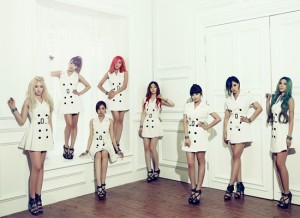
- March 21, 2013: International media outlets, including the Daily Mail and CNN, publish reports suggesting South Korea is "banning miniskirts." These articles often link the new law to the K-pop industry, speculating that popular girl groups would be forced to change their stage costumes.
- March 22, 2013: The South Korean National Police Agency issues a formal clarification. Officials explain that the law is an update to an existing 1973 statute and that there are no plans to measure skirt lengths or regulate street fashion.
- March 23, 2013: Government representatives clarify that the fine for overexposure actually decreased or remained consistent with previous standards, and the "revision" was largely a technicality to allow for "on-the-spot" ticketing rather than a full court summons.
Historical Context: The Legacy of Park Chung-hee
The intense public reaction to the 2013 law cannot be understood without acknowledging the historical context of the 1970s. President Park Geun-hye is the daughter of Park Chung-hee, the military leader who ruled South Korea from 1961 to 1979. During the elder Park’s "Yusin" era, the government enforced strict social controls in the name of national discipline and public morality.
During this period, police officers were famously equipped with bamboo rulers to measure the skirts of young women in public. If a skirt was more than 20 centimeters above the knee, the wearer could be detained or fined. Simultaneously, men with long hair were subjected to forced haircuts on the street. For many South Koreans, particularly the older generation who lived through the dictatorship and the younger generation who value liberal democracy, the phrase "overexposure law" triggered a traumatic cultural memory of state-mandated aesthetics.
The opposition Democratic United Party utilized this sentiment, with representatives such as Ki-sik Kim stating that the law "infringes on the citizens’ right to self-expression" and accusing the administration of having a "Yusin-style mindset."
Social Media and the Role of Cultural Figures
The escalation of the "miniskirt ban" narrative was significantly fueled by South Korean celebrities. Lee Hyori, a prominent K-pop soloist and fashion icon known for her bold style, posted a message on her Twitter account questioning the law: "Is the overexposure fine for real? I’m so dead." Her comment was shared thousands of times, cementing the idea in the public consciousness that the law was a direct threat to the modern fashion industry and the K-pop "Hallyu" wave.
Other netizens began posting satirical photos of themselves in long, traditional Hanbok or 19th-century Victorian-style clothing, mocking what they perceived as a regressive policy. This digital backlash caught the attention of foreign correspondents, who framed the story as a clash between South Korea’s hyper-modern pop culture and a conservative, traditionalist government.
Supporting Data and Comparative Analysis
In reality, South Korea’s public indecency laws are not unique in the international community. Many Western nations maintain similar "disorderly conduct" or "indecent exposure" statutes:
- United States: Most states have laws against "public indecency" or "lewd and lascivious behavior." While definitions vary, they generally prohibit the intentional exposure of genitals in a public place.
- United Kingdom: The Sexual Offences Act 2003 prohibits "intentional exposure" intended to cause alarm or distress.
- Singapore: The Miscellaneous Offences (Public Order and Nuisance) Act strictly prohibits nudity in public and even within private views that are visible to the public.
In South Korea, the 2013 revision actually simplified the legal process. Prior to the amendment, individuals caught for public indecency had to undergo a lengthy summary trial. The new law allowed for a simpler "on-the-spot" fine system, similar to a traffic ticket. According to police data, the number of citations for public indecency has remained relatively stable over the last decade, with the majority of cases involving public urination or "flashing" rather than fashion choices.
Official Responses and Clarifications
To quell the rising tide of misinformation, the National Police Agency released a series of infographics and statements. A spokesperson for the NPA stated, "The reports that we will be regulating what people wear are completely false. This law is specifically for extreme cases of public nudity that cause a nuisance. There is no intention to measure skirt lengths or hair lengths like in the 1970s."
Presidential spokesperson Yoon Chang-jung also addressed the media, expressing regret that the administrative update was being "misinterpreted for political purposes." He emphasized that the Park Geun-hye administration was committed to the "creative economy" and individual freedoms, and that the minor offense revisions were merely meant to ensure public safety and order.
Broader Impact and Implications
The "Overexposure Law" incident serves as a case study in the power of historical trauma to shape modern political discourse. Even though the law was a routine administrative update, the identity of the president and the nation’s past experiences with authoritarianism created a "perfect storm" for controversy.
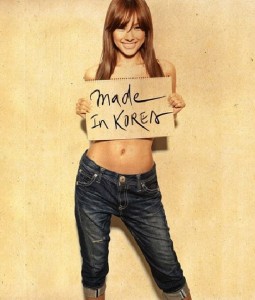
Furthermore, the incident highlighted the vulnerabilities of the modern news cycle. The rapid spread of the "miniskirt ban" headline illustrates how nuance is often lost when a story moves from local social media to international news aggregators. For the K-pop industry, the controversy briefly raised questions about the limits of government intervention in cultural exports, though the industry ultimately saw no changes to its operations or aesthetic standards.
As of today, South Korea remains one of the world’s leading fashion hubs, with miniskirts and "hot pants" remaining staples of both street style and stage performances. The 2013 controversy remains a notable example of how public perception and historical context can overshadow the technical reality of legislation, requiring governments to be increasingly sensitive to the cultural implications of their policy terminology.
Related News