
The South Korean government, under the newly inaugurated administration of President Park Geun-hye, implemented a revised Minor Offenses Act in late March 2013, sparking a nationwide and international debate regarding personal freedom, dress codes, and the legacy of authoritarianism. The legislative update, which includes a provision for a 50,000 KRW (approximately $45–$48 USD) fine for "overexposure" in public, was met with immediate criticism from civil rights groups, opposition politicians, and high-profile celebrities. However, as the news circulated through global media channels, a significant disconnect emerged between the technical language of the law and its popular interpretation, leading to widespread reports that the country had effectively banned the wearing of miniskirts.
The controversy centers on the definition of "indecent exposure" and the potential for police overreach. While the administration maintained that the law was a standard update to existing statutes aimed at curbing public indecency—such as public urination or complete nudity—the historical context of the Republic of Korea’s previous era of dress regulation lent weight to public fears. The tension highlighted the sensitive balance between public order and individual expression in a society that has transitioned from a military dictatorship to a vibrant democracy within a few decades.
Chronology of the Legislative Revision
The path to the current controversy began in late 2012, during the final months of the Lee Myung-bak administration, when the National Assembly discussed updating the Minor Offenses Act to reflect modern social standards and inflation. The bill was formally approved during a cabinet meeting on March 11, 2013, chaired by President Park Geun-hye, just weeks after her inauguration.
The law officially went into effect on March 22, 2013. The revisions covered 28 different minor offenses, ranging from stalking and persistent harassment to queue-jumping and littering. Among these was the controversial "overexposure" clause, which stipulated that individuals who "cause discomfort to others by excessively exposing their bodies or revealing parts of the body that should remain covered" would be subject to a summary fine.

The timing of the law’s enactment was particularly sensitive. President Park Geun-hye is the daughter of the late Park Chung-hee, who ruled South Korea with an iron fist from 1961 to 1979. During her father’s "Yushin" era in the 1970s, the government exercised strict control over the personal appearance of its citizens. This included the infamous "miniskirt measurements," where police officers used rulers to ensure that skirts did not end more than 20 centimeters above the knee, and the forced cutting of long hair on men. Consequently, the introduction of a new "overexposure" law under the daughter of the former dictator triggered deep-seated historical anxieties.
Supporting Data and Legal Specifications
To understand the scope of the law, it is necessary to examine the specific legal language. The revision targeted "public indecency" under Article 3, Paragraph 1, Item 33 of the Minor Offenses Act. The fine for this violation was set at 50,000 KRW, which is consistent with other minor violations such as public spitting or smoking in prohibited areas.
According to data provided by the National Police Agency (NPA), the previous version of the law already contained provisions for public indecency, but the penalties were often inconsistent or required a more lengthy court process. The 2013 revision was intended to streamline the process through summary fines. Police officials clarified that the law was specifically designed to address "lewd behavior" and "obscene acts" that fell short of criminal sexual exposure but still disturbed public order.
In a press briefing following the public outcry, an NPA spokesperson stated, "The amendment is not about what ordinary people wear in their daily lives. It is about punishing those who cause extreme discomfort through public nudity or by exposing private parts in a manner that constitutes a nuisance." The police further clarified that the length of a skirt or the depth of a neckline on a standard garment would not constitute a violation of the act.
Public and Political Reactions
The initial reaction from the South Korean public was fueled largely by social media. Lee Hyori, a prominent K-pop soloist and fashion icon, posted a message on her Twitter account expressing concern: "Is the overexposure fine for real? I’m so dead." Given Lee’s status as a trendsetter known for her bold fashion choices, her comment went viral, amplifying fears that the K-pop industry—a major driver of the Korean Wave (Hallyu)—would be censored.
Political opposition was equally vocal. Ki-sik Kim, a member of the then-opposition Democratic United Party, criticized the government for what he described as "anachronistic" legislation. "The government is trying to regulate the way citizens dress, which is a fundamental violation of personal liberty," Kim stated in a parliamentary session. He and other critics argued that the vague phrasing of "causing discomfort to others" gave the police too much discretionary power, potentially allowing for subjective enforcement based on a particular officer’s moral standards.
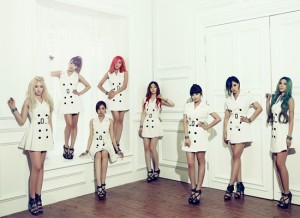
International media outlets, including CNN and The Daily Mail, picked up the story, often utilizing sensationalist headlines that suggested South Korea was returning to the 1970s. These reports frequently featured images of K-pop groups like Girls’ Generation or T-ara, implying that their stage outfits would now be illegal. This global coverage contributed to a perception of South Korea as a repressive state, contradicting the image of a modern, high-tech nation the government had worked hard to project.
Historical Context: The Legacy of the Yushin Era
The intensity of the backlash cannot be understood without reference to the 1970s. Under the Park Chung-hee administration, the "Emergency Measure No. 9" and other decrees were used to suppress dissent and enforce a conservative social order. The "Social Purification" campaigns of that era were not merely about fashion; they were a tool of social control meant to eliminate "Western decadence" and ensure that the youth were focused on national development and anti-communist vigilance.
During this period, the "Miniskirt Law" became a symbol of state intrusion into the private lives of individuals. The sight of police officers chasing young women to measure their hemlines remains a potent cultural memory in South Korea, often depicted in films and television dramas as a hallmark of the era’s absurdity. Because President Park Geun-hye’s political identity was inextricably linked to her father’s legacy, any policy that even remotely resembled his social controls was viewed through a lens of suspicion.
Broader Impact and Implications
The "overexposure" controversy serves as a case study in the challenges of legislative clarity and the power of digital-era misinformation. While the law was legally a minor update to public nuisance statutes, the lack of clear communication from the government allowed a vacuum to form, which was quickly filled by historical trauma and social media hyperbole.

For the South Korean government, the incident highlighted the need for greater transparency and sensitivity when dealing with laws that touch upon personal expression. In a mature democracy, the "vague" language of "discomfort" is often seen as a loophole for state overreach. Legal experts have since argued that for such laws to be effective and respected, they must be defined with extreme precision to prevent arbitrary enforcement.
Furthermore, the incident had a temporary but notable impact on the K-pop industry’s PR strategy. For a brief period, entertainment agencies were cautious about the "sexiness" of their concepts, fearing a potential crackdown. However, as it became clear that the police had no intention of patrolling music show sets or fashion runways, the industry returned to its usual standards.
In the long term, the 2013 overexposure law did not result in a "sea of long skirts." Instead, it underscored the vigilance of the South Korean citizenry in protecting their hard-won civil liberties. The rapid and loud response from the public served as a check on the administration, ensuring that the enforcement of the law remained focused on its intended purpose—maintaining public order—rather than regulating the fashion choices of a modern, democratic society.
Ultimately, the South Korean experience demonstrates that in the age of global connectivity, domestic policy is no longer local. A single clause in a minor legislative revision can become a global talking point, shaping international perceptions of a nation’s commitment to freedom and human rights. For South Korea, a country that prides itself on its rapid modernization, the controversy was a reminder that the shadows of the past are never far away, and that the protection of personal liberty requires constant public scrutiny of the law.