
The implementation of a revised ordinance targeting public indecency in South Korea has ignited a global debate regarding civil liberties, cultural expression, and the role of government in regulating personal attire. On March 22, 2013, the South Korean government, under the newly inaugurated administration of President Park Geun-hye, enacted an amendment to the Minor Offenses Act. This legislation, which includes a provision against "overexposure" in public spaces, carries a fixed fine of 50,000 Korean Won (approximately $45 USD). While the government maintains that the law is a technical update to existing public order statutes, it has faced significant scrutiny from domestic critics and international media outlets, many of whom have characterized the move as a return to the authoritarian social controls of the 20th century.
Legislative Background and Legal Definitions
The controversy centers on an amendment to the Minor Offenses Act, a body of law that governs low-level disruptions such as littering, public intoxication, and disruptive behavior. The specific clause in question prohibits "excessive exposure" that causes discomfort or offense to others in public areas. According to the National Police Agency (NPA), the law was designed to provide a clearer legal framework for penalizing acts of public nudity, lewdness, and "streaking."
Prior to the 2013 amendment, public indecency was often prosecuted under broader, more ambiguous statutes that could lead to heavier penalties or court appearances. The government argued that by categorizing "overexposure" as a minor offense with a set fine, they were actually streamlining the judicial process and making the law more predictable. However, the lack of specific language defining what constitutes "excessive exposure" led to immediate concerns that the law could be applied subjectively by law enforcement officers to target fashion choices, specifically miniskirts and short-shorts, which are staples of South Korean street fashion and the K-pop industry.
Historical Context: The Shadow of the Yushin Era
To understand the intensity of the public reaction in 2013, one must look to the historical precedent set during the 1970s. President Park Geun-hye is the daughter of the late Park Chung-hee, a military leader who ruled South Korea with an iron fist from 1961 until his assassination in 1979. During the "Yushin" era of the 1970s, the elder Park’s administration implemented strict social regulations intended to promote "public morality" and national discipline.

Under the Yushin-era Minor Offenses Act, police officers were famously equipped with bamboo rulers to measure the length of women’s skirts. If a skirt ended more than 20 centimeters above the knee, the wearer could be fined or detained. Similarly, men were subject to regulations regarding hair length; those with hair deemed too long were often forced to receive haircuts on the spot by police. For many South Koreans, these measures symbolized the repressive nature of the military dictatorship. Consequently, when the younger Park’s administration introduced a law using the term "overexposure" shortly after her inauguration, it triggered deep-seated cultural anxieties and accusations of "like father, like daughter" governance.
Chronology of the 2013 Controversy
The timeline of the "overexposure" controversy reveals a rapid escalation from a routine cabinet meeting to an international media sensation:
- March 11, 2013: The first cabinet meeting presided over by President Park Geun-hye approves a series of amendments to the Minor Offenses Act.
- March 12–20, 2013: Domestic news of the "overexposure fine" begins to circulate on South Korean social media platforms. High-profile celebrities and opposition politicians express concern.
- March 21, 2013: The National Police Agency issues a formal clarification, stating that the law does not target miniskirts but rather public nudity and indecent acts.
- March 22, 2013: The law officially takes effect. On the same day, major Western media outlets, including CNN and The Daily Mail, publish reports suggesting South Korea has "banned miniskirts."
- Late March 2013: The Blue House (the presidential residence) is forced to issue a statement denying that the law regulates women’s fashion, attributing the controversy to a misunderstanding of the legislative intent.
The Role of Celebrity and Social Media
The spread of misinformation regarding the law was significantly bolstered by social media commentary from influential South Korean figures. Pop icon Lee Hyori, known for her bold fashion and "sexy" image, tweeted to her millions of followers, "Is the overexposure fine for real? I’m so dead," implying that her stage outfits would make her a primary target for the police. Her comment was widely shared and cited by news agencies as evidence of the law’s potential impact on the entertainment industry.
Opposition politicians also utilized the law as a tool for political critique. Members of the Democratic United Party argued that the government was attempting to "regulate the way citizens dress," calling the legislation an infringement on personal freedom and a step backward for South Korea’s democracy. This political framing, combined with celebrity anxiety, created a narrative of a "morality police" force that was quickly adopted by international journalists looking for a sensationalist angle on South Korean society.
Media Sensationalism and International Perception
The "overexposure law" serves as a case study in how domestic legislative changes can be distorted by the global news cycle. Western outlets frequently framed the story as a direct attack on the K-pop industry, which was at the time experiencing a massive surge in global popularity (the "Hallyu" wave). Headlines suggesting that "SNSD" (Girls’ Generation) or "T-ara" would have to change their wardrobes generated high click-through rates but lacked factual grounding.
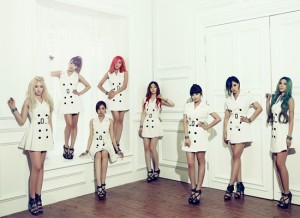
The reality, as clarified by the Seoul Metropolitan Police, was that the 2013 amendment was largely a reclassification of an existing law from the 1970s and 1980s. The "overexposure" clause had existed in the books for decades; the 2013 update merely adjusted the fine and the legal terminology. Despite this, the narrative of a "miniskirt ban" persisted in international discourse for weeks, painting South Korea as a regressive state despite its status as a leading global democracy and cultural powerhouse.
Supporting Data and Social Impact
Statistically, the enforcement of the overexposure law in the months following its enactment did not reflect the "fashion crackdown" feared by the public. Data from the National Police Agency indicated that the vast majority of citations issued under the revised Minor Offenses Act were related to:
- Public Urination: A persistent issue in nightlife districts such as Gangnam and Hongdae.
- Indecent Exposure: Specific acts of public nudity or "flashing" in residential areas.
- Disruptive Drunkenness: General disorderly conduct in public squares.
There were no recorded instances of women being fined for the length of their skirts or the style of their clothing in a manner reminiscent of the 1970s. However, the social impact of the law was felt in the increased scrutiny of the Park administration’s communication strategies. Critics pointed out that the government failed to anticipate the optics of passing such a law, given the President’s family history and the sensitive nature of civil liberties in a relatively young democracy.
Official Responses and Clarifications
In response to the mounting criticism, the National Police Agency held several press briefings to demystify the law. Inspector Ko Jun-ho of the NPA stated at the time, "The rumors that we will be measuring skirt lengths or checking the opacity of stockings are entirely groundless. This law is about public decency in its most literal sense—preventing nudity that causes genuine distress to the general public. It has nothing to do with fashion."
Furthermore, government spokespeople emphasized that the law was part of a broader effort to modernize the South Korean legal code. They argued that by setting a flat fine of 50,000 Won, the state was actually reducing the severity of punishments for minor indecency, which previously could have resulted in a criminal record if pursued under more serious "obscenity" charges.

Broader Implications and Analysis
The 2013 overexposure law controversy highlights the ongoing tension between traditional Confucian values and the rapid modernization of South Korean society. While the country is home to some of the world’s most cutting-edge technology and liberal pop culture, it remains a society where conservative elders hold significant political power. The "overexposure" law was, in many ways, an attempt to appease a conservative base that felt public decorum was sliding, but it was executed in a way that collided with the sensibilities of a younger, more globalized generation.
From a journalistic perspective, the event underscores the necessity of verifying domestic legal changes within their proper cultural and historical context. The "miniskirt ban" was a myth born of a combination of poorly phrased legislation, historical trauma, and the viral nature of social media.
In the years following 2013, the law has remained on the books but has largely faded from public consciousness. It has not hindered the K-pop industry’s growth, nor has it altered the landscape of South Korean fashion. Instead, it remains a footnote in the presidency of Park Geun-hye—a reminder of how the shadows of the past can influence the perception of the present, and how easily a technical legal amendment can be transformed into a symbol of cultural repression in the eyes of the world.