
In the spring of 2013, a legislative update in South Korea ignited an international media firestorm, highlighting the delicate balance between public decency laws and the preservation of personal freedoms. Shortly after the inauguration of President Park Geun-hye, the South Korean government implemented a revised Minor Offenses Act, which included a provision targeting "overexposure" in public spaces. While the law was intended to address public indecency and nudity, it was widely misinterpreted by both domestic celebrities and international news outlets as a regressive ban on miniskirts, a staple of modern South Korean fashion and the K-pop industry. This controversy not only revealed the sensitivity of the South Korean public toward government regulation of personal appearance but also underscored the complexities of reporting on foreign legal systems in a hyper-connected digital age.
The Legislative Context of the Overexposure Law
The controversy began following a cabinet meeting presided over by President Park Geun-hye on March 11, 2013. During this session, the government approved a revision to the Minor Offenses Act, which was slated to take effect on March 22. The specific clause that caught public attention stated that individuals who cause discomfort to others by "excessively exposing their bodies or revealing parts of the body that should be covered" would be subject to a fine of 50,000 Korean Won (approximately $45 to $48 USD at the time).
According to government officials, the amendment was not a new restriction but rather a procedural update. The "overexposure" clause had existed in South Korean law for decades; the 2013 revision merely shifted the penalty from a potential court appearance to a simplified "sticker" fine system, similar to a traffic ticket. The intent, as clarified by the National Police Agency, was to provide a legal basis for penalizing behaviors such as public streaking or indecent exposure in a way that was more efficient for law enforcement.
However, the timing of the law’s implementation was politically charged. As the first female president of South Korea and the daughter of the late military strongman Park Chung-hee, Park Geun-hye’s administration was under intense scrutiny. Critics were quick to draw parallels between the new law and the restrictive social policies of her father’s era, leading to a rapid spread of misinformation.
A History of Dress Regulation: The Shadow of the 1970s
To understand why the 2013 law caused such an immediate and visceral reaction, one must look back at the "Yushin" era of the 1970s under President Park Chung-hee. During this period, the South Korean government exercised strict control over the private lives of its citizens in the name of "public morality" and national discipline.

In 1973, the government enacted the Minor Offenses Act, which famously included regulations on the length of women’s skirts and the length of men’s hair. Police officers were equipped with bamboo rulers and would stop women on the streets to measure the distance between their knees and their hemlines. If a skirt ended more than 20 centimeters (about 7.8 inches) above the knee, the wearer could be fined or even detained. Similarly, men with hair deemed too long were subjected to forced haircuts at police stations.
These regulations became symbols of the authoritarian regime’s intrusion into personal autonomy. For the generation that lived through the 1970s, and for their children who grew up hearing these stories, any mention of "overexposure laws" or "decency regulations" carried the weight of historical trauma. When the 2013 revision was announced, the political opposition and social activists immediately framed it as a return to the "dictatorial" style of the past, using the slogan "Like Father, Like Daughter" to criticize President Park.
The Role of Social Media and Celebrity Influence
The transition of the story from a domestic legal update to a global viral sensation was accelerated by South Korean celebrities. Lee Hyori, a prominent K-pop icon and fashion trendsetter known for her bold style, was one of the first to comment on the matter. She tweeted, "Is the overexposure fine for real? I’m so dead," a remark that was meant to be humorous but was taken as a serious confirmation of the "miniskirt ban" by her millions of followers.
Following Lee Hyori’s post, other celebrities and netizens began posting photos of themselves in revealing outfits with captions mocking the law. The Democratic United Party, the main opposition at the time, capitalized on the sentiment. Ki-sik Kim, a member of the opposition, stated that the government was "infringing upon the rights of citizens to express themselves through their clothing."
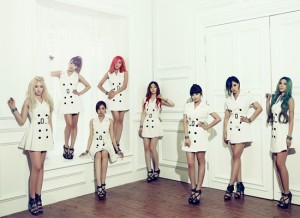
As the domestic outcry grew, international media outlets picked up the story. Headlines in publications like The Daily Mail and CNN suggested that South Korea was banning miniskirts entirely. These reports often featured images of K-pop groups like Girls’ Generation or T-ara, suggesting that the country’s massive music industry—which relies heavily on visual aesthetics and fashion—would be crippled by the new regulations.
Clarification from the National Police Agency
In response to the escalating hysteria, the South Korean National Police Agency (NPA) issued several clarifying statements to debunk the rumors of a miniskirt ban. On March 13, 2013, the NPA used its official social media channels to explain that the law had nothing to do with fashion or the length of skirts.
"The revision is about public indecency such as streaking or baring one’s private parts in a way that causes offense to others," an NPA spokesperson explained. "It has been part of the law since 1954. The only thing that changed was the method of punishment to make it more convenient for the public to pay fines without going to court."
The police further clarified that the law would not be applied to "normal clothing" worn in public, regardless of length. Despite these official assurances, the narrative of a "repressive fashion ban" continued to circulate online for weeks, demonstrating the difficulty of correcting misinformation once it has gained global momentum.
Chronology of the 2013 Controversy
- March 11, 2013: The Cabinet, led by President Park Geun-hye, approves a revision to the Minor Offenses Act during its first meeting.
- March 12, 2013: News of the "overexposure" clause spreads on Korean social media. Opposition politicians and celebrities express concern and mockery.
- March 13, 2013: The National Police Agency issues a clarification, stating the law targets public nudity, not miniskirts.
- March 15-20, 2013: International media outlets publish sensationalized reports claiming South Korea has banned miniskirts. The story goes viral globally.
- March 22, 2013: The revised Minor Offenses Act officially goes into effect.
- April 2013: Despite the new law, fashion trends in Seoul remain unchanged, and K-pop performances continue to feature short skirts and "hot pants," proving the initial fears were unfounded.
Supporting Data and Economic Context
The stakes of the controversy were particularly high due to the economic importance of the "Korean Wave" or Hallyu. By 2013, the K-pop industry was a multi-billion dollar global export. Fashion is intrinsically linked to the marketing of K-pop idols, with many groups serving as global ambassadors for luxury and streetwear brands.
- Fine Amount: 50,000 KRW (approx. $48 USD). For comparison, the fine for littering or smoking in non-smoking areas was typically between 30,000 and 100,000 KRW.
- Industry Scale: In 2012, the year before the law, South Korea’s cultural content exports (including music and fashion) were valued at approximately $4.6 billion.
- Public Perception: A survey conducted shortly after the law’s announcement showed that while the majority of South Koreans supported laws against public indecency, over 70% were wary of any legislation that could be subject to "arbitrary interpretation" by the police.
Analysis of Media Integrity and Cultural Sensitivity
The 2013 overexposure law incident serves as a case study in the pitfalls of international journalism. Many Western outlets failed to consult the actual text of the South Korean law or seek context from local legal experts. Instead, they relied on social media reactions and the historical narrative of the Park Chung-hee era to create a "clickable" story.
This "orientalist" framing often portrays Asian nations as either hyper-modern or deeply repressive, ignoring the nuances of their democratic processes. By painting South Korea as a country that would "ban miniskirts" in the 21st century, these reports ignored the robust civil society and legal protections that had been established since the country’s democratization in 1987.
Furthermore, the incident highlighted the "celebrity effect" in modern governance. The tweet from Lee Hyori carried more weight with the general public than official government press releases. This underscores the challenge modern governments face in communicating policy changes in an environment where influencer opinions can outpace factual reporting.

Broader Impact and Implications
Ultimately, the 2013 overexposure law did not result in a crackdown on fashion. South Korea remains one of the fashion capitals of the world, and the "short skirt" remains a common sight in districts like Gangnam and Hongdae. However, the controversy had lasting effects on the political discourse in the country.
It forced the Park Geun-hye administration to be more cautious regarding social legislation and underscored the public’s readiness to defend personal freedoms. For the police, it was a lesson in public relations, leading to more transparent communication strategies regarding the enforcement of minor offenses.
In the long term, the event stands as a reminder of the power of historical memory. In a nation that transitioned from a military dictatorship to a vibrant democracy in just a few decades, the fear of returning to the past remains a potent force in public life. The "miniskirt ban" that never was remains a significant footnote in the history of South Korean social policy, illustrating the complex intersection of law, history, and pop culture.