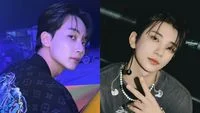
South Korean Actor Jeong Yoon Min’s Viral AI-Generated Brad Pitt Photo Sparks Global Debate on Digital Authenticity and Public Figure Responsibility.
Article Editorial Team

Seoul, South Korea – A seemingly innocuous social media post by South Korean actor Jeong Yoon Min ignited a widespread frenzy across the internet, briefly convincing millions that Hollywood icon Brad Pitt had made a clandestine visit to Seoul. The photograph, which depicted Jeong Yoon Min smiling alongside what appeared to be Brad Pitt in the picturesque Bukchon Hanok Village, rapidly went viral, sparking intense speculation among fans and entertainment media before being revealed as a sophisticated product of artificial intelligence. This incident, unfolding in early May 2026, has since become a potent case study on the accelerating capabilities of AI image generation, the challenges of digital verification, and the ethical responsibilities of public figures in the age of advanced digital tools.
The Genesis of a Digital Hoax: A Chronology of Events
The controversy began on Saturday, May 9, 2026, when actor Jeong Yoon Min, known for his roles in dramas such as Madame Antoine: The Love Therapist and Vagabond, uploaded a striking image to his personal Instagram account, @zzang_0809. The photo captured him standing beside a figure unmistakably resembling Brad Pitt, both appearing relaxed and smiling, with the traditional Korean architecture of Bukchon Hanok Village serving as a culturally rich backdrop. His accompanying caption, "Amazing, I met Brad Pitt in the alley of Bukchon," further cemented the illusion of a genuine encounter.
The realism of the image was immediately striking. The lighting, facial expressions, and overall composition were so convincing that the photo quickly circulated beyond Jeong Yoon Min’s immediate followers. Within hours, screenshots of the post saturated South Korean social media platforms, with countless netizens expressing shock, excitement, and disbelief. Major entertainment news outlets in Korea picked up the story, reporting on the unconfirmed sighting and speculating about the reasons behind Brad Pitt’s supposed unannounced visit. The absence of any official agenda or film promotion related to Pitt’s presence only fueled the public’s intrigue, making a ‘secret’ visit seem plausible, albeit highly unusual.
The fervor continued for nearly two days. Online discussions were rife with theories: Was Pitt in Seoul for a private vacation? A secret project? Or perhaps a quiet cultural immersion? However, as the initial excitement began to wane, a critical scrutiny emerged. Seasoned internet users and fan communities, accustomed to tracking celebrity movements, noted a significant lack of corroborating evidence. There were no other photos or videos from the public, no paparazzi sightings, and no leaks from airport staff or hotel employees – all common occurrences when a star of Pitt’s caliber visits a major city. Questions began to flood the comment section of Jeong Yoon Min’s Instagram post, challenging the authenticity of the photograph.
Facing mounting pressure and widespread inquiry, Jeong Yoon Min finally addressed the controversy. On May 11, 2026, he posted a clarification, admitting that the viral image was, in fact, an AI-generated creation. "I’m uploading this clarification because many people are asking if Brad Pitt visited Korea after seeing the photos in Bukchon. In short, this is an AI-generated photo," he wrote. He promptly deleted the original post, acknowledging the significant impact it had created.
The Uncanny Valley of AI: Why the Photo Was So Convincing
The incident vividly underscored the remarkable advancements in artificial intelligence, particularly in image synthesis. Modern AI models, trained on vast datasets of images, can now generate hyper-realistic visuals that are increasingly difficult to distinguish from genuine photographs. In this specific case, several factors contributed to the photo’s deceptive authenticity:
Firstly, the choice of location – Bukchon Hanok Village – played a crucial role. This historic district, with its traditional Korean houses and narrow alleyways, is a popular tourist destination and a frequent backdrop for aesthetically pleasing photos. Its familiar yet distinctive character added a layer of everyday realism to the improbable celebrity encounter. The integration of Brad Pitt’s likeness into this specific environment was seamless, avoiding common AI artifacts that might betray a generated image.
Secondly, the quality of the AI generation itself was exceptionally high. The rendering of skin texture, lighting, shadows, and the interaction between the figures and their environment exhibited a level of detail that mimicked professional photography. Even subtle elements like the folds in clothing and the natural expressions on the faces contributed to the overall illusion. This sophistication highlighted how far AI has come from earlier, more easily identifiable ‘deepfakes’ or generated images.
Thirdly, the context of celebrity culture often predisposes audiences to believe in unusual sightings. The allure of a Hollywood megastar like Brad Pitt making an unannounced visit to a country where he has a strong fan base taps into a pervasive cultural fascination. Pitt had indeed visited South Korea previously, most recently in 2022 to promote his film Bullet Train, making the idea of another visit, even a secret one, not entirely beyond the realm of possibility for many.
Jeong Yoon Min’s Intent and the Public’s Divided Reaction
Jeong Yoon Min clarified that his intention behind sharing the AI-generated photo was not to deceive but to highlight the astonishing, and somewhat alarming, capabilities of contemporary AI technology. "I myself was afraid that AI could create people and backgrounds that look so real and precise, so I just casually shared it to raise awareness," he explained in his clarification, even including hashtags like #AIHorror and #TrulyFrighteningWorld. He aimed to initiate a conversation about the blurring lines between reality and simulation in the digital age.
However, despite his stated educational intent, the public’s reaction was sharply divided, leaning heavily towards criticism. Many netizens and media commentators chastised the actor for his lack of foresight regarding the potential for misinformation. As a public figure with a significant social media following, his actions carried a greater weight and influence. Critics argued that even with good intentions, posting such a convincing, yet fabricated, image without immediate disclosure was irresponsible and could contribute to the spread of hoaxes. The incident, they contended, eroded trust in online content and demonstrated a casual disregard for the truth.
This incident is not isolated. A 2023 study by the Pew Research Center indicated that a significant portion of internet users globally find it challenging to distinguish between real and AI-generated images, with 67% expressing concern about the potential for AI to spread misinformation. For public figures, this responsibility is amplified. Their posts often gain immediate traction and are frequently amplified by news outlets and other social media users, making the rapid correction of false information particularly difficult once it has gone viral.
Broader Implications: The Era of Digital Uncertainty
The Jeong Yoon Min-Brad Pitt AI photo saga serves as a microcosm of a much larger and more profound societal challenge: the increasing difficulty of discerning truth from fiction in an era dominated by sophisticated AI. This "post-truth" landscape has several critical implications:
-
Erosion of Trust in Visual Media: For decades, photographs and videos were largely considered reliable forms of evidence. AI-generated content fundamentally undermines this trust, making it easier for malicious actors to create propaganda, defame individuals, or manipulate public opinion. If a seemingly innocuous celebrity post can cause such widespread confusion, the potential for deliberate disinformation campaigns becomes a far greater concern.
-
Challenges for Journalism and Fact-Checking: News organizations and fact-checkers are facing an unprecedented challenge. The speed at which AI-generated content can spread, combined with its high fidelity, demands increasingly sophisticated verification tools and a heightened level of skepticism. Resources that would typically be allocated to investigative journalism are increasingly being diverted to debunking digitally manufactured realities.
-
Ethical Guidelines and Regulation: The incident has reignited calls for clearer ethical guidelines and potentially regulatory frameworks for the creation and dissemination of AI-generated content, especially when it involves public figures or could incite public confusion. Discussions are ongoing globally about whether AI-generated images should be watermarked, clearly labeled, or subject to specific disclosure requirements, similar to how deepfake pornography is being legislated against in some jurisdictions.
-
Digital Literacy as a Crucial Skill: The episode underscores the urgent need for enhanced digital literacy among the general public. Education on how to critically evaluate online content, identify potential AI manipulations, and understand the mechanisms of viral spread is becoming as fundamental as traditional literacy. Users need to be equipped with the tools to question, verify, and understand the provenance of the information they consume.
-
Impact on Public Figures and Their Responsibility: The incident also highlights the evolving role and responsibility of public figures in the digital space. Their platforms are not just for personal expression but also powerful amplifiers of information. There is a growing expectation that they exercise greater caution, transparency, and ethical consideration, particularly when experimenting with powerful new technologies like generative AI. Their actions can inadvertently legitimize misinformation or create unnecessary public anxiety.
Conclusion: Navigating the New Digital Frontier
The brief but impactful saga of Jeong Yoon Min’s AI-generated Brad Pitt photo offers a vivid glimpse into the future of digital interaction. It demonstrates that the line between reality and simulation is not just blurring but rapidly dissolving, posing significant challenges to our collective ability to perceive truth. While AI technology holds immense promise for creativity and innovation, its misuse, even unintentional, carries substantial risks for social cohesion and public trust. As technology continues its relentless march forward, the responsibility to navigate this complex landscape falls not only on the creators of AI but equally on users, public figures, and institutions to foster an environment of critical thinking, transparency, and ethical engagement. The incident serves as a stark reminder that in the age of sophisticated AI, what we see online may not always be what it seems, and vigilance remains our most potent defense against deception.
Related News