
The implementation of a revised Minor Offenses Act by the South Korean government in March 2013, spearheaded by the administration of President Park Geun-hye, ignited a firestorm of international media coverage and domestic political debate regarding personal freedoms and the legacy of authoritarianism. While the legislation was officially framed as a measure to curb public indecency and nuisance behaviors, such as public urination and aggressive solicitation, a specific clause regarding "overexposure" was rapidly misinterpreted by global news outlets as a literal ban on miniskirts. This narrative, fueled by historical sensitivities and the high-profile nature of South Korea’s entertainment industry, highlights the complexities of legislative reform in a nation still grappling with the shadows of its political past.
Legislative Framework and the 2013 Revision
The controversy centers on an amendment to the Minor Offenses Act, which was approved during a cabinet meeting presided over by President Park Geun-hye shortly after her inauguration. The law, which officially took effect on March 22, 2013, sought to update a list of 28 minor offenses, adjusting fines for activities ranging from stalking and persistent begging to public indecency. Under the revised Article 1, Section 41 of the Act, individuals found guilty of "overexposure"—defined as showing excessive nudity in a way that causes discomfort or offense to others in public places—are subject to a fine of 50,000 South Korean Won (approximately $45 to $48 USD at the time).
The South Korean National Police Agency (NPA) clarified that the law was not a new restriction on fashion but rather a procedural update to existing regulations. Previously, public indecency cases often required a full summary trial; the amendment allowed police to issue on-the-spot fines for clear violations, such as "streaking" or public exposure of private parts. Government officials emphasized that the law was intended to target behaviors that genuinely disturbed the public peace rather than to regulate the hemline of a woman’s skirt or the aesthetic choices of K-pop performers.
The Global Media Phenomenon and the "Miniskirt Ban" Narrative
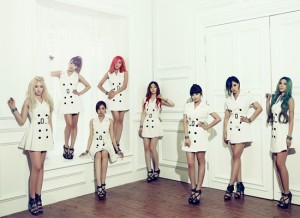
Despite official clarifications, the international media reaction was swift and sensational. Outlets such as the Daily Mail in the United Kingdom and CNN in the United States published headlines suggesting that South Korea was returning to a repressive era of dress codes. These reports frequently featured images of prominent K-pop groups, such as Girls’ Generation (SNSD) and T-ara, implying that the multi-billion-dollar Korean music industry would be forced to overhaul its visual identity to comply with the "overexposure" clause.

The narrative gained traction on social media platforms, where users interpreted the law as a direct assault on feminist progress and personal expression. The viral nature of the story was exacerbated by a lack of linguistic nuance in translation. The term for "overexposure" (gwa-do-han no-chul) in Korean can be broad, and without the context of the broader Minor Offenses Act, it was easily conflated with a moralistic crackdown on modern fashion. This led to a widespread perception of South Korea as a regressive state, a characterization that ignores the country’s status as a global fashion hub and a vibrant democracy.
Historical Context: The Shadow of the Yushin Era
To understand why the 2013 law caused such a visceral reaction within South Korea, one must look to the 1970s. President Park Geun-hye is the daughter of Park Chung-hee, the military dictator who ruled South Korea from 1961 until his assassination in 1979. During the 1970s, under the authoritarian Yushin Constitution, the government enforced strict social controls to maintain public order and traditional Confucian values.
During this period, police officers were famously equipped with bamboo rulers to measure the length of women’s skirts. Any skirt that ended more than 20 centimeters above the knee was considered a violation of public decency, and offenders could be detained or fined. Similarly, men with long hair were subject to forced haircuts on the street. For many South Koreans, the 2013 "overexposure" law felt like a symbolic return to the paternalistic and restrictive governance of the elder Park’s regime. Opposition politicians were quick to capitalize on this sentiment, using the phrase "Like father, like daughter" to criticize the President’s perceived overreach into the private lives of citizens.
Timeline of Events and Public Reaction
The trajectory of the controversy can be traced through a series of legislative actions and public outbursts:
- Late 2012: The revision of the Minor Offenses Act is proposed during the final months of the Lee Myung-bak administration.
- February 2013: Park Geun-hye is inaugurated as South Korea’s first female president.
- March 11, 2013: The cabinet approves the revised Act, including the 50,000 KRW fine for public overexposure.
- March 15-20, 2013: South Korean social media begins to buzz with concerns over the law’s ambiguity. High-profile celebrities, including pop icon Lee Hyori, post skeptical comments on Twitter. Lee tweeted, "Is the overexposure fine for real? I’m so dead," a comment that was widely cited by media as evidence of the law’s potential impact on the entertainment industry.
- March 22, 2013: The law officially goes into effect. The National Police Agency holds press briefings to dispel rumors of a "miniskirt ban," explaining that the law is identical in spirit to previous decency laws and targets extreme cases of nudity.
- Late March 2013: Western media outlets pick up the story, often ignoring the police clarifications in favor of more "clickable" headlines about K-pop bans.
Official Responses and Political Critique
The Democratic United Party (the primary opposition at the time) criticized the law not necessarily for its content, but for its potential for selective enforcement and its poor timing. Spokespersons for the party argued that at a time when the Korean Peninsula was facing heightened tensions with North Korea, the government’s focus on "minor offenses" like dress and public behavior was a distraction. They further argued that the vagueness of the term "overexposure" gave police too much discretionary power, which could lead to abuses of authority reminiscent of the 1970s.
In response, the Blue House (the presidential residence) and the ruling Saenuri Party defended the measure as a common-sense update to public safety laws. They pointed out that similar "indecent exposure" laws exist in virtually every modern democracy, including the United States, where "indecent exposure" is often a misdemeanor offense. The government maintained that the law was a necessary tool for local police to manage public order in high-traffic urban areas like Seoul’s Gangnam and Hongdae districts.
Analysis of Social and Cultural Implications
The "overexposure" controversy serves as a case study in the intersection of law, cultural memory, and modern digital communication. Several key factors contributed to the scale of the misunderstanding:
1. The Power of Celebrity Influence
The role of Lee Hyori and other celebrities cannot be understated. In the digital age, a single tweet from a cultural icon carries more weight than a dozen government press releases. When Lee Hyori expressed concern, she framed the issue as an existential threat to the "sexy" concept that defined much of K-pop at the time. This framed the law as an aesthetic conflict rather than a legal one.
2. The Fragility of International Perception
South Korea invests heavily in "Soft Power" through the Korean Wave (Hallyu). The suggestion that the government would handicap its most successful export—K-pop—seemed absurd to those familiar with Korean economic policy, yet it fit a Western stereotype of "East Asian social conservatism." The speed with which the story was globalized demonstrates how quickly a localized legal update can be transformed into a narrative of national regression.
3. The Legal Reality vs. Public Perception
Legally, the 2013 revision changed very little about what a person could wear on the street. However, the perception of the law changed the social atmosphere. For several weeks, there was a palpable anxiety among young women and fashion retailers. This discrepancy between the text of the law and the public’s fear highlights the importance of clear government communication, especially when a leader has a controversial family history.

Broader Impact on Journalism and Information Integrity
The incident also raises significant questions about journalistic integrity in the 24-hour news cycle. Reputable organizations like CNN were criticized for failing to provide the necessary context, such as the fact that the law was a revision of an existing statute and that police had explicitly denied the miniskirt ban. By prioritizing sensationalism over factual depth, these outlets contributed to a "distorted reality" that affected South Korea’s international image.
Furthermore, the comparison to gun control debates in the United States or social regulations in Europe provides a useful lens. Most nations have laws governing public behavior; however, when such laws are passed in a country with a recent history of dictatorship, they are scrutinized through a much harsher historical filter. The 2013 overexposure law was not an anomaly in global jurisprudence, but it was an anomaly in the context of South Korea’s specific political sensitivities.
Conclusion
Ultimately, the South Korean overexposure law did not result in a "miniskirt apocalypse." K-pop groups continued to perform in their signature styles, fashion trends remained short and bold, and the police did not start patrolling the streets with measuring sticks. The law remains on the books as a minor regulation against public nudity and streaking, largely invisible to the average citizen.
The legacy of the 2013 controversy remains a testament to the power of historical trauma and the volatility of the modern information landscape. It serves as a reminder that for a nation like South Korea, the path to the future is always walked in the shadow of the past, and even a 50,000-won fine for public indecency can become a global symbol of the struggle for personal liberty. For journalists and the public alike, the episode underscores the necessity of looking beyond the headline to understand the legal, historical, and cultural realities of a nation in transition.