
In late March 2013, the South Korean government, under the administration of newly inaugurated President Park Geun-hye, implemented a revised "overexposure law" that sparked significant domestic and international controversy. The legislation, which was part of a broader update to the country’s Minor Offenses Act, sought to regulate public indecency and imposed a fine of 50,000 Korean Won (approximately $45 to $48 USD at the time) on individuals found guilty of "overexposure" in public spaces. While the South Korean National Police Agency (NPA) maintained that the law was a standard measure to curb public nudity and extreme cases of indecent exposure, the move was met with immediate backlash from opposition politicians, cultural icons, and international media outlets, many of whom interpreted the move as a return to the authoritarian social controls of the 1970s.
The misunderstanding surrounding the law primarily centered on whether it specifically targeted the length of women’s skirts, a sensitive topic in a nation where K-pop fashion often features short hemlines. Despite government assurances that the law was intended to address public nakedness and lewd behavior rather than fashion choices, the ambiguity of the term "overexposure" led to widespread speculation that the administration was seeking to regulate the wardrobes of its citizens.
Chronology of the Legislative Implementation
The path to the implementation of the overexposure law began shortly after the inauguration of Park Geun-hye, South Korea’s first female president, in February 2013. On March 11, 2013, the new cabinet held its first meeting, presided over by President Park, where they approved an amendment to the Minor Offenses Act. This amendment was part of a package of 28 revised regulations aimed at maintaining public order.
The law officially went into effect on March 22, 2013. Immediately following the announcement, social media platforms and news cycles were dominated by the "miniskirt ban" narrative. The National Police Agency was forced to issue a series of clarifications as the public’s anxiety grew. Inspector Ko Jun-ho of the NPA stated in various press briefings that the law was not a new creation but rather a revision of an existing statute that had been on the books for decades. The revision actually lowered the potential penalty for public indecency, which previously could have resulted in a short jail sentence, to a standardized fine.

By late March, the story had transitioned from a domestic policy debate to an international viral sensation. Major Western news organizations, including CNN and The Daily Mail, published reports suggesting that South Korea was effectively banning miniskirts. These reports often juxtaposed the new law with images of K-pop stars, suggesting a looming crackdown on the "Hallyu" (Korean Wave) aesthetic that had become a major export for the country.
Historical Context: The Shadow of the Yushin Era
To understand why a 50,000 KRW fine for public indecency caused such a national outcry, it is necessary to examine the historical context of the 1970s. President Park Geun-hye is the daughter of Park Chung-hee, a military dictator who ruled South Korea from 1961 until his assassination in 1979. During the 1970s, under the Yushin Constitution, the elder Park implemented a series of "social purification" measures that strictly regulated personal appearance.
During this era, police officers were famously equipped with bamboo rulers to measure the length of women’s skirts in public. If a skirt was found to be more than 20 centimeters (approximately 7.8 inches) above the knee, the wearer could be fined or detained. Similarly, men were subject to hair length regulations; those with hair deemed too long were often subjected to forced haircuts on the spot by police officers.
These measures were symbolic of a broader era of political repression and the suspension of civil liberties. Consequently, when the younger Park’s administration introduced a law using the term "overexposure," the South Korean public—particularly the older generation that lived through the Yushin era and the younger generation of liberal activists—perceived it as a symbolic regression toward her father’s authoritarian style of governance.
Public and Celebrity Reactions
The reaction from South Korea’s cultural sphere was swift and vocal. Lee Hyori, a prominent K-pop soloist and fashion icon known for her provocative image, took to social media to express her concerns. Her tweet, "Is the overexposure fine for real? I’m so dead," resonated with millions of fans and helped fuel the narrative that the law would directly impact the entertainment industry.
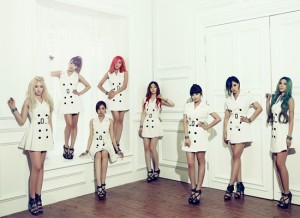
Opposition politicians also seized on the opportunity to criticize the Park administration. Ki-sik Kim, a member of the then-opposition Democratic United Party, argued that the government was attempting to "interfere with how citizens dress," calling the law an infringement on personal freedom. Critics pointed out that the language of the law—punishing those who "showed naked parts of the body or exposed parts that should be covered" in a way that caused "discomfort or shame to others"—was dangerously subjective.
In response to the mounting criticism, the Blue House (the presidential residence) and the National Police Agency launched a digital campaign to debunk the rumors. They released infographics explaining that the law was designed to target "streakers" and individuals who engaged in lewd acts in public parks or on public transportation, rather than women wearing short skirts or shorts.
Supporting Data and Legal Comparisons
Data provided by the South Korean government at the time indicated that public indecency remained a persistent minor offense. In 2012, the year prior to the law’s revision, thousands of reports were filed regarding public nudity and lewd behavior, often linked to excessive alcohol consumption in urban nightlife districts. The government argued that the 50,000 KRW fine was a necessary tool for local police to manage these incidents without resorting to more severe criminal charges.
When compared to international standards, the South Korean law is not unique. Most developed nations have statutes regarding public indecency:
- United States: Many states have "indecent exposure" laws that categorize the intentional showing of genitals in public as a misdemeanor, often punishable by fines or short-term incarceration.
- United Kingdom: The Sexual Offences Act 2003 prohibits the intentional exposure of genitals with the intent to cause alarm or distress.
- France: Article 222-32 of the Penal Code punishes "sexual exhibition" in a place accessible to the public gaze with up to one year of imprisonment and a heavy fine.
The primary difference in the South Korean case was the historical baggage associated with the President’s lineage and the specific phrasing of the law, which lacked the explicit "sexual intent" requirement found in many Western legal codes.

Analysis of Implications and Journalistic Integrity
The controversy over the overexposure law serves as a case study in the complexities of modern political communication and the risks of sensationalist journalism. The rapid spread of the "miniskirt ban" myth highlights how historical trauma can shape the reception of contemporary policy. For many South Koreans, the law was not viewed in a vacuum but through the lens of a painful past.
From a journalistic perspective, the event exposed significant flaws in international reporting on South Korean affairs. By focusing on the "absurdity" of a perceived miniskirt ban, many Western outlets ignored the nuanced legal clarifications provided by the NPA. This resulted in a distorted image of South Korea as a regressive society, overlooking the fact that the nation remains one of the most fashion-forward and technologically advanced democracies in the world.
Furthermore, the incident demonstrated the power of celebrity influence in the digital age. A single tweet from a figure like Lee Hyori was able to frame the national conversation more effectively than official government press releases. This forced the administration into a defensive posture, illustrating the challenges of governing in a highly connected and politically polarized society.
Conclusion
Ultimately, the 2013 overexposure law did not result in a crackdown on K-pop fashion or a return to the bamboo-stick measurements of the 1970s. The "sea of miniskirts" in districts like Gangnam and Hongdae remained unchanged, and the K-pop industry continued to thrive with its signature aesthetic. The law remains a part of the Minor Offenses Act, used primarily as a tool for police to manage public nuisance complaints.
However, the episode remains a significant moment in South Korean political history. It underscored the enduring sensitivity of the public toward government overreach and the long shadow cast by the country’s authoritarian past. While the "miniskirt ban" was a myth, the debate it triggered provided a vital outlet for South Koreans to reaffirm their commitment to personal expression and civil liberties in the post-democratization era. For the Park Geun-hye administration, it served as an early lesson in the importance of clear communication and the need to navigate the cultural sensitivities of a modern, democratic populace.