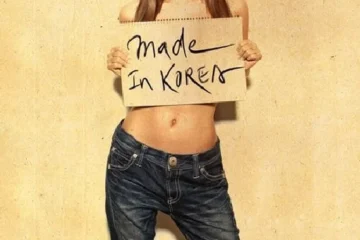
The Bean Paste Girl Phenomenon Exploring the Intersection of Consumerism Gender and Economic History in South Korea
Article Editorial Team

The term dwenjang-nyeo, or "bean paste girl," emerged in the mid-2000s as a potent symbol of social friction in South Korea, gaining international notoriety following the 2012 viral success of Psy’s "Gangnam Style." While the song’s colorful visuals and infectious "horse dance" captivated global audiences, its lyrical content served as a sharp satirical critique of a specific demographic within Seoul’s affluent Gangnam District. Western journalists and cultural analysts quickly identified the "bean paste girl" as the primary target of Psy’s mockery—a woman characterized by her perceived vanity, obsession with Western luxury goods, and a paradoxical habit of consuming cheap meals to afford expensive coffee. To understand the gravity of this term, one must look beyond the surface of pop culture and examine the complex tapestry of South Korea’s rapid economic modernization, shifting gender roles, and the psychological weight of status-seeking in a hyper-competitive society.
Etymology and Cultural Definitions of the Bean Paste Girl
The moniker "bean paste girl" is derived from dwenjang, a fermented soybean paste that serves as the foundation for dwenjang-jjigae (bean paste stew). In the hierarchy of Korean cuisine, dwenjang-jjigae represents the ultimate "humble" meal. It is a hearty, traditional staple that is inexpensive, easy to prepare at home, and ubiquitous in small, low-key neighborhood restaurants. During the early 2000s, a bowl of this stew typically cost between 3,500 and 4,500 KRW (approximately $3.00 to $4.00 USD).
The term became a pejorative through a specific contrast in spending habits. A dwenjang-nyeo is defined as a woman who chooses to eat a 4,000 KRW bowl of bean paste stew for lunch specifically so she can afford a 6,000 KRW designer coffee—often a Starbucks Frappuccino—immediately afterward. This behavior is viewed by critics as a sign of shallow priorities, where the pursuit of a Westernized, "sophisticated" image takes precedence over fiscal responsibility or authentic self-sustenance.
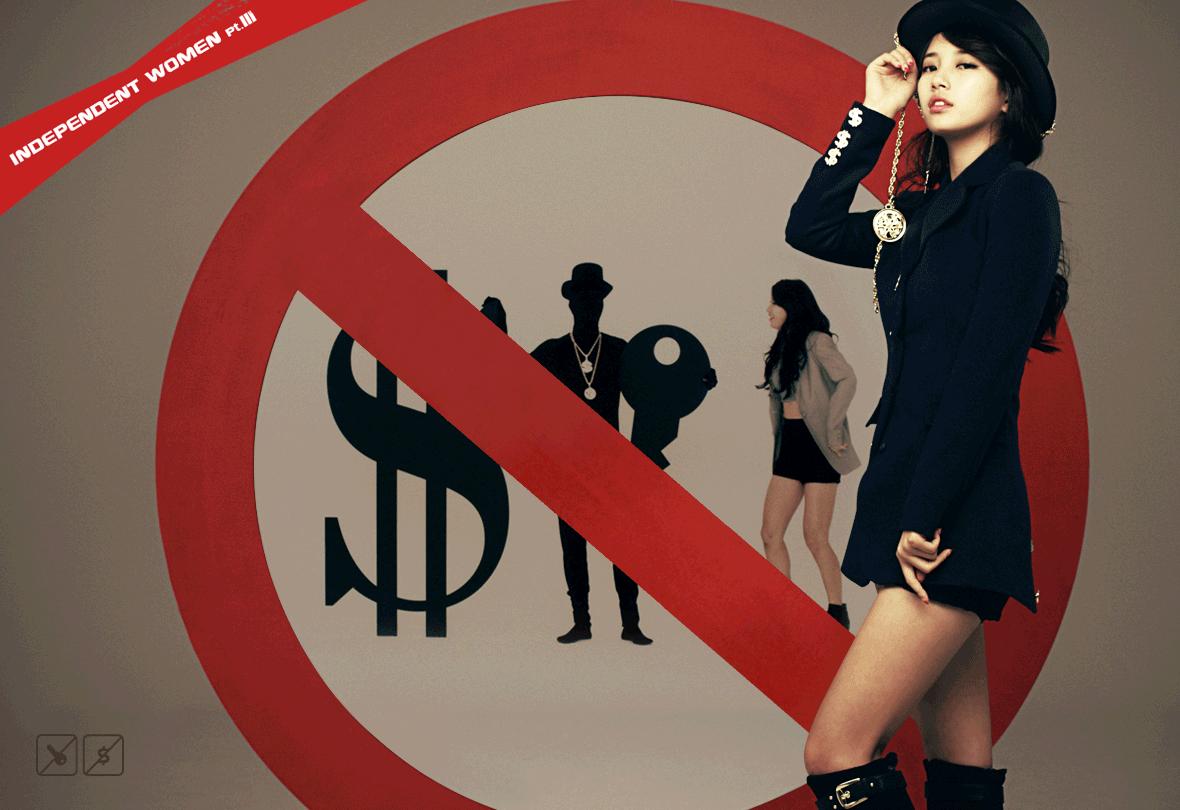
However, the definition of a "bean paste girl" is rarely fixed and often fluctuates based on the observer’s perspective. To some, she is a young woman living with her parents to save money, funneling every cent of her entry-level salary into a single Louis Vuitton or Chanel handbag. To others, she is a "wannabe" socialite who mimics the lifestyles of the truly wealthy, draped in brand-name finery that she cannot realistically afford. In more extreme critiques, the term is used to describe women who are perceived as "moochers," relying on the financial support of boyfriends or parents to maintain an illusion of affluence. Conversely, a minority of feminist scholars have attempted to reclaim the term, suggesting it describes an independent woman who works hard and chooses to spend her own earned income on high-quality items she values, regardless of societal judgment.
The Economic Backdrop: From Impoverishment to Hyper-Consumption
To understand why the "bean paste girl" became such a polarizing figure, one must consider the historical trajectory of South Korea. Following the devastation of the Korean War (1950–1953), the country was one of the poorest in the world. In the 1960s, South Korea’s GDP per capita was lower than that of many sub-Saharan African nations; notably, Ethiopia provided financial aid and military assistance to the struggling peninsula.
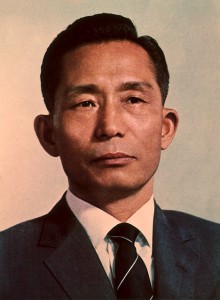
The "Miracle on the Han River," the period of rapid economic growth that followed, was overseen by the authoritarian administration of Park Chung-hee. To fuel this growth, the state enforced a culture of extreme frugality. National campaigns were launched to combat kwasobi (excessive spending), which was framed as unpatriotic and detrimental to the country’s development. For decades, South Koreans were exhorted to save every won, work tireless hours, and eschew foreign luxury goods in favor of domestic products.
By the 1990s, the economic landscape had shifted dramatically. South Korea had joined the OECD and transformed into a global industrial powerhouse. The generations born after the war did not share their parents’ lived experience of starvation and extreme austerity. As the country liberalized, Western brands flooded the market, and the previous social taboo against conspicuous consumption began to erode. The "bean paste girl" is, in many ways, the byproduct of this compressed modernization—a generation caught between the traditional values of frugality and the modern reality of a high-consumption, image-driven capitalist society.

Supporting Data: The Luxury Market and the Coffee Index
The prevalence of the "bean paste girl" narrative is supported by South Korea’s unique position in the global luxury market. Despite having a population of only 51 million, South Korea consistently ranks as one of the top markets in the world for luxury goods per capita. According to data from Morgan Stanley, South Koreans’ total spending on personal luxury goods grew significantly over the last two decades, with per capita spending reaching approximately $325 in recent years—surpassing both the United States ($280) and China ($55).
The "coffee culture" aspect of the dwenjang-nyeo trope is equally rooted in data. In the early 2010s, South Korea had one of the highest densities of coffee shops in the world. Starbucks, in particular, became a symbol of status. In 2012, a tall caffe latte in Seoul was priced significantly higher than in New York or London when adjusted for purchasing power parity. For a "bean paste girl," the green Starbucks logo was not just about the caffeine; it was a portable status symbol that signaled participation in a global, middle-class cosmopolitanism.
Societal Reactions and the Gender Gap
The vilification of the "bean paste girl" has sparked significant debate regarding gender equality in South Korea. Critics of the term point out a glaring double standard: the lack of a "bean paste boy." While young men in South Korea also engage in conspicuous consumption—often spending exorbitant amounts on electronics, cars, or designer streetwear—they are rarely subjected to the same level of public vitriol or branded with a derogatory culinary nickname.
This disparity is often attributed to South Korea’s historically patriarchal social structure. According to the World Economic Forum’s Global Gender Gap Report, South Korea has consistently ranked near the bottom among developed nations in terms of gender equality. The "bean paste girl" trope can be seen as a form of social policing, where women are criticized for how they spend their money and how they navigate the public sphere. By labeling these women as shallow or "fake," the narrative reinforces traditional expectations of female modesty and domesticity.

Public reactions to the phenomenon have been mixed. On internet forums, the term was often used as a weapon in "gender wars," with male users citing the dwenjang-nyeo as a reason for their disillusionment with modern dating. On the other hand, social commentators have argued that the obsession with the "bean paste girl" is a distraction from deeper systemic issues, such as the lack of affordable housing and the extreme pressure of the Korean education and employment systems, which drive young people to seek small, immediate "luxuries" because larger milestones like home ownership seem unattainable.
Analysis of Implications: Status and Identity
The "bean paste girl" phenomenon provides a window into the psychological state of a society in transition. In a culture where "saving face" (chemyeon) is of paramount importance, outward appearances become a vital currency. When social mobility slows and the gap between the ultra-rich and the middle class widens, the consumption of luxury goods serves as a way to bridge that gap, if only superficially.
The satire in "Gangnam Style" was effective because it touched on this universal insecurity. Psy himself noted in interviews that the song was about the "patheticness" of people trying too hard to be something they are not. The "bean paste girl" is the personification of this struggle—a woman caught in the crossfire of a society that demands both modern sophistication and traditional frugality.
Evolution and the Modern Landscape
While the specific term dwenjang-nyeo has faded from the daily vernacular since its peak in the late 2000s and early 2010s, the underlying social tensions have evolved into new forms. Concepts such as "Small Luxury" (purchasing high-end small items like lipsticks or premium desserts to cope with economic stagnation) and "YOLO" (You Only Live Once) spending have replaced the bean paste girl narrative.
Furthermore, the rise of the "Hell Joseon" sentiment—a term used by young Koreans to describe the harsh socioeconomic conditions of the country—suggests that the critique has shifted from individual spending habits to the systemic failures of the state. However, the legacy of the "bean paste girl" remains a significant case study in how gender, economics, and pop culture intersect in the modern age. It serves as a reminder that in the rush toward progress, the cultural friction between "who we were" and "who we want to appear to be" often manifests in the most unexpected—and sometimes derogatory—ways.
Related News