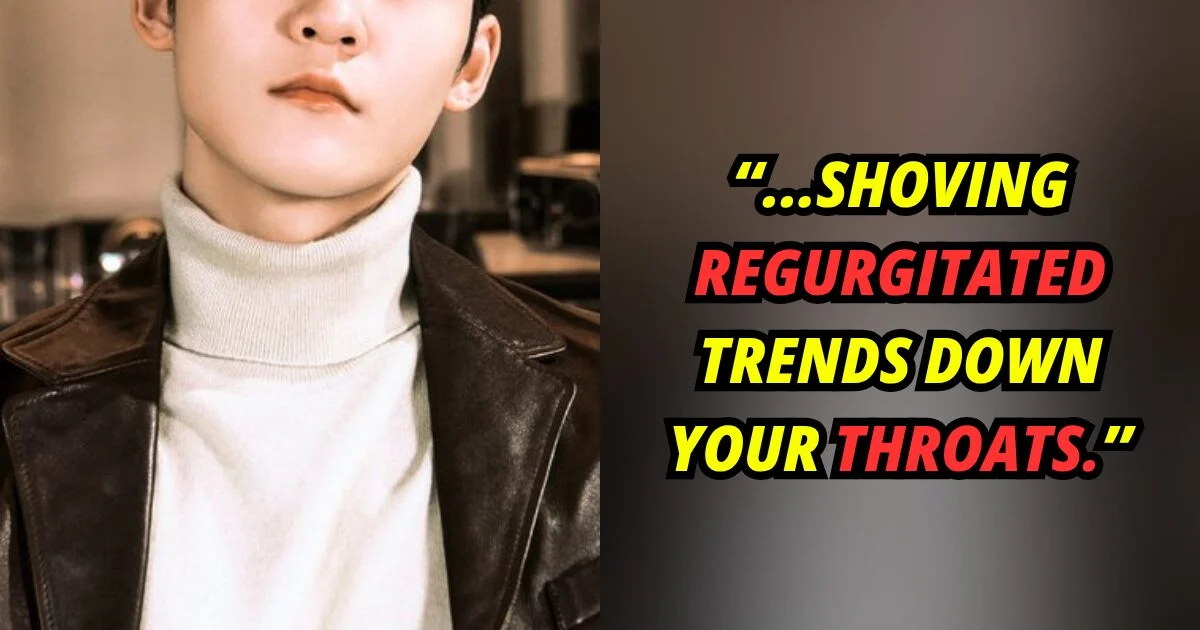
In a series of candid social media posts on August 28, 2026, Kevin Moon, a prominent member of the K-Pop group THE BOYZ, voiced significant criticisms regarding the current state and practices of the K-Pop industry. His remarks, made as he prepares for his anticipated solo debut, sparked widespread discussion among fans and industry observers, highlighting persistent concerns about artistic authenticity, commercialization, and systemic pressures within the global phenomenon. Moon’s outspokenness marks a notable moment, as active idols rarely articulate such direct critiques of the very system they operate within.
Moon’s unfiltered thoughts began with a promise of vulnerability in his upcoming album, stating, "I hope kpop fans can feel a breath of fresh air with the level of vulnerability in this album." This sentiment quickly evolved into a broader indictment of the industry’s approach to its fanbase, expressing regret that fans often become mere components of a business model. "It’s always troubled me to have the most dedicated fans in the world but having been restricted to shoving regurgitated trends down your throats," he wrote. "I’m glad to have made memories for yall but it never sat right with me that yall were simply part of a business model and nothing more." This statement resonated deeply with many, touching upon the transactional nature that can sometimes overshadow the artistic and emotional connections fostered in K-Pop.
The Call for Authenticity and Creative Freedom
Moon elaborated on his frustrations, revealing a prolonged internal struggle with the industry’s perceived lack of genuineness. He asserted his determination to create music aligned with his personal inspirations, emphasizing that while music is subjective, authenticity remains its sole objective truth. "I’ve spent way too much time upset about the fact and now I’m finally doing music the way my inspirations in music have shown me," he shared. "Music is so subjective but to me the only objective take I have is that it should be authentic. I’m glad that we had some authentic moments of joy but to see the ugly intention behind it all only fueled my fire."
His forthcoming release, Moon suggested, would intentionally challenge conventions. "My release is going to be different for sure. I did it not for the sake of being different but doing what suited my message best. It’s going to push some buttons but I believe that artists should be the last people on earth to walk on eggshells. And yet I feel that 99% of the industry has been built on eggshells." This powerful analogy underscored his belief that the industry stifles true artistic expression, forcing artists into a cautious, constrained existence. This ‘egg-shell’ environment, he implied, contributes to the homogeneity and lack of innovation he perceives.
Broader Industry Critiques: "Lost the Plot" and Performative Diversity
Beyond the issue of authenticity, Kevin Moon extended his critique to other significant aspects of the K-Pop landscape, explicitly stating that the industry has "lost the plot." He hinted at a much larger exposé, tweeting, "The day I spill the entirety of my tea though HA it’s gonna be a sobering day for all of us." This teaser suggests that his recent comments are merely the tip of an iceberg, promising more revelations about the inner workings of K-Pop.
One particularly poignant point of his criticism touched upon cultural appropriation and superficial attempts at diversity. He questioned the industry’s approach to incorporating diverse elements, arguing that it often lacks genuine recognition and celebration of the origins. "No but it’s all ‘we featured a drag queen’ ‘we’re doing house now’ but where’s the real recognition and celebration," he wrote. This critique highlights a common complaint among K-Pop fans and cultural commentators: that elements from marginalized cultures or specific subgenres are sometimes adopted for aesthetic or trendy purposes without proper understanding, credit, or respect, leading to performative rather than substantive diversity. He concluded this line of thought by emphasizing the need for "awareness and humility" as a "K-pop starter pack," suggesting these fundamental qualities are often absent.
Background and Chronology: THE BOYZ’s Evolution
Kevin Moon’s recent statements come at a pivotal time for both him and his group, THE BOYZ. On August 6, 2026, it was officially announced that THE BOYZ would continue as a nine-member group following their departure from their previous agency, ‘100’. This transition marked a significant shift in the group’s trajectory, allowing members to explore individual ventures while maintaining their collective identity. Kevin Moon, specifically, has been actively preparing for his solo debut, as evidenced by the release of a teaser titled "[TEASER 3] FREECHILD" on platforms like YouTube. This solo endeavor provides him with a new platform and potentially greater artistic autonomy, which may have emboldened him to speak out more freely than before.
THE BOYZ debuted in 2017 under Cre.ker Entertainment (later merged into IST Entertainment). Known for their powerful performances and intricate choreography, the group garnered a dedicated international fanbase. The move to a new management structure and the subsequent focus on solo careers for individual members represent a natural evolution for many K-Pop groups, particularly as members mature and seek to diversify their artistic portfolios. However, this transition also often entails a re-evaluation of artistic direction and industry relationships, providing a fertile ground for reflection and critique.
The K-Pop Industrial Complex: Contextualizing Moon’s Critique
Moon’s criticisms are not isolated; they echo a growing sentiment among both artists and audiences regarding the highly commercialized and standardized nature of the K-Pop industry. The K-Pop system, renowned for its meticulous trainee programs, rigorous production cycles, and aggressive marketing strategies, has achieved unparalleled global success. In 2023, the global K-Pop market size was valued at an estimated USD 10.3 billion, with projections indicating continued robust growth. This success, however, often comes at a cost to artistic freedom and individual expression.
Industry practices frequently involve:
- Rigid Concept Development: Agencies often dictate artistic concepts, musical styles, and visual aesthetics to appeal to broad market trends, potentially limiting an artist’s personal input.
- Intense Competition: The sheer volume of debuts annually (hundreds of new groups and soloists) necessitates a constant drive for novelty, which can lead to "regurgitated trends" as companies attempt to replicate past successes.
- Fan Engagement as Business Model: While K-Pop is celebrated for its deep fan-artist connections, Moon’s point about fans being "part of a business model" highlights how fan loyalty is often leveraged through elaborate merchandise sales, album versions, fan call events, and streaming goals, transforming emotional bonds into economic drivers.
- The "Egg-Shell" Environment: Artists often operate under strict contracts and public scrutiny, making it risky to voice dissenting opinions or challenge agency directives. Concerns about career repercussions, backlash from certain fan segments, or even legal action contribute to a culture of self-censorship. This environment can significantly impact artists’ mental health, a topic that has gained increasing attention within the industry over recent years.
Netizen Reactions and the Broader Dialogue
Immediately following Kevin Moon’s posts, social media platforms, particularly X (formerly Twitter), erupted with reactions. A significant majority of netizens expressed overwhelming support for his candidness. Fans applauded his bravery in speaking out, recognizing the potential risks involved for an active idol.
One user, @cloveryums, tweeted, "an idol calling this out is so huge and i need every single person on this site who has ever talked about the issues in this industry to support kevin’s album. you want real change in the industry? support the people who are actively trying to make it and speaking up about it!!!" This sentiment underscores a common desire among fans for more authenticity and less corporate control in K-Pop.

Another user, @luizatheworld, suggested a provocative collaboration: "somebody please arrange a podcast featuring tbz kevin & svt vernon where they talk about how kpop is essentially dying." This tweet referenced Vernon of SEVENTEEN, another idol known for his thoughtful and sometimes critical perspectives on the industry, indicating a perceived shared understanding among certain artists regarding K-Pop’s challenges.
@Paw07288138 articulated a nuanced fan perspective: "As K-pop fan I think must of us understands that K-pop is mostly this big capitalist corporation that at the end of the just sees us as big numbers and money But what I like K-pop the most is that a lot of times you find really passionate artists that when given the opportunity [to be authentic]." This comment captures the complex relationship many fans have with K-Pop, acknowledging its commercial aspects while still valuing the genuine artistry that emerges despite the system.
The strong positive response from fans suggests a significant portion of the K-Pop audience is hungry for more raw, unvarnished expression from their idols. It also indicates a growing awareness and dissatisfaction with the industry’s perceived shortcomings.
Implications and Future Outlook
Kevin Moon’s outspokenness could have several implications. For his solo career, it might garner him a dedicated following who value his commitment to authenticity, potentially boosting his album sales and critical reception. Conversely, such direct critique, especially if "the entirety of his tea" is indeed spilled, could alienate some industry players or more conservative segments of the fanbase who prefer idols to maintain a more conventional, curated image.
More broadly, Moon’s statements contribute to an ongoing, albeit often subdued, conversation within the K-Pop industry about its sustainability, artistic integrity, and ethical responsibilities. While immediate, drastic changes are unlikely, the cumulative effect of artists like Moon speaking out could incrementally shift industry paradigms. It may encourage other idols, particularly those with established careers or nearing contractual freedom, to voice their experiences. It could also prompt agencies to at least outwardly address concerns about artist welfare, creative control, and genuine diversity.
From a sociological perspective, this public discourse initiated by an active idol reflects a maturing of the K-Pop ecosystem. As the industry expands globally, it becomes subject to more diverse critiques and expectations, moving beyond its initial image as purely entertainment to a complex cultural and economic force. Kevin Moon’s challenge to the "egg-shell" environment could be seen as a call for a more artist-centric model, where creative expression is prioritized alongside commercial success. His emphasis on "awareness and humility" as essential traits for K-Pop further underscores a desire for a more thoughtful and responsible approach to cultural production in an increasingly interconnected world. The industry will undoubtedly watch closely to see how his solo debut and subsequent comments unfold, as they could serve as a bellwether for future artist-driven discussions and reforms.