The global expansion of the South Korean music industry, commonly known as K-pop, has been fueled by a level of fan engagement that is arguably unparalleled in any other entertainment sector. This engagement manifests in extraordinary acts of philanthropy and support, ranging from the organization of massive fan projects and the donation of thousands of dollars to charities in an artist’s name to the traditional gifting of rice wreaths and the coordination of intricate fanchants. However, this fervent devotion has a darker, more complex side. The same passion that drives record-breaking album sales and sold-out stadium tours also fosters an environment where fans often feel a sense of ownership over the personal lives and professional trajectories of their favorite idols. Recent incidents involving prominent figures such as f(x)’s Krystal, Super Junior’s Eunhyuk, and SHINee’s Jonghyun highlight the growing tension between artist autonomy and the demands of a consumer-driven fandom.
The Digital Frontier: Social Media Harassment and the Case of Krystal Jung
In the digital age, social media has become a primary bridge between idols and their fans, offering a perceived intimacy that was once impossible. Yet, this accessibility frequently exposes artists to targeted harassment. A significant example occurred when Krystal Jung, a member of the girl group f(x), was forced to deactivate her Instagram account. The catalyst for this decision was not a scandal of her own making, but rather the actions of another high-profile idol. G-Dragon, the leader of Big Bang, had "liked" several of her photos, an action that triggered immediate and baseless dating rumors.
The backlash was swift and severe. Fans of G-Dragon, feeling protective or possessive of the star, flooded Krystal’s account with malicious comments and harassment. Furthermore, multiple hacking attempts were reported on her account, @kjungxox, leading to its eventual deletion. This incident underscores a recurring theme in K-pop culture: the "shipping" or dating of idols is often treated as a betrayal by the fandom. The digital space, intended for engagement, becomes a battlefield where the artist’s privacy is the first casualty. The lack of intervention from entertainment agencies during these online firestorms often leaves the artist to manage the psychological toll of mass harassment in isolation.
The "Only 13" Movement and the Boundaries of Super Junior
The struggle for control over an idol group’s composition is perhaps most visible in the long-standing controversy surrounding Super Junior and its sub-unit, Super Junior-M. For years, a vocal segment of the fandom, identifying with the "Only 13" movement, has vehemently opposed the inclusion of Zhou Mi and Henry Lau as official members of the main group. This movement originated when SM Entertainment attempted to expand the group’s reach into the Chinese market, leading to fears among fans that the original lineup would be diluted or replaced.
The pressure reached a peak when Eunhyuk, a senior member of Super Junior, was compelled to issue a public statement clarifying the status of the two members. He stated that Zhou Mi and Henry were members of Super Junior-M but were not, and would not become, official members of the primary Super Junior lineup. This demand for "clearly defined boundaries" illustrates the power dynamics at play. Fans do not merely consume the music; they feel entitled to dictate the structural evolution of the groups they support. By caving to these demands, agencies reinforce the idea that the "customer" is always right, even when those customers are marginalizing talented performers who have contributed years of work to the brand.
The Apology for Normalcy: Jonghyun and the Cinema Incident
The expectation of "perfection" and "purity" in the K-pop industry extends to the most mundane aspects of an idol’s life. Recently, Jonghyun of the boy group SHINee was spotted at a movie theater in the company of a female friend. Despite there being no evidence of a romantic relationship, the mere sight of an idol with a member of the opposite sex was enough to spark a social media frenzy.
The pressure on Jonghyun was so immense that he felt obligated to issue an apology on his Twitter account. His statement was a poignant reflection of the industry’s current state: “Even though it’s not something I should be sorry about, I’m sorry,” he wrote. He clarified that the individuals were simply friends and expressed hope that no one was "hurt" by the sighting. This phenomenon—where an adult must apologize for having a social life—points to a deeper issue of dehumanization. Idols are often viewed as characters in a narrative controlled by the audience rather than as independent human beings. When the "character" deviates from the fan-scripted storyline, the reaction is often one of perceived betrayal.

Physical Safety and the Chaos of Airport Arrivals
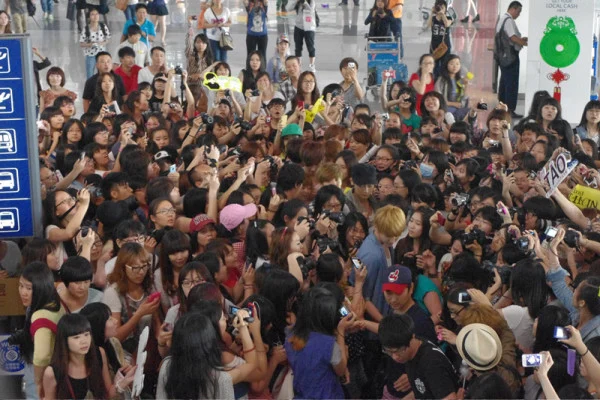
The entitlement of the fandom is not limited to the digital sphere; it frequently manifests in physical spaces, most notably at international airports. In the K-pop industry, airport arrivals have become high-stakes events where hundreds, sometimes thousands, of fans congregate to catch a glimpse of their idols. The result is often a dangerous environment characterized by "stampeding" and crowding.
Reports of fans and artists falling over, being pushed, or being stepped on are common. In some extreme cases, idols have reported being touched inappropriately or having cameras shoved directly into their faces. Despite these recurring safety hazards, entertainment agencies have been criticized for their slow response in providing adequate security personnel. The silence of the companies in the face of such behavior is often interpreted as a tacit endorsement of the "fan-at-all-costs" mentality. Some artists have taken to social media to plead for personal space, but without institutional support and a shift in fan behavior, the physical risks remain a constant in the life of a touring idol.
The Economics of Entitlement: A Fact-Based Analysis
The root of this behavior can be traced to the business model of the K-pop industry itself. Agencies market idols as "accessible" and "relatable" through reality shows, live streams, and fan meetings. This creates a "parasocial relationship," where fans invest significant time and money into an idol, leading to a psychological sense of ownership.
Data from the Korea Creative Content Agency (KOCCA) indicates that the "fandom economy" is worth billions of dollars, with fans contributing to revenue through album sales, digital streaming, and high-priced merchandise. In a market where the consumer’s financial power is so concentrated, agencies are often hesitant to reprimand bad behavior for fear of a boycott. This creates a cycle where toxic behavior is inadvertently incentivized. The "customer is always right" mantra, while effective for retail, becomes "poisonous" when applied to human relationships and the personal lives of artists.

The Role of the Collective: A Call for Fan Accountability
While the responsibility for change is often placed on agencies and the idols themselves, there is a growing consensus that the fandom must also police its own ranks. The same organizational skills used to coordinate light stick "oceans" at concerts or to raise thousands of dollars for charity can be redirected toward fostering a healthier culture.
Maturity within the fandom involves recognizing that idols are employees of a company, not personal property. When inappropriate behavior occurs—whether it is bullying a stranger off social media or causing a disturbance at an airport—it is the responsibility of the broader fan community to condemn such actions. There is a need for a "silent majority" of fans to speak up against the vocal minority that perpetuates negativity. By requesting better security and advocating for the mental health of artists, fans can transform the industry into a more sustainable environment.
Conclusion: Seeking a Sustainable Future for K-pop
The K-pop industry stands at a crossroads. As it continues to gain global prominence, the tension between fan engagement and artist well-being will only intensify. The current trend of blind negativity and inappropriate behavior is not only harmful to the individuals involved but also threatens the long-term reputation of the genre.
Entertainment is a business of perfection, but the human beings at the center of it are inherently imperfect. For the industry to thrive, there must be a shift away from the commodification of idols’ personal lives. Companies must take a stand to protect their artists, and fans must realize that their support does not grant them a contract of ownership. The question remains: will the industry and its followers step forward to establish healthier boundaries, or will the "other side of the K-pop coin" continue to grow grittier? The future of the genre may depend on the answer.