
The concept of Korean nationalism, characterized by a unique and potent brand of ethno-nationalist sentiment known as "danil minjok" or the "single-blooded nation," continues to serve as a foundational pillar for identity on the Korean Peninsula. While South and North Korea have diverged sharply in political ideology and economic structure since the mid-20th century, both societies remain deeply anchored in a shared belief of ethnic homogeneity. This ideology, which posits that all Koreans descend from a single ancestral bloodline, has historically functioned as a mechanism for resilience against foreign intervention. However, in the 21st century, this same sentiment faces increasing scrutiny as South Korea grapples with the pressures of globalization, a shrinking domestic workforce, and the rise of multiethnic households.
The Mythological Foundations of the Korean Race
The bedrock of Korean ethno-nationalism is the foundation myth of Tan’gun Wanggeom, the legendary figure credited with establishing the first Korean kingdom, Gojoseon, in 2333 BC. According to the "Samguk yusa" (Memorabilia of the Three Kingdoms), a collection of legends and historical accounts compiled in the 13th century, the story begins with Hwan-ung, the son of the heavenly lord Hwan-in. Seeking to live among humans, Hwan-ung descended to Mount Paektu—a peak on the modern-day border of North Korea and China that remains a sacred site for Koreans today.
The legend narrates that a tiger and a bear approached Hwan-ung, expressing a desire to become human. He instructed them to remain in a dark cave for 100 days, consuming only sacred mugwort and twenty cloves of garlic. While the tiger succumbed to impatience and fled, the bear persevered and was transformed into a woman named Ung-nyeo. Hwan-ung subsequently married Ung-nyeo, and their son, Tan’gun, became the progenitor of the Korean people.
Related Articles
While contemporary historians and the South Korean public largely view the Tan’gun narrative as a foundation myth rather than empirical history, its cultural weight is immense. The myth provides a "constitutive story" that justifies the idea of an uninterrupted, 5,000-year-old bloodline. In North Korea, the state has gone further to politicize the legend; in 1993, Pyongyang claimed to have discovered the "Tomb of Tan’gun" in Kangdong, a move widely viewed by the international scientific community as a fabricated attempt to bolster the regime’s legitimacy as the "true" successor of the Korean lineage.

The Shift from Confucian Monarchy to Ethnic Nationalism
Historical analysis suggests that the modern iteration of Korean nationalism is a relatively recent construct. During the Joseon Dynasty (1392–1910), identity was primarily defined by Neo-Confucian values, social caste, and loyalty to the monarchy rather than a shared ethnic "nationhood." The populace viewed themselves as subjects of the King, and the intellectual elite focused on Korea’s role within the broader Sinitic (Chinese) world order.
The transition to a modern nationalist identity began in the late 19th century, spurred by the "Hermit Kingdom’s" forced opening to the West and the encroaching imperial ambitions of Japan, Russia, and China. As the Joseon state weakened, intellectuals sought a new framework to unify the people and defend national sovereignty. This era saw the "rediscovery" of Tan’gun and the elevation of the Korean script, Hangul, which had previously been dismissed by the elite in favor of Chinese characters.
Influential newspapers of the time, such as the "Tongnip Sinmun" (The Independent) and the "Hwansŏng Sinmun" (Capital Gazette), played a critical role in disseminating these ideas. They introduced the term "minjok"—a translation of the Western concept of "nation" or "ethnic group"—into the popular lexicon. By centering the Korean ethnic identity, these reformers sought to decouple Korea from its centuries-old tributary relationship with China and create a modern, independent state.
The Crucible of Japanese Colonial Rule (1910–1945)
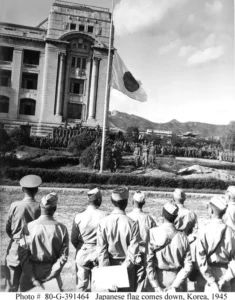
The most significant catalyst for the solidification of Korean ethno-nationalism was the Japanese colonization of the peninsula. Following the annexation in 1910, the Japanese colonial administration implemented policies aimed at the cultural and linguistic erasure of the Korean identity. This culminated in the "Soshi-kaimei" policy, which pressured Koreans to adopt Japanese surnames, and the mandatory use of the Japanese language in schools and public life.
In response to these existential threats, the Korean independence movement utilized ethno-nationalism as a survival strategy. Historians like Shin Chae-ho argued that the "minjok" was the eternal soul of the country, surviving even when the state itself had fallen. This "defensive nationalism" created a powerful "us versus them" dichotomy, where the purity of the Korean bloodline became a symbol of resistance against the Japanese "other." The trauma of the colonial period ensured that, upon liberation in 1945, any threat to the perceived homogeneity of the Korean race would be met with intense social and political pushback.

Chronology of the Evolution of Korean Nationalism
- 2333 BC (Legendary): Founding of Gojoseon by Tan’gun.
- 1280s AD: The "Samguk yusa" codifies the Tan’gun myth during the Mongol invasions, using it to bolster a sense of distinct identity.
- 1890s: Intellectuals begin promoting "minjok" and Hangul to counter imperialist pressures.
- 1910–1945: Japanese colonial rule solidifies ethno-nationalism as a primary tool of resistance.
- 1960s–1970s: President Park Chung-hee utilizes nationalist rhetoric to mobilize the workforce for the "Miracle on the Han River," framing economic development as a national duty.
- 1993: North Korea claims to discover Tan’gun’s tomb, utilizing ethnic mythology for state propaganda.
- 2006: The UN Committee on the Elimination of Racial Discrimination (CERD) urges South Korea to overcome the "pure blood" ideology to better integrate migrants.
- 2010s–Present: Rapid demographic shifts lead to the "Damunhwa" (multiculturalism) policy debate in South Korea.
Data and Demographic Realities
For decades, the narrative of a "single-blooded nation" was supported by the reality of a largely closed society. However, recent data from the Ministry of Justice and Statistics Korea indicates a rapid shift in the country’s demographic makeup.
As of 2023, the number of foreign residents in South Korea has surpassed 2.5 million, accounting for approximately 4.9% of the total population. This is a significant increase from the early 2000s, when the foreign-born population was less than 1%. Furthermore, international marriages now account for nearly 10% of all new marriages in the country. In rural areas, where there is a shortage of marriageable women, this figure can be as high as 20% to 30%.
The economic necessity for foreign labor is also stark. With a total fertility rate that hit a record low of 0.72 in 2023—the lowest in the world—South Korea faces a "demographic cliff." Economists argue that without a significant influx of immigrants, the nation’s workforce will shrink by nearly 25% by 2050, threatening the stability of the pension system and the overall economy.
Official Responses and Policy Shifts
The South Korean government has acknowledged the need for a transition away from strict ethno-nationalism, though the process has been fraught with social tension. In 2008, the government enacted the "Multicultural Family Support Act," aimed at providing social services to international couples and their children.
However, critics and international organizations, including the United Nations, have noted that these policies often focus on "assimilating" foreigners into Korean culture rather than fostering a truly pluralistic society. The UN CERD has repeatedly expressed concern that the emphasis on "ethnic homogeneity" encourages discrimination against those who do not share the "Korean bloodline," including biracial Koreans and migrant workers from other Asian nations.

In the political sphere, reactions are mixed. While some progressive factions advocate for a "civic nationalism" based on shared democratic values rather than blood, conservative elements often lean back into nationalist rhetoric when dealing with territorial disputes (such as the Dokdo/Takeshima islands) or historical grievances with Japan.
Broader Impact and Future Implications
The persistence of ethno-nationalism has significant implications for South Korea’s international relations and internal social cohesion. On one hand, it provides a strong sense of social capital and unity that has helped the country overcome wars and economic crises. On the other hand, it manifests as "exclusive nationalism," which can lead to friction with neighboring countries.
The dispute over the history of the ancient kingdom of Koguryŏ is a prime example. When Chinese state-sponsored historians claimed Koguryŏ as a provincial government of ancient China, it sparked a firestorm of nationalist outrage in Seoul. For many Koreans, the claim was not just a historical disagreement but an attack on the very origins of their ethnic lineage.
As South Korea moves further into the 21st century, the tension between its "danil minjok" heritage and its "Global Korea" aspirations will likely intensify. The success of the nation may depend on its ability to redefine what it means to be "Korean"—moving from a definition based on biological ancestry to one based on shared civic participation in a modern, multicultural democracy. Whether the myth of Tan’gun can be expanded to include those of different origins remains the central challenge for the Korean national identity.