
The global ascent of the South Korean musician Psy in 2012, fueled by the viral success of his hit single "Gangnam Style," introduced international audiences to a specific and biting form of Korean social satire. While Western listeners largely focused on the infectious beat and the "horse-riding" dance, domestic audiences in South Korea recognized a pointed critique of a contemporary social archetype: the dwenjang-nyeo (된장녀), or "Bean Paste Girl." This term, which has become a fixture in the lexicon of modern Korean gender politics and consumer criticism, describes a woman who allegedly sacrifices basic necessities to afford luxury goods and Western lifestyle symbols. To understand the dwenjang-nyeo is to understand the rapid economic transformation of South Korea, the resulting friction between traditional frugality and modern consumerism, and the persistent gendered double standards within the nation’s social hierarchy.
Etymology and the Paradox of Consumption
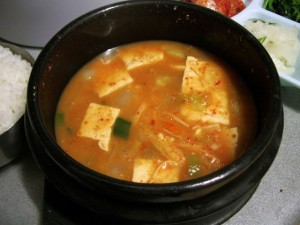
The term "Bean Paste Girl" is derived from dwenjang (된장), a fermented soybean paste that serves as the foundation for dwenjang jjigae, a humble, nutritious, and remarkably inexpensive stew. Historically, dwenjang jjigae has been the quintessential meal of the Korean working class—a "soul food" that is both ubiquitous and affordable, typically costing between 3,500 and 5,000 Korean Won (approximately $3 to $4 USD). In the cultural imagination, the "Bean Paste Girl" is a woman who chooses to eat this cheap, pungent stew in private or at low-end eateries specifically so she can save enough money to be seen in public with a 6,500 Won Starbucks Frappuccino or a designer handbag from brands like Chanel or Louis Vuitton.
The paradox lies in the perceived deception of her social status. Critics argue that the dwenjang-nyeo is a "wannabe" who prioritizes the appearance of wealth over actual financial stability. The term suggests a person who is "consumed with the thought of consuming," favoring imported Western brands—particularly those associated with the wealthy Gangnam district—over domestic or more affordable alternatives.
Historical Context: From Frugality to Kwasobi
The vitriol directed toward the dwenjang-nyeo cannot be fully understood without examining South Korea’s economic trajectory. Following the devastation of the Korean War (1950–1953), South Korea was one of the poorest nations on Earth, at one point receiving financial aid from countries like Ethiopia. The "Miracle on the Han River," the period of rapid industrialization that followed, was overseen by the authoritarian regime of Park Chung-hee. During the 1960s and 70s, the state enforced a strict ethos of nationalistic frugality.
During this era, the term kwasobi (과소비), meaning "excessive spending" or "conspicuous consumption," was treated as a moral failing and a betrayal of the national effort to build a self-sufficient economy. Government-led campaigns exhorted citizens to save every penny, and the purchase of imported luxury goods was often framed as unpatriotic. However, as the nation reached OECD status in the 1990s, the "belt-tightening" mentality began to clash with the new reality of disposable income and the opening of high-end department stores.
The 1990s saw the emergence of the "Orange Tribe" (Orenji-jok), the wealthy children of the Gangnam elite who flaunted their riches. While they were criticized, the dwenjang-nyeo phenomenon of the 2000s represented a shift: the criticism moved from the truly wealthy to those in the middle or lower-middle class who attempted to emulate that lifestyle through extreme budgeting or debt.
Defining the Archetype: Four Perspectives
The definition of a dwenjang-nyeo is fluid and often depends on the observer’s own social biases. Through sociological observation and media analysis, four distinct characterizations emerge:
- The Calculating Saver: This is the most common definition. It depicts a woman who lives at home with her parents to avoid rent and eats the cheapest possible food (dwenjang jjigae) to afford a "status symbol" like a designer bag. The critique here is directed at her perceived vanity and distorted priorities.
- The Parasitic Consumer: A more derogatory version paints the dwenjang-nyeo as someone who exhausts her own funds on luxury items and then relies on her parents or boyfriends to pay for her actual living expenses. In this view, she is a financial "moocher" who uses her appearance to extract resources from others.
- The Shallow Westernizer: This perspective focuses on the rejection of Korean identity. The dwenjang-nyeo is seen as someone who values anything Western—Starbucks coffee, French handbags, Italian shoes—as inherently superior to Korean equivalents. Critics argue that if you strip away the $2,000 worth of accessories, she is "nothing more" than a rural or "bucolic" Korean, using the brands to mask her origins.
- The Economic Independent (The Feminist View): A minority of defenders, including some feminist scholars, argue that the dwenjang-nyeo is actually a symbol of female empowerment. They posit that these women are using their own hard-earned salaries to purchase items that bring them joy and status in a society that historically denied women both. In this light, the "Bean Paste Girl" is a woman making a rational choice to participate in a globalized fashion culture using her own agency.
Supporting Data: South Korea’s Luxury Market
The prevalence of the dwenjang-nyeo discourse is mirrored by actual economic data regarding South Korea’s consumption habits. According to a report by Morgan Stanley in 2022, South Koreans are the world’s biggest spenders on personal luxury goods per capita, spending an average of $325 per year, significantly higher than the $280 spent by Americans or the $55 spent by Chinese citizens.
Furthermore, the coffee industry in South Korea has seen exponential growth. Data from the Korea Customs Service indicates that coffee imports hit record highs consistently over the last decade. For many young Koreans, a cup of branded coffee is not just a beverage but a "small luxury" (sokkakhaeng)—an affordable way to participate in a high-status lifestyle when larger milestones, like home ownership, remain financially out of reach due to skyrocketing real estate prices in Seoul.
The Gendered Double Standard: Where is the Bean Paste Boy?
A significant point of contention in the dwenjang-nyeo debate is its gendered nature. While there is a male equivalent—sometimes referred to as dwenjang-nam—the term carries significantly less social weight and is rarely used in public discourse. Men in South Korea also engage in conspicuous consumption, often spending vast sums on imported cars, high-end electronics, or expensive watches.
The lack of a "Bean Paste Boy" phenomenon points to a deeper societal issue: South Korea’s persistent gender inequality. The World Economic Forum’s Global Gender Gap Report consistently ranks South Korea near the bottom among developed nations. Analysts suggest that the vilification of women’s spending habits is a form of "misogynistic policing," where women are criticized for seeking status through fashion, while men’s status-seeking through automobiles or technology is viewed as a standard byproduct of professional success.

Official Responses and Cultural Impact
While the South Korean government does not issue official statements on slang terms like dwenjang-nyeo, the cultural impact has prompted various social dialogues. Educational programs and "financial literacy" campaigns have occasionally touched on the dangers of "conspicuous consumption" among the youth, indirectly addressing the pressures that lead to the dwenjang-nyeo lifestyle.
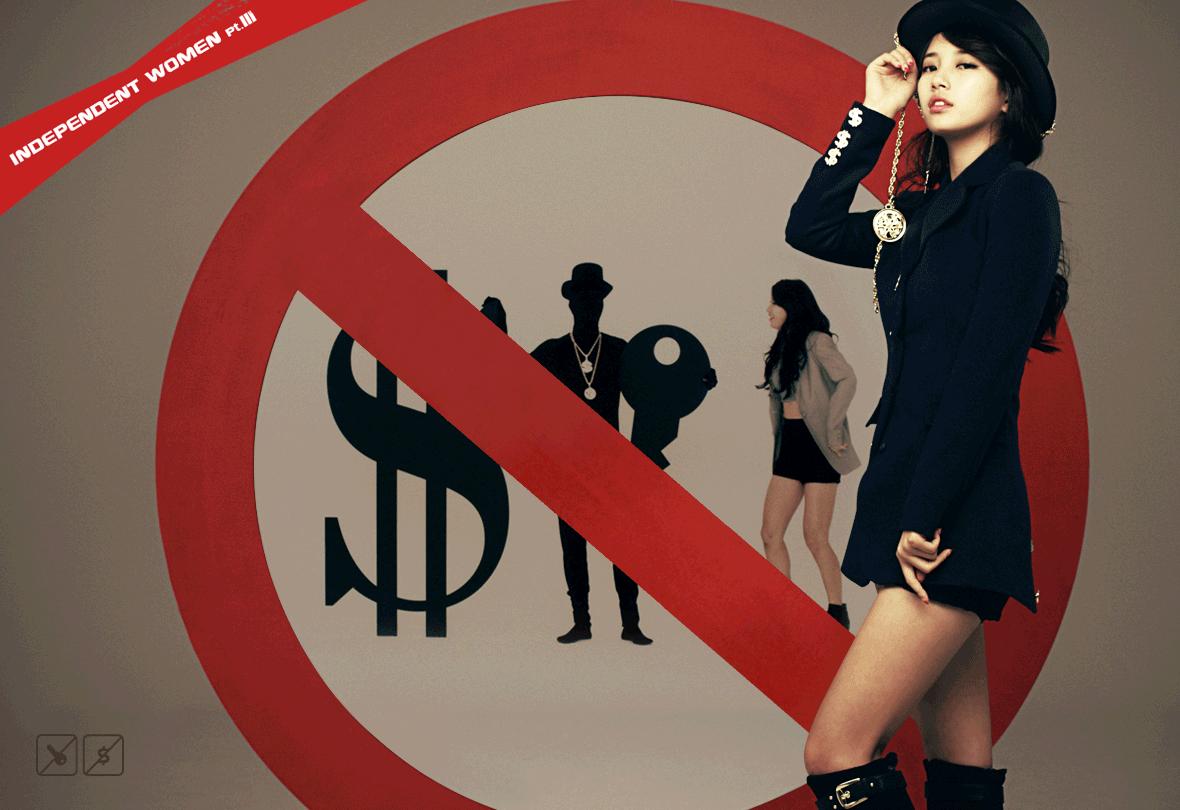
In the media, the archetype has been explored through numerous K-dramas and films. Characters are often depicted as "shopaholics" who eventually learn that "true value" comes from family or hard work, reinforcing traditional Confucian values. However, music groups like Miss A have countered this with lyrics emphasizing financial independence and the right of women to buy what they want with their own money, challenging the derogatory roots of the term.
Broader Implications and Future Outlook
The dwenjang-nyeo phenomenon is a symptom of a society in transition. South Korea has moved from a survival-based economy to a status-based economy in record time. The "Bean Paste Girl" represents the anxiety of a generation caught between the frugal ghost of their grandparents’ past and the hyper-consumerist reality of their present.
As long as social mobility remains difficult and status is tied to visible markers of wealth, the pressure to "look the part" will continue. However, as the conversation around gender equality evolves in South Korea, the unilateral criticism of women’s consumption is beginning to face more pushback. The dwenjang-nyeo may eventually fade as an insult, but the economic pressures that created her—high luxury demand, the "small luxury" trend, and the desire for social recognition—remain deeply embedded in the fabric of modern Seoul. For now, the "Bean Paste Girl" remains a potent symbol of the complexities of the Korean Dream in the 21st century.