The Evolution of Aesthetic Standards: Navigating the Complex Relationship Between Plastic Surgery and South Korean Media Culture
Article Editorial Team
The discourse surrounding cosmetic enhancement in South Korea has reached a critical juncture, as the intersection of celebrity influence, societal pressure, and industrial growth continues to redefine national beauty standards. While plastic surgery has long been a fixture of the South Korean entertainment landscape, recent public debates and viral media events have highlighted a growing tension between individual autonomy and a homogenized cultural ideal. This tension was recently exemplified by a public exchange between solo artist G.NA and comedian Lee Yoon-suk, as well as the international scrutiny surrounding the Miss Daegu 2013 beauty pageant. These incidents serve as case studies for a broader analysis of how the South Korean media apparatus promotes a specific, manufactured aesthetic that influences not only the entertainment industry but the demographic at large.
The Celebrity Defense and the Self-Esteem Argument
The conversation regarding cosmetic procedures often occurs behind a veil of denial within the K-pop industry. Historically, many idols have attributed changes in their appearance to weight loss, puberty, or sophisticated makeup techniques. However, the dialogue shifted slightly when G.NA, a prominent solo vocalist, engaged in a televised debate with comedian Lee Yoon-suk. The discussion began when Lee expressed a rigid disapproval of cosmetic surgery, specifically in the context of his marriage, characterizing such procedures as a violation of marital trust. He argued that the pursuit of surgical enhancement often stems from a lack of self-acceptance rather than a genuine need for improvement.
In response, G.NA offered a defense rooted in psychological well-being and personal satisfaction. She posited that cosmetic procedures could serve as a vital tool for boosting self-esteem, citing her grandfather’s positive emotional transformation following a hair transplant. Her argument suggested that if a physical change leads to a measurable increase in an individual’s happiness and confidence, the procedure should be viewed as a valid form of self-care. This perspective aligns with a growing sentiment among younger South Koreans who view the body as a customizable asset. Nevertheless, critics noted that G.NA’s rebuttal, while focused on personal happiness, failed to address the systemic pressures that dictate exactly what kind of "improvement" is necessary to achieve that happiness.
The Miss Daegu Controversy and the "Clone" Phenomenon
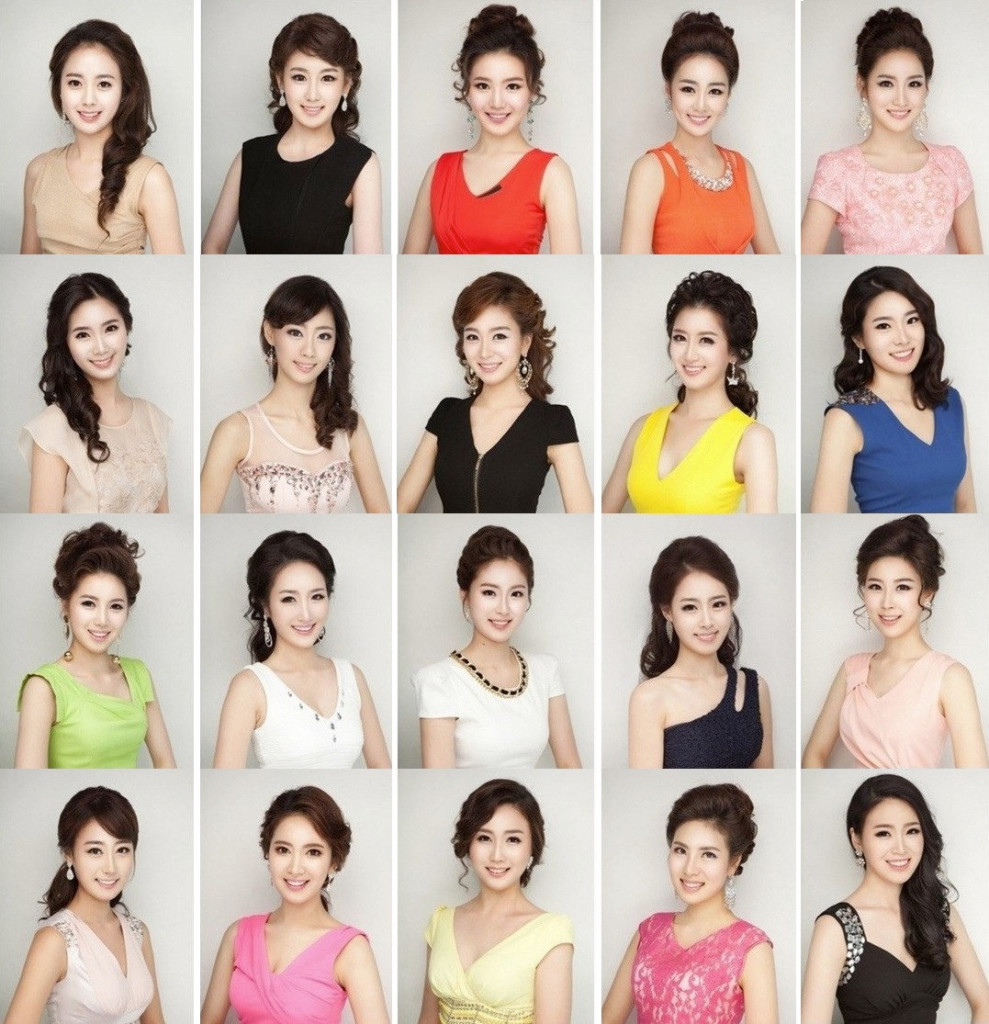
The debate over the homogenization of beauty reached a global audience following the release of the official photographs for the Miss Daegu 2013 pageant, a preliminary for the Miss Korea competition. The images featured twenty contestants who possessed nearly identical facial features: large, almond-shaped eyes with pronounced double eyelids, high and narrow nasal bridges, porcelain-clear skin, and the "V-line" jaw—a tapered, heart-shaped chin. The similarity was so striking that it sparked an international viral sensation, with media outlets and netizens questioning whether the pursuit of a singular "ideal" had effectively erased individual identity.
While some defenders of the pageant argued that the similarities were exacerbated by uniform styling, heavy makeup, and aggressive digital retouching, industry experts acknowledged that the contestants represented the pinnacle of the "Gangnam look." This term refers to the aesthetic produced by the dense cluster of clinics in Seoul’s Gangnam District, where surgeons often employ standardized techniques to achieve a look that is considered most "marketable" in the current cultural climate. The Miss Daegu incident became a visual metaphor for the "beauty belt" of Apgujeong, where surgical precision has created a generation of "special snowflakes" who, paradoxically, appear to be clones of one another.

Statistical Landscape: South Korea as a Global Hub for Enhancement
The prevalence of plastic surgery in South Korea is supported by significant data. According to reports from the International Society of Aesthetic Plastic Surgery (ISAPS), South Korea has consistently ranked as the country with the highest number of cosmetic procedures per capita. In 2011, statistics indicated that approximately one in five women in Seoul had undergone some form of surgical enhancement. The industry is not merely a cultural phenomenon but a major economic driver. The "beauty belt" in the Gangnam District alone is home to over 400 to 500 plastic surgery clinics, contributing to a multi-billion dollar medical tourism sector that attracts patients from across Asia and the West.
The most common procedures requested include:
- Blepharoplasty (Double Eyelid Surgery): A procedure to create a crease in the upper eyelid, intended to make the eyes appear larger and more "open."
- Rhinoplasty: Often focused on elevating the nasal bridge to create a more "Westernized" or "refined" profile.
- V-line Bone Contouring: A more invasive surgery involving the shaving of the jawbone to create a slim, tapered chin.
- Epicanthoplasty: A surgery to remove the Mongolian fold of the eye to further enlarge the eye’s appearance.
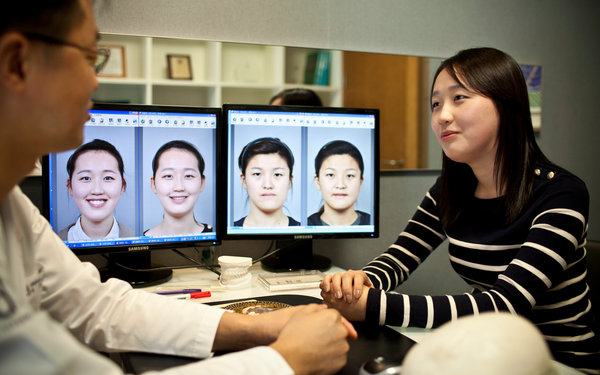
The ubiquity of these procedures is reinforced by pervasive advertising. Commuters in Seoul are frequently met with large-scale "before and after" posters in subway stations and on the sides of buses, framing surgery not as a medical intervention, but as a routine lifestyle upgrade akin to buying new clothing.

Societal Pressures and the "Employment Surgery" Trend
The motivation for undergoing surgery in South Korea extends far beyond vanity or the desire to emulate K-pop idols. In a highly competitive labor market, physical appearance is often viewed as a "spec"—a slang term for the various qualifications, such as GPA and language certifications, that candidates accumulate to impress employers. The phenomenon of "employment plastic surgery" (chwioep seonghyeong) involves job seekers undergoing procedures to present a "trustworthy" or "bright" image during interviews.
A 2010 survey of human resources managers in South Korea revealed that a significant majority considered a candidate’s appearance a deciding factor in the hiring process. This societal reality places an immense burden on individuals, particularly young women, who feel that failing to conform to beauty standards could lead to professional stagnation. Consequently, the "personal choice" to undergo surgery is frequently a pragmatic response to a rigid social hierarchy that rewards a specific aesthetic.
Comparative Analysis: The Lack of Diverse Beauty Voices
A notable difference between the South Korean and Western media landscapes is the presence—or lack thereof—of diverse beauty standards. In the United States, while traditional beauty ideals remain dominant, there are prominent voices that challenge these norms. Figures such as Tina Fey, Lena Dunham, and Mindy Kaling have built successful careers by embracing and satirizing their departure from the "Hollywood ideal." Their presence provides a counter-narrative that celebrates individuality and flaws.
In contrast, the South Korean media environment offers fewer platforms for such subversion. Actresses and singers who do not fit the narrow definition of "beautiful" are often relegated to comedic roles where their appearance is the primary subject of the joke. Comedians like Kim Shin-young and Jung Ju-ri are frequently cast in sketches that highlight their "unattractiveness" compared to their idol counterparts. This binary—where one is either a "beauty" or a "gagwoman"—leaves little room for a middle ground where diverse physical traits are accepted as equally valid. Even in music, artists like the group Big Mama or soloists like Lee-hyun have had their talent overshadowed by marketing campaigns that focused on their physical transformation or their perceived lack of conventional beauty.
The Complicity of the Media and the Path Forward
The South Korean media apparatus is deeply complicit in the glorification of manufactured beauty. Idol stars are not only entertainers but also the primary faces of the cosmetic and skincare industries. When celebrities are revealed to be "natural beauties" (mo-tae-mi-nyeo), it becomes a major headline, further reinforcing the idea that beauty is the ultimate form of social currency. Conversely, those who are "too" surgically enhanced are often mocked as "plastic monsters" (seong-괴), creating a catch-22 where individuals are pressured to get surgery but shamed if the results are too obvious.
However, there are signs of a burgeoning shift in the industry. Some veteran groups, such as the Brown Eyed Girls, have begun to speak candidly about their procedures, using humor and honesty to demystify the process. By acknowledging the "price of beauty," these stars are slowly beginning to erode the culture of denial.

The ultimate challenge for South Korean society lies in decoupling the concept of self-worth from a singular, narrow aesthetic. While individuals like G.NA argue for the personal benefits of cosmetic surgery, those benefits are inextricably linked to a system that penalizes those who do not conform. Until the media and the corporate world begin to champion a more inclusive definition of beauty—one that values diversity over homogeneity—the cycle of surgical conformity is likely to persist. The evolution of these standards will require a concerted effort from educators, media creators, and public figures to foster an environment where "personal satisfaction" is not defined by a surgeon’s scalpel.
Related News