The Evolution of Authenticity: TXT’s Beomgyu Reveals Initial "Prince" Persona Mandate by BIGHIT MUSIC
Article Editorial Team
The meticulously crafted image of K-Pop idols is a well-documented aspect of the industry, often involving a deliberate shaping of personas by entertainment agencies to align with specific group concepts or marketing strategies. This rigorous approach to artist branding frequently requires idols to maintain a designated on-camera persona, even during less formal or off-stage engagements, irrespective of how closely it mirrors their genuine personality. In a recent candid revelation, Beomgyu, a prominent member of the popular boy group TXT, disclosed that his group was subjected to precisely such a directive during their formative debut period under BIGHIT MUSIC.
Beomgyu’s Candid Revelation on Radio Star
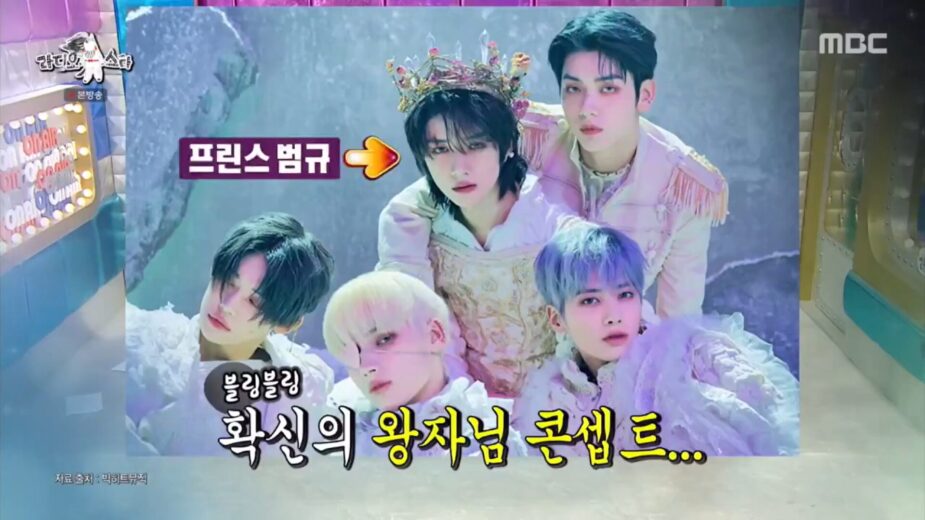
Appearing on the widely watched MBC variety program Radio Star, Beomgyu shed light on TXT’s early days, describing a notably restrained and "tame" public demeanor. He unequivocally stated that this was not an organic expression of their collective personalities but rather a carefully constructed image imposed by their label, BIGHIT MUSIC (now part of HYBE Corporation). The agency’s mandate, according to Beomgyu, was for TXT to embody a "prince-like" aesthetic and persona. This directive came with specific restrictions, notably prohibiting the members from engaging in aegyo – the endearing act of displaying cuteness – even during appearances on variety shows, where such expressions are often encouraged and expected to foster fan engagement.
Beomgyu recounted the internal struggle and the external reception of this strategy. The imposed limitations on their natural expressiveness inadvertently led some viewers to label TXT as a "boring" group. This perception directly contradicted the vibrant, youthful energy that often defines successful K-Pop acts, particularly those targeting a younger demographic. The tension between the mandated image and the members’ inherent personalities created a challenging environment, where attempts to break free from the mold were met with internal resistance.

He specifically recalled an instance during a television appearance where he attempted to inject some of his natural charm and personality by acting cute. This seemingly innocuous act, however, resulted in disciplinary action from the management. Furthermore, Beomgyu revealed that any moments of spontaneous humor or aegyo that he or other members managed to sneak into their filmed content were systematically removed during post-production editing, ensuring the "prince" narrative remained unbroken for public consumption. This stringent control over their public image highlighted the extent to which BIGHIT MUSIC was committed to its initial branding strategy for the group.
The Genesis of the "Prince" Concept: BIGHIT MUSIC’s Strategy
TXT, an acronym for "Tomorrow X Together," debuted on March 4, 2019, with their EP The Dream Chapter: Star. As BIGHIT MUSIC’s first boy group since the global phenomenon BTS, expectations were astronomically high. The agency, having successfully navigated BTS to international stardom, likely sought to replicate certain strategic elements while also differentiating their new act. The "prince-like" concept for TXT was arguably an attempt to establish an aura of polished elegance, youthful purity, and perhaps a degree of aspirational fantasy, which are often appealing traits in the K-Pop market.

In the highly competitive K-Pop landscape, establishing a clear and distinct "concept" is paramount for a group’s identity and market positioning. Concepts can range from "dark fantasy" to "high school crush" to "futuristic cyberpunk." For a group debuting under such a prominent label, the initial concept often serves as a foundational brand identity that the agency believes will resonate with a specific audience segment. BIGHIT MUSIC’s decision to enforce a "tame" and "prince-like" image for TXT might have been rooted in a desire to project an image of impeccable manners and refined charm, aiming to cultivate a sophisticated and universally appealing persona that avoided potentially polarizing or overly boisterous displays common in variety content. The prohibition of aegyo, a common tool for fan service, further underscored this attempt at a more reserved, almost ethereal, presentation.
However, this strategic decision overlooked a crucial element: the burgeoning demand for authenticity from K-Pop fans. While polished visuals and synchronized performances remain central, the digital age has fostered a deeper desire for genuine connection with idols. Fans increasingly seek to understand the real personalities behind the stage personas, appreciating raw, unscripted moments that reveal an idol’s true self.

The Clash with Authenticity and Fan Perception
The imposition of a rigid "prince" image on TXT created a significant disconnect between the agency’s vision and the natural inclinations of the members, as well as the evolving expectations of the audience. K-Pop variety shows and fan interactions are vital platforms for idols to showcase their unique personalities, humor, and charm, which are often crucial for building a strong and loyal fanbase. When these avenues for genuine expression are restricted, groups can indeed come across as less engaging or, as Beomgyu noted, "boring."
The irony, as highlighted by fan reactions, was that TXT’s debut music and visuals themselves often exuded a youthful, energetic, and inherently cute vibe. Their early concepts, revolving around themes of youth, dreams, and growth, naturally lent themselves to a more expressive and charming persona rather than a strictly formal one. This internal inconsistency between their musical concept and their enforced public demeanor likely contributed to the "boring" label. The agency’s attempt to curate an image that potentially clashed with the group’s inherent youthful exuberance and the playful nature often expected of rookie groups in variety settings led to a perception gap. Fans, accustomed to seeing idols engage in lighthearted interactions and displays of aegyo, found TXT’s reserved approach somewhat alienating or difficult to connect with on a personal level.
The Shift: Idols Reclaiming Their Narratives Through Livestreams
The turning point for TXT, according to Beomgyu, came through the advent and increasing popularity of idol livestreams. Unlike pre-recorded television appearances or curated content, livestreams offer a direct, unedited, and immediate channel for idols to communicate with their fans. Recognizing this unique opportunity, the members of TXT made a collective decision to defy the label’s strictures during these live broadcasts. They understood that livestreams, by their very nature, were difficult to censor in real-time post-production, providing a loophole to finally present their authentic selves to their burgeoning fanbase.
This strategic pivot by the members proved to be highly effective. As TXT began to interact more freely and genuinely during their livestreams, their true personalities — full of humor, spontaneity, and warmth — began to shine through. This unvarnished portrayal quickly resonated with fans, who eagerly embraced the more authentic version of the group. The positive reception and increased fan engagement from these livestreams ultimately forced BIGHIT MUSIC to re-evaluate and eventually relax their rigid image control. This moment marked a significant evolution in TXT’s public persona, allowing them to finally express their true selves without fear of reprisal or censorship. The public was then able to witness the multifaceted personalities of the members, fostering a deeper, more genuine connection between the group and their dedicated following.

Industry-Wide Practice: The Curated Image in K-Pop
The practice of agencies dictating idol personas is not unique to TXT or BIGHIT MUSIC; it is a pervasive element of the K-Pop industry’s highly structured system. From the rigorous trainee period, which can last for years, aspiring idols are often coached not only in singing, dancing, and performing but also in media training, public speaking, and image management. Agencies invest significant resources in developing a cohesive brand identity for each group, encompassing everything from their musical style and visual aesthetics to their individual member personas.
This level of control is often justified by agencies as a necessary component for launching and sustaining a successful career in a saturated market. A clear concept helps a group stand out, appeal to a target demographic, and maintain a consistent brand message. Historically, many successful K-Pop groups have debuted with highly curated images, with idols adhering strictly to these personas for years before gradually revealing more of their true selves. This controlled environment aims to minimize controversies, maintain a pristine public image, and ensure marketability. However, as Beomgyu’s story illustrates, this approach can sometimes stifle individuality and lead to a perception of inauthenticity.

The digital age, characterized by social media and direct fan communication platforms, has progressively challenged this traditional model. Fans, particularly the younger generation, value transparency and authenticity more than ever. The rise of platforms like VLIVE, YouTube, and more recently, TikTok, has empowered idols to bypass traditional media filters and connect with their audience directly, creating an environment where unscripted moments and genuine interactions are highly prized. This shift has placed increasing pressure on agencies to adapt their management strategies, balancing the need for a cohesive brand with the growing demand for genuine idol personalities.
Fan Reactions and the Demand for Authenticity
The revelation from Beomgyu sparked a wave of intense reactions across social media platforms, with fans largely expressing a mix of amusement, frustration, and vindication. Many found the restrictions placed on TXT absurd, particularly in light of what they perceived as the agency’s inability to effectively cultivate the intended "prince-like" image in the first place. Fans pointed to various instances from TXT’s early career where their natural, chaotic, and humorous personalities inadvertently shone through, often in stark contrast to the sophisticated image BIGHIT MUSIC was reportedly trying to enforce.

One common sentiment among fans was that the agency’s marketing team seemed "clueless from day one," suggesting a fundamental misunderstanding of the group’s inherent charm and the audience’s preferences. Tweets and online discussions frequently juxtaposed the "prince" mandate with images and videos of TXT members engaging in playful antics, making funny faces, or even wearing casual, less-than-princely attire. This juxtaposition served to highlight the perceived incongruity between the agency’s vision and the reality of the group’s dynamic.
The overarching theme in fan reactions was a strong endorsement of authenticity. Fans lauded TXT for their courage in eventually defying the restrictions and using livestreams to reveal their true selves. This narrative resonated deeply, as it celebrated the idols’ agency in reclaiming their own narratives and fostering a more genuine connection with their fanbase. The backlash against BIGHIT MUSIC’s initial strategy underscored a broader fan sentiment within the K-Pop community: a preference for real, relatable personalities over overly polished or manufactured ones. This desire for authenticity is a powerful force in modern K-Pop fandom, driving engagement and loyalty far more effectively than a rigidly controlled image.

Implications for Artist Management and Fan Engagement
Beomgyu’s revelation offers valuable insights into the evolving dynamics between K-Pop idols, their agencies, and their fanbases. It underscores several critical implications for artist management and fan engagement in the contemporary entertainment landscape.
Firstly, it highlights the increasing difficulty for agencies to maintain absolute control over an idol’s public image in the digital age. The proliferation of direct communication channels, such as livestreams and personal social media accounts, empowers idols to bypass traditional media filters and connect with fans on a more personal level. This shift necessitates a more flexible and adaptive approach from agencies, moving away from rigid image mandates towards strategies that allow for greater artistic and personal expression.

Secondly, the incident reinforces the growing demand for authenticity from K-Pop fans. Modern fandom thrives on genuine connection and relatability. Fans are increasingly adept at discerning manufactured personas from genuine ones and tend to gravitate towards idols who are perceived as authentic and transparent. Agencies that fail to recognize and adapt to this trend risk alienating their audience and hindering their artists’ ability to build deep, lasting fan relationships.
Thirdly, it showcases the agency of idols themselves. While contracts and industry structures often place significant power in the hands of management, Beomgyu’s account demonstrates that idols can, and do, find ways to assert their individuality and influence their public perception. The collective decision by TXT members to utilize livestreams as a platform for authenticity was a strategic move that ultimately redefined their relationship with their label and their fans.

Finally, this episode serves as a case study in the delicate balance between branding and genuine expression. While a strong concept is crucial for market entry and identity, an overly restrictive approach can backfire, leading to a perception of inauthenticity and hindering organic fan growth. Successful long-term artist development in K-Pop now requires agencies to foster environments where idols can grow, evolve, and express their true selves, rather than being confined to static, pre-defined personas. The journey of TXT from a strictly "prince-like" group to one celebrated for its genuine and multifaceted personalities is a testament to the power of authenticity in an industry that is constantly negotiating the line between artifice and artistry.
Related News