
The concept of Korean nationalism represents a complex and deeply rooted ideological framework that distinguishes itself from the civic nationalism prevalent in many Western democracies. Often described as ethno-nationalism, this sentiment is predicated on the belief that the Korean people constitute a single, homogenous bloodline (danil minjok) that has occupied the Korean peninsula for millennia. While this shared identity has served as a powerful tool for mobilization during periods of colonial occupation and economic reconstruction, it increasingly faces scrutiny in an era defined by globalization, shifting demographics, and regional geopolitical tensions. Understanding the trajectory of Korean nationalism requires an examination of its mythic foundations, its defensive crystallization during the early 20th century, and its contemporary implications for both domestic policy and international relations.
The Mythic Foundations: Tan’gun and the 5,000-Year Narrative
At the heart of Korean ethno-nationalism lies the foundational myth of Tan’gun Wanggeom, the legendary forefather of the Korean people. According to traditional lore, the Korean race traces its origins to 2333 BC. The narrative, first recorded in the 13th-century historical chronicle Samguk yusa (Memorabilia of the Three Kingdoms), posits that Hwan-ung, the son of the heavenly god Hwan-in, descended to Earth at Mount Paektu.
The myth details a trial involving a tiger and a bear who wished to become human. While the tiger failed to endure the required 100 days of seclusion fueled only by mugwort and garlic, the bear succeeded, transforming into a woman named Ung-nyeo. She subsequently wed Hwan-ung and gave birth to Tan’gun, who founded Gojoseon, the first Korean kingdom.
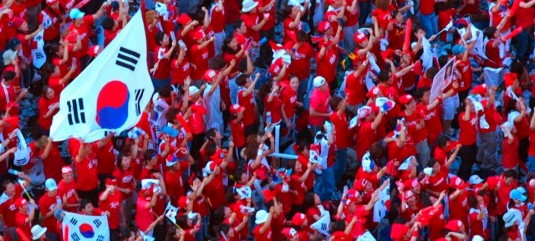
While contemporary historians and the South Korean public largely view the Tan’gun narrative as a foundation myth rather than a literal biological record, its symbolic power remains immense. The idea of a "pure" bloodline descending from a semi-divine ancestor provides a powerful sense of continuity. In North Korea, this myth has been co-opted for political legitimacy; in 1993, the regime claimed to have discovered the "Tomb of Tan’gun" near Pyongyang, an assertion widely viewed by international archaeologists as a fabrication designed to anchor the Kim dynasty’s legitimacy in ancient lineage.
The Chronology of National Awakening: 1876 to 1945
Contrary to the "time immemorial" narrative, modern Korean nationalism is a relatively recent construct, born out of the existential threats facing the peninsula in the late 19th and early 20th centuries. For centuries, the Joseon Dynasty (1392–1910) operated within a neo-Confucian framework where loyalty was directed toward the monarch and the broader Sinitic civilization rather than a "nation" in the modern sense.
1876–1905: The Erosion of Sovereignty
The opening of Korea via the Treaty of Ganghwa in 1876 exposed the "Hermit Kingdom" to the imperial ambitions of Japan, China, and Russia. As the Joseon state weakened, intellectuals began to realize that traditional Confucian structures were insufficient to protect Korean interests. This period saw the rise of reformist movements and the establishment of newspapers like Tongnip Sinmun (The Independent) in 1896, which began promoting the use of Hangul (the Korean alphabet) over Chinese characters to foster a sense of popular identity.
1905–1910: The Protectorate and Annexation
Following the Russo-Japanese War, Japan established a protectorate over Korea in 1905, followed by full annexation in 1910. It was during this "dark age" of sovereignty that the concept of minjok (the ethnic nation) was formalized. Historians like Shin Chae-ho sought to "rediscover" a glorious Korean past that was distinct from Chinese influence, emphasizing the martial prowess of the ancient kingdom of Goguryeo and the divine lineage of Tan’gun as a psychological bulwark against Japanese assimilation policies.

1910–1945: Colonial Resistance
Under Japanese rule, the colonial administration attempted to dismantle Korean identity through the Naisen Ittai policy (Japan and Korea are One), which eventually mandated that Koreans adopt Japanese names and speak only Japanese. In response, Korean nationalism became an essential survival mechanism. The March 1st Movement of 1919 served as a pivotal moment, demonstrating a unified national desire for independence that transcended class and regional lines.
Data and Societal Metrics: The "One-Race" Doctrine in Practice
The legacy of this defensive nationalism remains visible in South Korean social and legal structures. For decades, the South Korean education system emphasized the "pure blood" (sunhyeol) of the Korean people.
- Educational Curriculum: Until the mid-2000s, South Korean textbooks frequently used the term "single-blood nation" to describe the country’s demographic makeup.
- International Criticism: In 2007, the United Nations Committee on the Elimination of Racial Discrimination (CERD) issued a formal recommendation to South Korea, urging the government to overcome the notion of "pure blood" and to recognize the country’s shift toward a multiethnic society.
- Demographic Shifts: According to the Ministry of Interior and Safety, the number of foreign residents in South Korea surpassed 2.2 million in 2022, accounting for approximately 4.4% of the total population. This represents a significant increase from less than 1% two decades ago.
The persistence of ethno-nationalist sentiment is often cited as a primary factor in the discrimination faced by "multicultural families" (damunhwa gajeong), particularly those involving Southeast Asian or Chinese-Korean migrants. Despite government efforts to promote "multiculturalism," societal acceptance of non-ethnic Koreans as "truly Korean" remains a point of contention.
Official Responses and Policy Evolutions
In response to both international pressure and domestic demographic realities—most notably a record-low birth rate that necessitates increased immigration—the South Korean government has begun a gradual pivot away from hardline ethno-nationalism.

- Legislative Changes: The enactment of the "Support for Multicultural Families Act" in 2008 marked an official acknowledgement that the state must provide social services to non-ethnic Korean residents and their children.
- Military Policy: In 2011, the South Korean military removed a regulation that prevented biracial men from enlisting, a move intended to reflect the changing face of the nation’s youth.
- Diplomatic Friction: Ethno-nationalism continues to complicate regional diplomacy. The "History Wars" with China over the heritage of the Goguryeo kingdom (which China claims as a regional minority state and Korea claims as a foundational national ancestor) demonstrate how ancient history is weaponized to serve modern nationalist agendas. Similarly, the ongoing disputes with Japan over the Dokdo islets and historical grievances from the colonial era are frequently fueled by nationalist fervor that limits the room for diplomatic compromise.
Analysis of Implications: The Future of the Minjok
The survival of Korean ethno-nationalism presents a paradox for the 21st century. On one hand, it provided the social cohesion and collective will necessary for South Korea to achieve the "Miracle on the Han River," transforming from a war-torn agrarian society into a global technological powerhouse in less than three generations. On the other hand, the rigidity of an identity based on bloodline poses a significant threat to South Korea’s future stability.
The Economic Imperative
With a fertility rate that has plummeted to 0.72 (as of 2023), South Korea faces a "demographic cliff." To maintain its workforce and pension systems, the country must integrate foreign labor. However, if the national identity remains tied strictly to ethnicity, these new residents will remain perpetual outsiders, potentially leading to the kind of social fragmentation seen in parts of Europe.
The North-South Divide
Ethno-nationalism also remains the only common ideological ground between North and South Korea. Both regimes utilize the concept of "one people" to justify their respective goals for reunification. However, as the two societies diverge culturally and linguistically after 70 years of separation, the "bloodline" argument is losing its potency among the younger generation in the South, many of whom view North Koreans as a distinct and alien group rather than long-lost kin.
Conclusion
The evolution of Korean nationalism from a mythic origin story to a defensive colonial shield and finally to a modern social challenge illustrates the power of identity in shaping a nation’s destiny. While the narrative of the danil minjok provided the resilience needed to survive the 20th century, the 21st century demands a more inclusive definition of what it means to be Korean. Whether South Korean society can transition from a "blood-based" nation to a "civic-based" nation will likely determine its ability to navigate the complexities of a globalized world and its own demographic crisis. The myth of Tan’gun, once a source of unity, must now be reconciled with a reality where the Korean identity is increasingly defined by shared values and legal citizenship rather than biological ancestry.