Korean dramas, a cornerstone of the global Hallyu wave, have transcended their entertainment value to become powerful cultural ambassadors, subtly shaping international perceptions of Korean society while simultaneously reflecting and responding to evolving domestic and global social trends. While these narratives offer a captivating glimpse into various facets of Korean life, it is crucial to discern between on-screen idealizations and everyday realities, particularly concerning workplace dynamics and gender roles. The depiction of professional and personal lives in K-dramas often navigates a complex interplay between mirroring the progress of Korean society and imagining aspirational futures that resonate with an increasingly discerning global audience.
The Rise of Hallyu and Shifting Audience Demographics
The phenomenon of Hallyu, or the Korean Wave, has dramatically accelerated the global demand for Korean dramas, with international viewership now frequently surpassing domestic consumption. The proliferation of Netflix originals and other Over-The-Top (OTT) K-dramas is a clear indicator of a strategic shift by creators to cater to a worldwide demographic. Industry reports and audience studies consistently highlight that a significant majority of this international audience is female. This demographic, characterized by shifts in age, occupation, and cultural outlook, has become a powerful catalyst for change within the K-drama landscape. In response to these evolving tastes and broader societal transformations in South Korea, K-drama creators have progressively redefined the roles, occupations, and agency afforded to their female characters. This is not merely a superficial change but a deep-seated evolution in storytelling that speaks to contemporary desires for empowerment and representation.

A Chronology of Evolving Female Portrayals
The trajectory of female characters in K-dramas has seen a remarkable transformation over the past two decades. Historically, many K-dramas predominantly centered male protagonists, with female characters often relegated to supporting roles as love interests or foils. However, the last decade, particularly from the mid-2010s onwards, has witnessed a significant surge in women-led narratives. These stories frequently delve into more intricate themes than traditional romantic comedies, offering multifaceted portrayals of female ambition, resilience, and moral complexity.
Data from South Korea’s national broadcaster KBS illustrates this trend, reporting that over 53% of lead characters in its dramas were female in 2021, marking a modest yet significant increase from its five-year average of 49.8%. While other major networks showed figures around 40% between 2017 and 2020, the overall trajectory points towards a deliberate move to feature more prominent female roles. This shift is largely attributed to the growing expectations of the female audience, both domestically and internationally, who are increasingly seeking characters that embody agency and strength, moving away from passive archetypes towards figures that inspire and empower.
Redefining Female Power and Agency
Modern K-dramas are actively engaged in redefining what constitutes "power" for women. This redefinition extends beyond merely assigning powerful job titles; it encompasses a character’s capacity to actively steer their own life, make autonomous decisions, articulate their convictions, and prioritize their well-being. This expanded notion of power allows for portrayals of women who are independent and resilient, even if they are at times morally ambiguous or flawed. Power, in these narratives, is not solely measured by status or dominance but by the unwavering ability to stand one’s ground and project strength, particularly in interactions with men.
This evolution is not confined to female characters alone. K-drama creators are also increasingly willing to depict male characters who defy traditional gender expectations. This includes a greater openness for men to express vulnerability, engage in non-stereotypical activities, and even rely on female partners. The thematic scope of K-dramas has visibly expanded to explore gender, power, and social status from diverse and often subversive perspectives.
Occupations as Narrative Tools and Identity Formers
The occupations assigned to K-drama characters serve various narrative functions, sometimes as mere plot devices and other times as fundamental shapers of identity. In workplace romantic comedies like Business Proposal, the hierarchical relationship between CEO Kang Tae-moo (Ahn Hyo-seop) and employee Shin Ha-ri (Kim Se-jeong) primarily serves to generate romantic tension and comedic situations within the corporate setting. While this formula provides lighthearted entertainment, it often sacrifices deeper character development, reducing professions to convenient catalysts for romance rather than integral components of a character’s ambitions and identity. The implications here are subtle but significant: by de-emphasitizing the professional aspects, these dramas can inadvertently sidestep deeper questions about work-life balance, career aspirations, and workplace challenges that are highly relevant to contemporary female audiences.

Conversely, in other dramas, a character’s occupation is central to their being. In Crash Landing on You, Yoon Se-ri (Son Ye-jin) is depicted as the highly successful CEO of a South Korean fashion and lifestyle conglomerate. Her executive role is intrinsically linked to her confident and independent personality throughout the series. Her financial prowess and decision-making capabilities are repeatedly showcased, from her ability to buy property to her strategic use of connections, demonstrating a profound departure from traditional passive heroines. Unlike characters who wait to be rescued, Se-ri actively leverages her resources, including political and judicial connections, to protect her love interest, Ri Jeong-hyeok (Hyun Bin), a North Korean army officer whose military position is equally crucial to the narrative’s central conflict. Had he been a civilian, the intricate plot of hiding a South Korean woman and facilitating her escape would be untenable, highlighting how both leads’ professions are indispensable to their identities and the plot.
Similarly, in My Love from the Star (2013), Cheon Song-yi (Jun Ji-hyun), a celebrated actress, embodies a bold and outspoken persona intrinsically tied to her celebrity status. Her profession subjects her to intense public scrutiny, especially when a scandal involving a fellow actress’s death causes her career to plummet. This dramatic fall initiates a profound journey of self-realization and personal growth, revealing a more serious and vulnerable side beneath her initially whimsical exterior. Her inherent fearlessness and quirky confidence are portrayed as direct consequences of her power and visibility in society. While the drama initially used her celebrity for comedic effect, it ultimately allowed a successful woman to be loud, vain, selfish, funny, emotional, and competent simultaneously, challenging conventional expectations of female characters. This drama, released over a decade ago, demonstrated early inklings of complex female portrayals, a trend that has significantly expanded in recent years, with K-drama creators now openly exploring themes of women’s ambition and resistance, actively challenging societal norms.
Workplace Realities vs. Fictional Aspirations
The portrayal of women’s professional lives in K-dramas often stands in stark contrast to the challenging realities faced by Korean women workers. Government research and reports, such as those by the OECD (2021), indicate that Korean workers, both male and female, endure some of the longest working hours globally. Simultaneously, Korean men spend the second shortest amount of time on household chores (OECD, 2020), underscoring a significant burden on women workers both inside and outside the workplace.

Some K-dramas, however, present an idealized counter-narrative. In Boyfriend on Demand, Seo Mi-rae (Kim Ji-soo) is depicted working extensive overtime, living independently away from her family, and prioritizing her career over traditional dating. This challenges the prevailing social norms and represents a cultural fantasy for many viewers – an aspirational world where women are empowered to prioritize their professional ambitions and make autonomous life choices, untethered from male relationships. Such portrayals act as a powerful form of escapism and a subtle critique of existing workplace norms, allowing women characters to define their lives on their own terms.
Beyond individual professions, workplace hierarchies play a critical role in shaping a character’s identity and perceived power, especially in South Korean culture, which is deeply rooted in hierarchical structures. Employees of lower status are often expected to exert greater effort to support those above them. For women, OECD data reveals significantly fewer opportunities for promotion compared to their male counterparts, highlighting a persistent gender gap in career advancement.
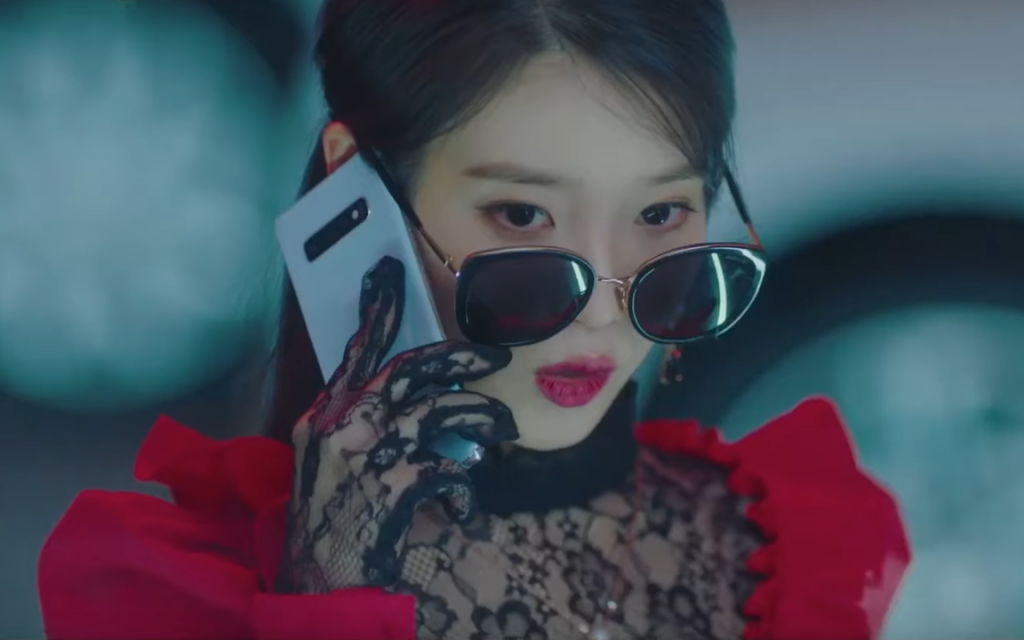
The trope of women working as subordinates to male leads has been a long-standing fixture in K-dramas, exemplified by What’s Wrong with Secretary Kim?. Kim Mi-so (Park Min-young), despite her exceptional competence as secretary to Lee Young-joon (Park Seo-joon), remains in a subordinate position. Even after their marriage, the workplace hierarchy often overshadows her professional aspirations, with the series ultimately prioritizing her romantic relationship over her career. This reflects a familiar pattern where a woman’s professional identity becomes secondary once romance takes center stage. However, a noticeable shift is underway. While characters like Jang Man-wol (IU/Lee Ji-eun) in Hotel Del Luna are powerful business owners, commanding authority and respect, even subordinate characters like Baek Su-jeong (Moon Ga-young) in My Dearest Nemesis are now shown actively demanding and fighting for respect and autonomy. This signifies a direct consequence of increasing agency, empowering characters to assert their individuality regardless of their hierarchical position.
The Evolution of Male Characters and Challenging Masculinity

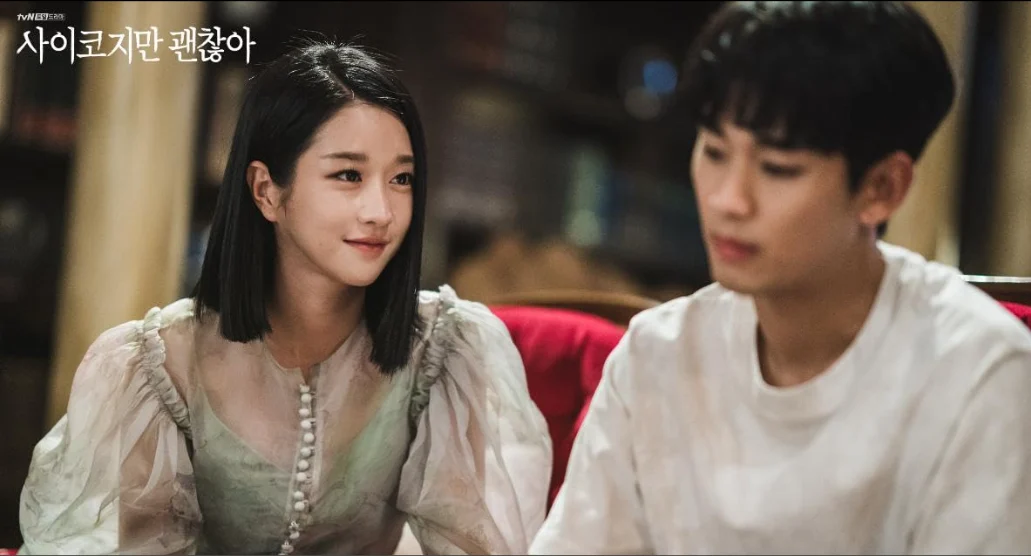
This evolution in K-drama portrayals extends to male characters, challenging conventional notions of masculinity and gender roles. In My Dearest Nemesis, Choi Hyun-wook’s boss character secretly indulges in a "fanboy" lifestyle, an activity often stereotyped as traditionally "feminine." The drama shows him overcoming this societal stereotype and confidently embracing his authentic self. Similarly, in It’s Okay Not to Be Okay, Moon Gang-tae (Kim Soo-hyun) works as a psychiatric caregiver, a role that emphasizes emotional intelligence and empathy. He is portrayed as emotionally expressive and humble, struggling financially, and living modestly while caring for his older brother. Crucially, he often relies on Ko Moon-young (Seo Yea-ji), a wealthy and successful children’s book author, even living in her house at certain points. This portrayal of a male lead depending on a female lead, while their support is mutual, represents a significant shift from traditional gender dynamics where the man is typically the dominant provider. Ko Moon-young herself is a complex female character, self-driven, ambitious, and morally gray, further challenging conventional heroine archetypes.
Through such narratives, K-dramas encourage viewers to critically examine conventional ideas about masculinity and gender roles, actively attempting to dismantle stereotypes through compelling storytelling. Yet, it is important to acknowledge that South Korea continues to exhibit one of the widest gender employment gaps among OECD member countries. This stark contrast suggests that while K-dramas are increasingly envisioning more equitable gender dynamics, these portrayals often represent desired aspirations rather than the lived realities of contemporary Korean society.
Broader Impact and Future Implications
The evolving portrayal of women in K-dramas signifies their active participation in reshaping conventional narrative structures. Female characters are no longer confined to being mere romantic interests or emotional support systems; they are written as flawed, ambitious, morally complex, and self-driven individuals who actively sculpt their own destinies. Whether navigating complex workplace hierarchies or driving character-centric narratives, women are increasingly depicted as exercising agency rather than passively awaiting rescue. This deliberate normalization of images of female ambition and independence, which may not yet be commonplace in everyday Korean life, serves as a powerful cultural statement.

While traditional tropes and gendered expectations have not entirely vanished, the rising number of dramas that explicitly challenge these norms indicates a significant shift in audience demand. This demand is being met with a growing supply of such progressive narratives, reflecting not only a change in thinking within the industry but also an effort to inspire further societal change. As K-dramas continue to expand their global reach, these nuanced portrayals transcend South Korean borders, contributing to broader international conversations about gender, independence, and power.
In this context, entertainment transcends simple storytelling; it transforms into a subtle yet profoundly influential space where ideas about autonomy and identity are continuously redefined. Some dramas serve as a reflective mirror to the realities of contemporary Korean society, prompting audiences to question existing norms. Others boldly challenge these standards by presenting idealized worlds where women wield greater agency and independence than they often do in reality. Rather than merely mirroring society, K-dramas engage in a dynamic conversation with it, simultaneously reflecting current social realities and imagining new, progressive possibilities for the future.
Garima Chhabra is an Indian writer drawn to introspective storytelling that explores love, emotion, and the quieter sides of life. She writes poems, music, and essays that reflect on feeling deeply and thinking inward. Inspired by Korean R&B and dramas, her work often finds beauty in stillness, vulnerability, and emotional nuance. More of her writing can be found on Substack @garimachhabra.
(Statista, Research Gate, 2018 Reddit K-Drama Census, CNN, National Library of Medicine, Borgen Project. Images via: tvN, Netflix, SBS.)