The Intersection of Black Culture and Korean Pop Music A Critical Analysis of Appropriation Influence and the Global Fandom Experience
Article Editorial Team
The global ascension of Korean pop music, commonly known as K-pop, has transformed from a regional phenomenon into a multi-billion-dollar international industry. Central to this success is the genre’s ability to synthesize various musical styles, most notably those rooted in Black American culture, including hip-hop, R&B, soul, and jazz. However, as K-pop expands its reach into Western markets, the relationship between the industry and its Black audience has come under intense scrutiny. This tension arises from a recurring pattern of cultural appropriation, racial stereotyping, and a perceived lack of historical understanding regarding the very art forms that K-pop emulates. For Black fans, the experience of consuming K-pop is often a complex negotiation between an appreciation for the music’s high production value and the discomfort of seeing their culture utilized as a mere aesthetic or "concept."
The Historical Blueprint: Black Music as the Foundation of Modern K-pop
To understand the current discourse surrounding Black fans and K-pop, one must first acknowledge the foundational debt the South Korean music industry owes to Black artists. The birth of modern K-pop is often traced back to 1992 with the debut of Seo Taiji and Boys, who introduced American hip-hop and New Jack Swing to the Korean mainstream. Since then, the "idol" system has consistently relied on Black musical structures.
Industry data suggests that the most successful K-pop exports—groups like Big Bang, BTS, and EXO—built their initial identities on hip-hop and R&B foundations. BTS, for instance, has been vocal about the influence of artists such as D’Angelo, Prince, and India Arie. Similarly, the late Michael Jackson remains the single most influential figure for K-pop choreography and performance style, with idols frequently paying homage to his "King of Pop" aesthetics in music videos and live stages. Despite this heavy reliance on Black creativity, there remains a disconnect in how the industry handles the cultural context of these genres.

A Chronology of Cultural Friction and Controversy
The history of K-pop’s global expansion is marked by a series of incidents that have alienated Black fans and sparked international debate. These controversies often fall into three categories: the use of offensive symbols, the practice of blackface, and the appropriation of "Blackness" as a costume.
In the mid-2010s, several high-profile incidents brought these issues to the forefront. In 2015, the hip-hop duo Infinite H faced backlash when the Confederate flag—a symbol of white supremacy and slavery in the United States—appeared in their promotional content. The defense often cited by fans was that the artists were unaware of the flag’s historical weight. However, critics argue that in an era where K-pop agencies actively seek "crossover" success in the U.S., the "ignorance" defense is no longer viable.

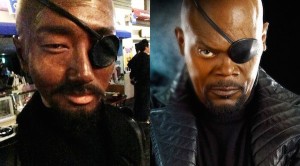
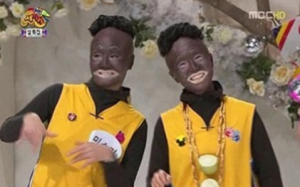
Furthermore, the practice of blackface has surfaced multiple times within the industry. High-profile idols, including Yesung of Super Junior, have been criticized for wearing dark makeup to imitate Black celebrities. These instances are often dismissed by domestic audiences as "homage" or "comedy," but for Black international fans, they represent a painful continuation of minstrelsy—a 19th-century theatrical practice used to dehumanize Black people.
Appropriation vs. Appreciation: The "Concept" Problem
A significant point of contention for Black fans is the industry’s tendency to treat hip-hop not as a culture or a lived experience, but as a "concept" or a trend to be discarded when it is no longer profitable. This is often referred to as "cultural appropriation"—the adoption of elements of one culture by members of another, typically without showing an understanding of the original context and while often reinforcing stereotypes.

For example, the 2015 release of 4Minute’s "Crazy" and Keith Ape’s "It G Ma" sparked intense debate regarding the line between inspiration and imitation. In "Crazy," the group utilized aesthetics associated with Black urban culture—braids, specific slang, and "tough" posturing—to project an image of "coolness." Critics argue that when non-Black artists "put on" these traits as a costume to gain "street cred" or "authenticity," they are engaging in appropriation. This is particularly jarring when the same artists or agencies fail to speak out against racism or colorism within their own society.
Conversely, "appreciation" is characterized by a deep engagement with the history of the genre. Some fans point to artists like Tiger JK, Tasha (Yoon Mi-rae), and Dynamic Duo as examples of Korean musicians who have spent decades studying hip-hop’s roots and contributing to the culture authentically, rather than treating it as a seasonal gimmick.
The Black Fan Experience: Marginalization Within the Fandom
Beyond the actions of the idols and agencies, the internal dynamics of the K-pop fandom itself present challenges for Black supporters. Black fans often report feeling invisible or marginalized within the global community. This marginalization manifests in various ways, from the lack of representation in fan-produced content to the dismissive "let it slide" rhetoric used by other fans when racial issues are raised.
In the realm of fan-produced media, such as "reader-insert" fan fiction, the default protagonist is almost exclusively portrayed as white or East Asian. Physical descriptions often center on traits that are not inclusive of Black fans, such as "running hands through silky hair," which serves as a subtle but constant reminder of their exclusion from the "romantic idol" fantasy.

Furthermore, when Black fans voice concerns about offensive behavior, they are frequently met with hostility from the broader fandom. Common responses include accusing Black fans of being "fake outraged" or "sensitive." This creates a "passive-aggressive" environment where the feelings of marginalized groups are prioritized below the reputation of the idol. The irony, as noted by many Black fans, is that these same "defenders" are often gushing over music that would not exist without Black influence.
Official Responses and the Need for Systematic Change
While many agencies have historically remained silent during racial controversies, some have begun to take steps toward education. Seven Seasons, the agency formerly representing the group Block B, has been noted for responding to international fans who reached out to explain why certain lyrics or actions were offensive. In some instances, agencies have issued apologies or edited music videos to remove problematic imagery.

However, many analysts believe that reactive apologies are insufficient. The root of the problem lies in the lack of diversity and cultural competency training within the "Big Four" (HYBE, SM, YG, and JYP) and other major labels. As K-pop idols are now global ambassadors, their actions have a profound impact on international relations and social discourse.
The industry’s desire for Western success—evidenced by collaborations with artists like Nicki Minaj, Megan Thee Stallion, and Usher—requires a corresponding commitment to cultural respect. Industry experts suggest that agencies should employ cultural consultants to vet "concepts" before they are released to a global audience.
Broader Implications: A Kaleidoscope of Colors
The debate over Black culture in K-pop is not merely about "political correctness"; it is about the ethics of global consumption. As South Korea continues to project its "soft power" through the Hallyu wave, it must grapple with the responsibilities that come with being a cultural exporter.
For Black fans, the attraction to K-pop often stems from a shared history of overcoming oppression and a mutual respect for high-level artistry. Many Black fans express that they do not wish to "cancel" K-pop; rather, they want the industry to acknowledge the roots of its success. They seek a move away from the "minstrel show" tropes of the past toward a future of genuine collaboration and mutual respect.

The economic reality is that the Black community has significant purchasing power and influence on global trends. By alienating this demographic, K-pop agencies risk hitting a "ceiling" in their international expansion. Conversely, by embracing true cultural competency, the industry can move toward a more sustainable and inclusive model.
In conclusion, the relationship between Black culture and K-pop is one of the most vital and fraught intersections in modern entertainment. While the music has the power to bridge cultural divides, the recurring issues of appropriation and ignorance serve as significant barriers. The future of K-pop’s global dominance may well depend on its ability to transition from a "consumer" of Black culture to a respectful partner in the global musical landscape. As the industry matures, the hope is that it will finally offer the "respect" that Black fans and creators have long advocated for, ensuring that the "kaleidoscope of colors" in music is one of true harmony rather than imitation.
Related News