The Intersection of Hallyu and Black Culture Navigating Appropriation and Appreciation in the K-pop Fandom
Article Editorial Team
The global expansion of the South Korean music industry, commonly referred to as the Hallyu wave, has fostered a remarkably diverse international community of listeners. As K-pop transcends national borders, it has increasingly relied on the foundational elements of Black American musical genres, specifically Hip-Hop, R&B, and Soul. However, this cross-cultural exchange has not been without friction. For Black fans within the K-pop community, the experience is often a complex duality: a deep appreciation for the artistry and performance of Korean idols tempered by frequent encounters with cultural appropriation, racial stereotypes, and systemic insensitivity. A recent roundtable discussion featuring prominent commentators Camiele, Cjontai, and Taylore has brought these issues to the forefront, highlighting the urgent need for cultural literacy within an industry that seeks a permanent foothold in the Western market.
The Foundation of Global K-pop and the Paradox of Influence
The modern K-pop aesthetic is inextricably linked to Black culture. From the early 1990s, when Seo Taiji and Boys introduced elements of American Hip-Hop to the Korean public, to the current era of "trap" influenced idol tracks, the influence is pervasive. However, as the roundtable participants noted, there is a distinct difference between genuine appreciation and the performative use of culture as a "concept" or "gimmick."
One of the primary points of contention involves the "Kanye West defense." In several instances where K-pop idols have worn the Confederate flag—a symbol of systemic racism and slavery in the United States—fans have pointed to American rapper Kanye West’s use of the imagery as a justification. Participants in the discussion clarified that West does not serve as a universal representative for the Black community, and his controversial artistic choices do not grant a "pass" for international artists to use harmful symbols without scrutiny. This highlights a broader issue: the tendency of both agencies and fans to latch onto singular, often problematic, examples of Black artistry to deflect legitimate criticism.

A Chronology of Cultural Friction in the Industry
To understand the current state of the discourse, it is necessary to examine the timeline of incidents that have sparked debate regarding race and representation in K-pop. These events illustrate a recurring pattern of aesthetic imitation without historical context.
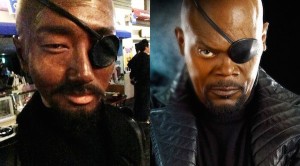
- 2013: The Blackface Controversy: Yesung of the veteran group Super Junior faced intense criticism after posting photos in what appeared to be blackface while impersonating Nick Fury from the Marvel cinematic universe. The incident highlighted a significant gap in understanding the historical weight of minstrelsy.
- 2014: Linguistic Insensitivity and the "N-word": Several high-profile idols, including Zico of Block B, were criticized for the use of racial slurs in their lyrics or during live broadcasts. While some agencies, such as Seven Seasons, responded to fan education efforts, the recurring nature of these slips suggests a lack of rigorous internal vetting.
- 2014: The "American Hustle Life" Experiment: BTS participated in a reality program where they were mentored by Hip-Hop legends such as Coolio and Warren G. While the show was designed to ground the group in the history of the genre, it also exposed the awkwardness of the "idol rapper" concept when confronted with the lived realities of Black artists.
- 2015: The Aesthetic Appropriation of "Crazy" and "It G Ma": The release of 4Minute’s "Crazy" and Keith Ape’s "It G Ma" sparked renewed debates. While praised for their high production values, critics argued that the "tough" or "street" imagery utilized in these videos often reduced Black culture to a costume meant to project "edginess."
Supporting Data: The Economic and Social Reach of the Fandom
The demographic shift of the K-pop audience suggests that the industry can no longer afford to ignore minority perspectives. According to industry reports from 2023, the United States remains the largest market for K-pop outside of Asia, with a significant percentage of that growth driven by Black and Latinx consumers. Data from streaming platforms indicates that Hip-Hop and R&B-leaning K-pop tracks consistently outperform traditional "bubblegum pop" in international markets.

Despite this, Black fans report a feeling of invisibility within the fan-produced content that sustains the community. In the realm of "fanfiction" or "reader-insert" stories, descriptions of protagonists often default to Eurocentric features, such as "running fingers through silky hair." As Taylore noted in the roundtable, these small but persistent exclusions remind Black fans that they are often not the intended audience for the "romantic illusion" that the idol industry sells. This lack of representation in fan spaces mirrors the lack of representation in the industry’s strategic planning.
Official Responses and the Role of Agency Education
The response from South Korean entertainment agencies has been varied, ranging from total silence to formal apologies and promises of reform. Agencies like SM Entertainment and YG Entertainment have historically been slow to address cultural appropriation directly, often choosing to delete controversial content without issuing a statement.

In contrast, smaller labels have sometimes shown more agility. Seven Seasons, the former management for Block B, has been noted for its willingness to engage with international fanbases who reach out to explain why certain behaviors are offensive. This "fan-led education" model has become a primary tool for change, yet participants in the roundtable argue that the burden of education should not rest solely on the shoulders of the marginalized fans who are being offended.
The consensus among critics is that as these companies hire international choreographers, producers, and songwriters—many of whom are Black—there is an internal infrastructure that could be used to provide cultural sensitivity training. The failure to do so is increasingly viewed not as "cultural ignorance," but as a strategic choice to prioritize a specific aesthetic over human respect.
Analysis of Implications: Soft Power and Global Branding
The stakes for the South Korean government and the music industry are high. K-pop is a primary component of South Korea’s "Soft Power" strategy, used to bolster the country’s image and tourism. When idols engage in behaviors that are perceived as racist or culturally insensitive, it damages the "brand" of Korea on the global stage.
Furthermore, there is a growing tension between the "authenticity" required by Hip-Hop and the manufactured nature of the idol system. For a K-pop rapper to be taken seriously by global Hip-Hop fans, they must demonstrate a respect for the roots of the genre. As Camiele pointed out, artists like Tiger JK, Tasha (Yoon Mi-rae), and Dynamic Duo are respected because they have immersed themselves in the culture rather than simply putting on a "hip-hop costume." The "idol" version of Hip-Hop often lacks this depth, leading to what many describe as a "minstrel-lite" performance that is increasingly rejected by discerning listeners.

The Road Toward Mutual Respect
The roundtable concluded with a call for respect rather than just imitation. Black fans are not asking for K-pop to stop using Black musical influences; rather, they are asking for the industry to acknowledge the source of their success. This involves:
- Historical Research: Agencies must conduct basic research into the symbols and language they use in music videos and fashion.
- Diverse Representation: Including Black perspectives in the creative and marketing processes to ensure that concepts are celebratory rather than appropriative.
- Accountability: Moving beyond the "ignorance" excuse and taking proactive steps to apologize and correct behavior when mistakes are made.
The beauty of music lies in its ability to act as a universal language, a "kaleidoscope of colors," as Cjontai described it. However, for that beauty to be genuine, it must be rooted in an environment where all contributors and fans feel seen and respected. As K-pop continues its unprecedented global trajectory, its ability to navigate these complex racial dynamics will determine whether it remains a fleeting trend or becomes a permanent, respected fixture in the global cultural landscape. The voices of Black fans, who have often been the most loyal and vocal supporters of the genre’s musical evolution, are essential to this journey. Their message is clear: the industry must respect the roots of the music it sells if it wishes to keep the fruit of its global success.
Related News