The King’s Reign: Elvis Presley Dominates Country and Pop Charts in 1956
Article Editorial Team
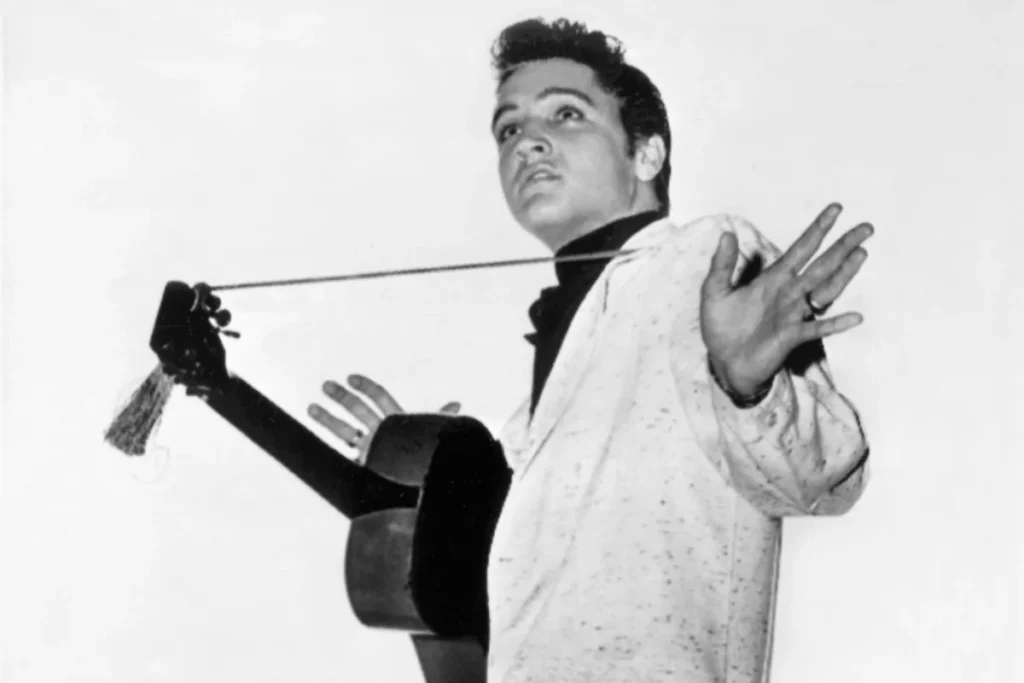
On March 31, 1956, the King reigned with "I Forgot to Remember to Forget" and "Heartbreak Hotel."
The year 1956 marked a seismic shift in the landscape of popular music, with Elvis Presley emerging as an undeniable force, rewriting the rules of chart dominance. On March 31 of that pivotal year, a snapshot of Presley’s ascendant career was vividly captured in the pages of Billboard magazine. At the age of 21, the young artist, already dubbed "The King," was not merely topping charts; he was conquering them across multiple genres, demonstrating a rare and potent appeal that transcended traditional musical boundaries. His success was underscored by an extraordinary feat: simultaneously holding the number one positions on all three of the era’s major country music charts with two distinct singles, one from his former independent label and another from his new major label home. This achievement, coupled with parallel triumphs on the pop charts, solidified Presley’s status as a cultural phenomenon and signaled the dawn of a new era in American music.
The Contract That Changed Everything
The foundation for Presley’s unprecedented chart success in 1956 was laid in November 1955. The independent Sun Records, under the visionary guidance of Sam Phillips, found itself in a precarious financial position, struggling to keep pace with the explosive demand for the recordings of their rising star, Elvis Presley. Recognizing the immense potential and the need for broader distribution and resources, Sun Records made a momentous decision: they sold Presley’s recording contract to the industry giant RCA Victor for a sum of $35,000. This transaction, though significant at the time, would prove to be one of the most astute investments in music history, unleashing Presley’s talent onto a national and international stage.
A Trifecta of Country Supremacy
Four months after this pivotal contract sale, on March 31, 1956, Billboard documented Presley’s extraordinary dominance. He masterfully leveraged singles from both his Sun Records tenure and his new RCA contract to seize the coveted number one position on all three of the era’s primary country music charts. "I Forgot to Remember to Forget," a release from Sun Records, concluded a remarkable five-week run at the top of the "Most Played in Juke Boxes" chart. Simultaneously, "Heartbreak Hotel," one of his first singles for RCA, occupied the pinnacle of both the "Best Sellers" and "Most Played by Jockeys" charts. This dual reign was not a fleeting moment. A week later, "Heartbreak Hotel" ascended to the "Most Played in Juke Boxes" summit, supplanting "I Forgot to Remember to Forget." This marked the beginning of a sustained period of dominance for Presley on the country charts, with him accumulating nine more non-consecutive weeks where he held the number one spot across all three country categories. This level of multi-chart supremacy was virtually unheard of and spoke volumes about the broad appeal of his music.
Crossing Over to Pop Stardom
Presley’s impact was not confined to the country music sphere. During the same period of intense country chart success, he was simultaneously making significant inroads into the pop music market. He accrued streaks of three to eight weeks atop four key pop charts: the Billboard Top 100, "Best Sellers," "Juke Boxes," and "Disc Jockeys." The peak of this pop dominance occurred between May 12 and May 26, 1956, when Presley held the number one position on all four of these pop charts concurrently. This simultaneous control of the country and pop landscapes was a watershed moment, signifying his ability to resonate with an incredibly diverse audience and breaking down the rigid genre distinctions that had long characterized the music industry.
Recognition and R&B Influence
The magnitude of Presley’s chart-topping achievements did not go unnoticed. On June 5, 1956, during his appearance on Milton Berle’s popular NBC-TV show, Presley was presented with a pair of "Triple Play" awards by the host. These accolades were bestowed in recognition of his unparalleled chart-topping prowess in both the country and pop music genres, a testament to his widespread appeal. Furthermore, within this same timeframe, Presley also achieved significant success on the rhythm and blues charts, securing top five appearances on all three parallel R&B lists. This further underscored his versatility and the widespread embrace of his music by diverse listening audiences, including the African American community, which was a significant development for a white artist at the time.

A Year of Unprecedented Dominance
The year 1956 continued to be a showcase for Presley’s extraordinary talent and commercial appeal. Later that year, on September 29 and October 6, the artist, affectionately known as the "Hillbilly Cat," achieved yet another country chart triple crown. This time, he commanded all three country lists with his double-sided single, featuring the hits "Don’t Be Cruel" and "Hound Dog." These songs, born from a rock and roll sensibility, further cemented his reputation as an artist who could not only dominate but redefine musical genres.
The Impact of the RCA Deal
The $35,000 investment by RCA Victor proved to be a catalyst for Presley’s global superstardom. With the backing of a major label, Presley’s music reached a wider audience than ever before. RCA’s established distribution networks and marketing power allowed his records to be readily available across the nation and, increasingly, around the world. This enabled him to consolidate his chart successes and build a dedicated fanbase that transcended regional and demographic divides. The deal not only benefited Presley but also significantly boosted the fortunes of RCA Victor, positioning them as a dominant force in the burgeoning rock and roll market.
Analyzing the Phenomenon
Elvis Presley’s ability to simultaneously top country, pop, and R&B charts in 1956 was not merely a statistical anomaly; it represented a profound cultural shift. His music, a potent blend of country, blues, and rhythm and blues influences, appealed to a broad spectrum of listeners who were ready for something new and exciting. This crossover appeal challenged the existing segregation of musical genres and paved the way for future artists to break down these barriers. Presley’s charisma, his distinctive vocal style, and his electrifying stage presence combined to create a unique phenomenon that captured the imagination of a generation.
The success of "Heartbreak Hotel" on the pop charts, in particular, signaled the mainstream acceptance of rock and roll. While the genre had been developing for years, Presley’s undeniable talent and massive popularity brought it squarely into the national consciousness, influencing countless musicians and shaping the trajectory of popular music for decades to come. His dominance in 1956 was not just about record sales; it was about a cultural revolution that was being broadcast through the airwaves and etched into the record grooves.
Broader Implications and Legacy
The events of March 31, 1956, and the subsequent chart performances of Elvis Presley were more than just a series of impressive statistics. They marked a turning point in the music industry and American culture. Presley’s ability to appeal to diverse audiences demonstrated the growing interconnectedness of different musical styles and the evolving tastes of the American public. His crossover success also highlighted the power of mass media, particularly television and radio, in shaping musical trends and creating national stars.
The implications of Presley’s 1956 achievements are far-reaching. He became a blueprint for future crossover artists, demonstrating that musical boundaries could be fluid and that a single artist could command an audience across multiple demographics. His impact on fashion, dance, and youth culture was equally profound, solidifying his status as a true icon. The $35,000 contract that facilitated this explosion of fame stands as a testament to the transformative power of talent and strategic business decisions in the entertainment industry. The legacy of Elvis Presley’s 1956 chart dominance continues to resonate today, a reminder of the year when a young man from Tupelo, Mississippi, truly became the King of Rock and Roll and, for a significant period, the undisputed monarch of American popular music. His reign was not just measured in weeks on the charts, but in the lasting imprint he left on the cultural fabric of the nation and the world.
Related News