The Paradox of K-pop Fandom The Dual Reality of Devotion and Toxicity
Article Editorial Team
The global ascent of Korean popular music, or K-pop, is frequently attributed to the unprecedented mobilization and devotion of its fanbases. These organized communities are capable of extraordinary feats of philanthropy and support, ranging from the coordination of elaborate "fan projects" to the donation of thousands of dollars to charitable organizations in the names of their favorite artists. The tradition of donating "rice wreaths"—large displays of rice bags intended for the needy—at press conferences and concerts has become a hallmark of the industry’s positive social impact. However, this level of intense engagement carries a darker, more volatile secondary characteristic. The same passion that fuels record-breaking sales and charitable endeavors often manifests as a rigid, and at times predatory, sense of ownership over the lives and careers of the idols themselves.
This duality creates a complex environment where the line between "supporter" and "enforcer" becomes blurred. While the industry thrives on the financial contributions of these consumers, the lack of boundaries has led to systemic issues involving cyberbullying, the policing of personal lives, and physical safety concerns at public venues. To understand the current landscape of K-pop, one must examine the specific incidents and structural incentives that have allowed toxic fan behaviors to persist alongside the genre’s mainstream success.
The Digital Frontier: Cyber Harassment and the "Krystal Incident"
Social media has transformed the way idols interact with their audience, offering a semblance of intimacy that drives the "parasocial relationship" central to K-pop marketing. However, this accessibility also leaves artists vulnerable to rapid-response harassment. A prominent example occurred when Krystal Jung, a member of the girl group f(x), was forced to deactivate her Instagram account following a wave of targeted vitriol.
The catalyst for the harassment was remarkably minor: G-Dragon, the leader of BIGBANG and a global fashion icon, had "liked" several of Krystal’s photos. In the hyper-reactive ecosystem of K-pop fandom, this simple digital interaction was interpreted by some as evidence of a romantic entanglement. Fans of G-Dragon, feeling a sense of protective ownership over the artist, descended upon Krystal’s profile. The harassment included not only derogatory comments but also repeated attempts to hack her account.
This incident highlights a recurring theme in the industry: the disproportionate burden placed on female idols in the face of dating rumors. Despite no official confirmation of a relationship, the mere suspicion was enough to drive an artist off a platform designed for fan engagement. The "Krystal Incident" serves as a case study in how the digital tools meant to foster connection are frequently weaponized to enforce a "single" status for idols, ensuring they remain available as "fantasy partners" for their audience.
The "Only 13" Sentiment and the Policing of Group Identity
The influence of fans extends beyond the personal lives of idols and into the very corporate structure of the groups themselves. This was most notably seen in the long-standing tension surrounding Super Junior and its sub-unit, Super Junior-M. Since the group’s inception, a vocal segment of the fanbase has adhered to the "Only 13" philosophy, a movement dedicated to preventing any permanent changes or additions to the original 13-member lineup.
This sentiment came to a head when Henry Lau and Zhou Mi were introduced as members of Super Junior-M, a sub-unit focused on the Chinese market. Despite their talent and contributions, "Only 13" supporters demanded a clear demarcation between the "official" members and the "guest" members. In July 2013, the pressure reached a point where Eunhyuk, a senior member of Super Junior, was compelled to issue a public statement clarifying that Henry and Zhou Mi were not official members of the main group.
This dynamic illustrates a significant power imbalance. When fans can dictate the membership and legitimacy of professional artists within their own groups, it undermines the creative and administrative autonomy of the entertainment agencies. By pandering to these demands, companies like SM Entertainment prioritize short-term consumer satisfaction over the professional dignity and integration of their artists.
The Policing of Private Lives: The Jonghyun Movie Incident
The expectation of "perfection" and "purity" is perhaps the most taxing element of the idol-fan contract. This was exemplified by the public reaction to SHINee’s Jonghyun being spotted at a movie theater with a female friend. In most global entertainment industries, a young adult attending a film with a peer would be non-news. In the context of K-pop in 2013, it necessitated a formal apology.

Jonghyun took to Twitter to address the "scandal," stating: "My stories are appearing a lot on community sites. If I tell you just the facts, I went to the movies with my friends, and they’re just my friends, not celebrities. I hope no one gets hurt by this." He concluded with a poignant observation: "There must be a lot of people who are taking breaths of relief; I’m sorry. Even though it’s not something I should be sorry about, I’m sorry."
The phrase "not something I should be sorry about" reflects the internal conflict many idols face. They are aware that their basic human rights—such as the freedom to socialize—are being curtailed by the very people who claim to love them. The apology was not for a moral failing, but for a perceived breach of the "availability" fantasy that fans pay to maintain.
Physical Safety and the Chaos of Airport Transitions
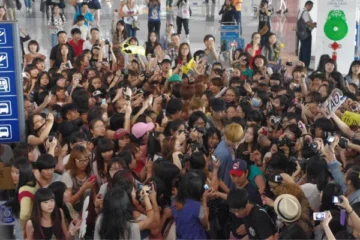
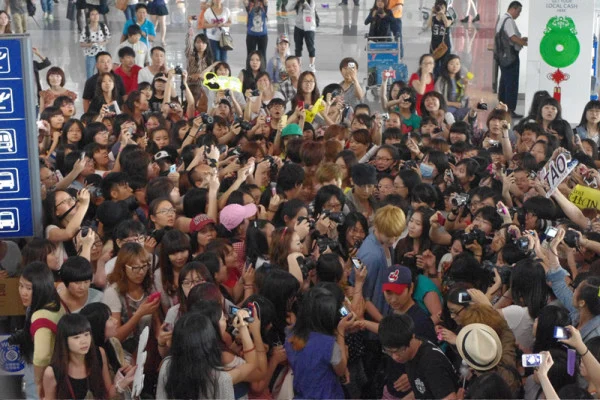
The volatility of fandom is not limited to the digital sphere; it often manifests in dangerous physical environments. International airports have become flashpoints for "sasaeng" (stalker) behavior and general crowd mismanagement. As idols travel for overseas schedules, they are frequently met by hundreds of fans who bypass security barriers to get closer to their "biases."
Reports and footage from major airports frequently show artists from groups like EXO and SHINee being swarmed, shoved, and even touched inappropriately. In many instances, both fans and artists have been knocked to the ground during stampedes. Despite the recurring nature of these events, entertainment agencies have been criticized for their slow response in providing adequate security personnel.
The reluctance to reprimand fans for this behavior stems from the "customer is always right" mentality. Companies fear that a heavy-handed security approach or a public scolding of the fanbase could lead to a boycott or a "bad reputation." However, observers note that by failing to set boundaries, agencies are implicitly condoning behavior that risks the physical well-being of their employees.

The Economic Engine: Why the Customer is Always Right
To understand why this toxic behavior is tolerated, one must look at the economic structure of K-pop. Unlike Western music markets, which have shifted heavily toward streaming, K-pop maintains a robust physical sales market. Fans do not just buy one CD; they buy dozens, sometimes hundreds, to help their favorite groups climb charts or to secure "fansign" slots.
This high-investment model creates a sense of "shareholder" status among fans. They believe that because they are the primary source of an idol’s income and success, they have earned the right to monitor the idol’s behavior, dictate their social circles, and demand apologies for "lapses" in the idol persona. The industry, in turn, is hesitant to bite the hand that feeds it.
Chronology of Consumer Power Incidents (2012–2013)
- January 2012: Reports of "sasaeng" taxis chasing EXO members lead to a public outcry regarding idol safety.
- June 2012: Luhan (formerly of EXO) is visibly distressed at an airport due to crowding, highlighting the lack of SM Entertainment security.
- Early 2013: Krystal Jung shuts down her Instagram following G-Dragon dating rumors.
- July 2013: Super Junior’s Eunhyuk clarifies the status of Henry and Zhou Mi under fan pressure.
- August 2013: Jonghyun issues a Twitter apology for attending a movie with a friend.
Broader Implications and the Path Forward
The persistence of these behaviors suggests a fundamental flaw in the K-pop business model: the commodification of the human being. When idols are marketed not just as musicians but as "perfect characters" in a scripted narrative, any deviation from that script—such as dating, having a private life, or even aging—is seen by the consumer as a product defect.
This environment is "poisonous," as the original discourse suggests. The mental health toll on idols is significant, often leading to burnout, anxiety, and early retirement. Furthermore, the hypocrisy of the "netizen" culture—where individuals demand moral and social perfection from idols while engaging in anonymous bullying—creates a toxic cycle that is difficult to break.
For the industry to evolve, a three-pronged approach is necessary:

- Agency Accountability: Companies must prioritize the safety and mental health of their artists over the immediate appeasement of vocal minorities within the fandom. This includes hiring professional security and refusing to issue apologies for non-scandals.
- Idol Assertiveness: While difficult in a culture that values humility, artists who set clear boundaries (such as Jonghyun’s subtle acknowledgement that he shouldn’t have to apologize) help to slowly shift the narrative.
- Fan Self-Regulation: The most effective change must come from within. If the "silent majority" of fans who engage in positive behaviors—like charity work and project coordination—maturely call out inappropriate behavior within their ranks, the culture of toxicity can be marginalized.
The "blind negativity" that currently characterizes the fringes of K-pop fandom is not a prerequisite for the genre’s success. As K-pop continues to expand into global markets where different social norms apply, the industry may find that the "customer" is not always right—and that the most valuable asset it has is the humanity of its artists.
Related News