The global ascent of Korean popular music, known as K-pop, has been fueled by a symbiotic relationship between artists and their dedicated fanbases. These fans are renowned for their mobilization, frequently organizing elaborate fan projects, donating thousands of dollars to charitable causes in the names of their idols, and providing the financial backbone for the industry through the purchase of albums, merchandise, and concert tickets. However, this intense devotion often masks a darker reality within the industry: a culture of toxic entitlement and harassment that has forced many artists into a state of perpetual apology and self-censorship. Recent incidents involving prominent idols such as Krystal of f(x), Jonghyun of SHINee, and members of Super Junior highlight a growing tension where the consumer’s perceived "right" to control an artist’s life conflicts with the fundamental human rights of the performers themselves.
The Digital Siege of Krystal Jung
In early 2013, the volatile nature of K-pop’s social media landscape was laid bare when Krystal Jung, a member of the girl group f(x), was forced to deactivate her Instagram account. The catalyst for this withdrawal was not a scandal of her own making, but rather the digital footprints of a senior artist. When G-Dragon, the leader of Big Bang and one of the most influential figures in the industry, "liked" several of Krystal’s photos, it triggered a deluge of dating rumors.
What followed was a coordinated campaign of harassment. Fans of G-Dragon, perceiving Krystal as a threat to their idealized vision of the artist or perhaps fueled by jealousy, swarmed her account with vitriolic comments. Beyond verbal abuse, Krystal’s account, known as "kjungxox," became the target of multiple hacking attempts. The digital siege reached a breaking point, leading to the deletion of the account. This incident serves as a primary example of how social media, intended to be a bridge between idols and fans, can be weaponized by the very people the industry seeks to appease. It also underscores a recurring theme in K-pop: the "dating rumor" as a tool for demeaning female artists.
Structural Interference: The Super Junior "Only 13" Controversy
The influence of fans extends beyond the personal social media accounts of idols and into the very structural management of musical groups. Super Junior, one of the most iconic groups under SM Entertainment, has long grappled with a faction of fans known as "Only 13." This group of supporters vehemently opposes the inclusion of any new members, specifically targeting Henry Lau and Zhou Mi, who were introduced as part of the sub-unit Super Junior-M.
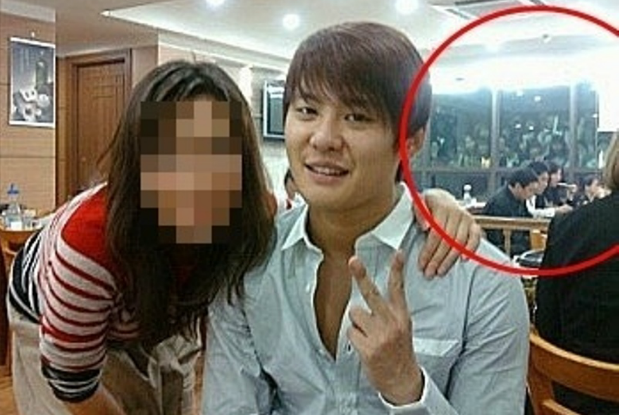
The pressure from this faction reached a significant milestone in July 2013. Despite Henry and Zhou Mi having been active with the group’s Mandarin-focused sub-unit for years, the "Only 13" movement continued to demand a clear distinction between the "official" members and "guest" members. This pressure culminated in a public statement by Eunhyuk, a senior member of the group, who clarified that Zhou Mi and Henry were not official members of the core Super Junior lineup.
This concession by the artist and the agency highlights a disturbing power dynamic. The fans, acting as a collective of consumers, successfully dictated the professional identity and group hierarchy of the artists. By categorizing Henry and Zhou Mi as "guest members," the agency effectively validated the exclusionary tactics of the fanbase, prioritizing the demands of a vocal minority over the integration and professional standing of their own talent.
The Apology for Normalcy: Jonghyun’s Movie Outing
Perhaps the most poignant example of the surveillance culture in K-pop occurred in August 2013, involving SHINee’s Jonghyun. The singer-songwriter, known for his vocal prowess and articulate presence on social media, was spotted at a movie theater with a female companion. In most entertainment industries, a celebrity attending a film with a friend would be a non-event. In the K-pop ecosystem, it was treated as a breach of contract with the fans.
Shortly after photos of the outing surfaced on community sites, Jonghyun felt compelled to issue a public apology on his Twitter account. His statement was a complex mix of clarification and contrition:
“My stories are appearing a lot on community sites. If I tell you just the facts, I went to the movies with my friends, and they’re just my friends, not celebrities. I hope no one gets hurt by this… I’m happy that there’s many people around me who care for me like this. It’s late, go to sleep. There must be a lot of people who are taking breaths of relief, I’m sorry. Even though it’s not something I should be sorry about, I’m sorry.”

The phrase “even though it’s not something I should be sorry about, I’m sorry” encapsulates the psychological burden placed on idols. Jonghyun recognized the absurdity of apologizing for having a personal life, yet he felt obligated to do so to "mollify" fans who felt betrayed by his perceived lack of availability. This incident reflects a broader industry standard where idols are marketed as "ideal partners" for their fans, making any sign of a private life a potential threat to the commercial fantasy.
The Physical Risk: Airport Chaos and Lack of Security
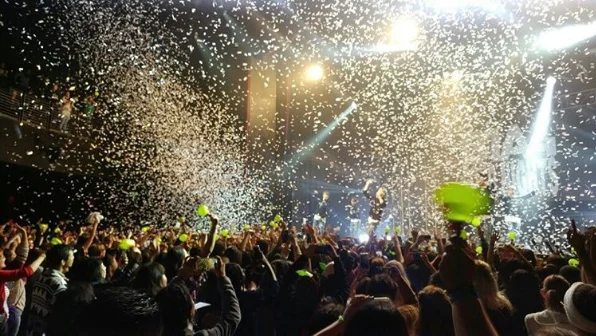
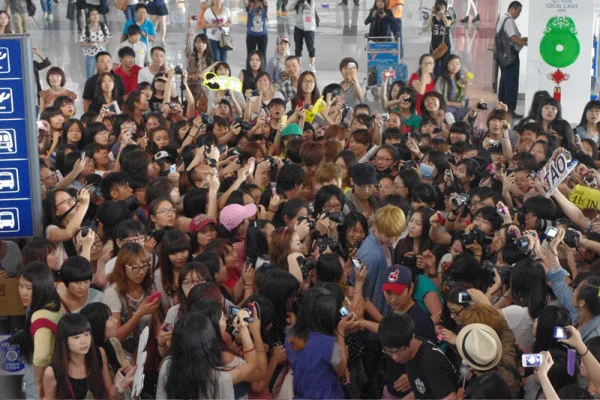
The entitlement of the fanbase is not limited to the digital sphere; it frequently manifests as a physical threat. Airports have become notorious battlegrounds for fan-idol interactions. When groups like EXO or SHINee travel, they are often met by hundreds, sometimes thousands, of fans who swarm the arrivals hall.
These gatherings frequently devolve into stampedes. Fans, desperate to capture a photo or touch their idols, often push, shove, and step over one another. This environment has led to numerous injuries for both fans and artists. There have been reported instances of idols being shoved, having cameras thrust into their faces, and even being subjected to unwanted physical contact that borders on sexual assault.
Despite the recurring nature of these events, entertainment agencies have often been criticized for their lack of proactive measures. The absence of adequate security personnel and the failure to coordinate with airport authorities suggest a reluctance to distance the artists from the fans, perhaps out of fear of appearing "unapproachable." However, the refusal to reprimand this behavior sends a message that the safety and dignity of the artist are secondary to the fans’ "access."
Analysis: The "Customer is Always Right" Fallacy
The root of these issues lies in the commercialization of the idol-fan relationship. In K-pop, the fan is not just a listener; they are a stakeholder. Through the purchase of multiple copies of the same album to boost chart rankings or the funding of massive billboards for an idol’s birthday, fans invest heavily in the success of the group. This financial investment often translates into a sense of ownership.

The industry phrase "the customer is always right" has been adapted into a weapon of control. Because the fans provide the capital, they believe they have the right to demand perfection, to dictate group membership, and to monitor the private lives of the performers. Agencies, fearful of boycotts or negative press, often pander to these demands, further emboldening toxic behavior.
However, this business model is inherently poisonous. When an idol is treated as a character in a story written by the fans rather than a human being with agency, the psychological toll is immense. The expectation of "perfection"—defined as being perpetually single, always smiling, and never complaining—is an impossible standard that leads to burnout, anxiety, and the eventual withdrawal of talented individuals from the industry.
The Path Forward: A Call for Agency and Fan Accountability
For the K-pop industry to sustain its global growth without sacrificing the well-being of its artists, a cultural shift is required. This shift must occur on three levels: the agencies, the artists, and the fans themselves.
First, entertainment companies must prioritize the safety and mental health of their artists over short-term fan satisfaction. This includes implementing stricter security protocols at public venues and taking legal action against those who engage in cyberbullying or hacking. Agencies must stop issuing apologies for the personal lives of their artists, as doing so only validates the idea that an artist’s private life is a matter of public concern.
Second, artists should be encouraged to set boundaries. While the "image" is a key component of K-pop, allowing bad behavior to go unchecked is a disservice to both the artist and the healthy segments of the fanbase. Asserting one’s humanity is not a betrayal of the fans; it is a necessary step for professional longevity.

Finally, the responsibility lies with the fan community. The same organizational skills used to donate thousands to charity must be used to self-regulate the community. Mature fans must speak up against the "sasaeng" (obsessive) behavior of others. If the collective power of a fandom can influence music charts, it can also be used to demand better treatment of the artists they claim to love.
The blind negativity and inappropriate behavior that currently plagues the K-pop world is not an inevitable byproduct of fame; it is a learned behavior fostered by an industry that has, for too long, traded the humanity of its stars for the loyalty of its consumers. Until the industry and the fans recognize that an idol is a person first and a product second, the cycle of harassment and apologies will continue, casting a long shadow over the vibrant world of Korean pop music.