The South Korean music industry, widely known as K-pop, has achieved unprecedented global success, yet this rise to prominence has been shadowed by the persistent and evolving threat of sasaeng fans. The term "sasaeng," derived from the Korean words for "private life" (sasaenghwal), refers to obsessive fans who engage in stalking and other behaviors that constitute a gross invasion of an idol’s privacy. Unlike the general fandom, which supports artists through music consumption and official events, sasaengs operate in a grey area of legality, often bordering on criminal harassment. These individuals are a fixture of the entertainment business, yet they remain its most widely condemned and feared demographic.
The phenomenon is not a recent development, but it has gained renewed international attention following a series of high-profile incidents involving the boy group EXO. Since their debut, EXO has faced an escalating series of security breaches that have prompted both the group and their management, SM Entertainment, to speak out against the psychological and physical toll of such obsession. In a candid interview with Sports Seoul, members of EXO expressed a profound sense of burden, pleading for an end to the intrusive behaviors that have come to define their daily lives.
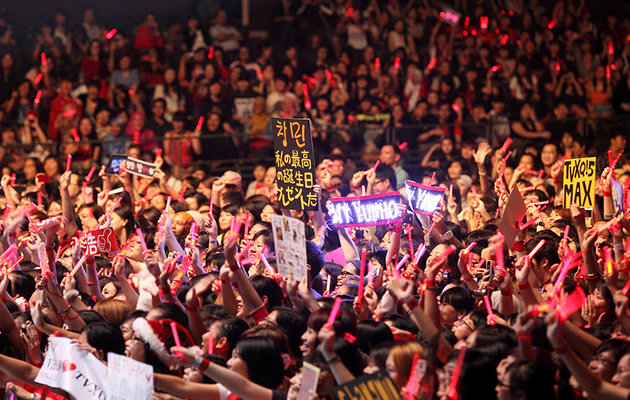
The Evolution of Extremist Fandom: From TVXQ to EXO
To understand the current state of sasaeng culture, one must look at the historical precedent set by groups like TVXQ. During the mid-2000s, TVXQ was arguably the most targeted group in the industry. Reports from that era detailed sasaeng fans breaking into the members’ private residences, photographing them while they slept, and even stealing personal items such as undergarments to be sold on the black market. The level of sophistication involved in these activities—ranging from hacking personal phone records to installing GPS trackers on the group’s transport vans—set a terrifying benchmark for future generations of extremist fans.
The mantle of this unwanted attention has recently shifted toward EXO. The group has been the subject of numerous headlines involving "elephant stampedes" at international airports, where fans have caused physical injury to members and staff by shoving past security barriers. Specific incidents, such as the recording of member Tao singing in the shower or fans attempting to link arms with members in restricted airport zones, highlight a total lack of boundaries. The psychological impact of being under constant surveillance has led many idols to describe their lives as living in a "panopticon," where every private moment is a potential piece of content for the sasaeng community.
Analyzing the Drivers of Sasaeng Behavior
The intensity of following surrounding groups like EXO can be attributed to several systemic factors within the K-pop industry. By analyzing these drivers, industry experts can better understand how to mitigate the risks associated with extremist fandom.

1. The Influence of Large Entertainment Corporations
Belonging to a "Big Three" agency (SM Entertainment, YG Entertainment, or JYP Entertainment) carries a level of prestige that automatically generates massive anticipation. Much like a major film studio announcing a high-stakes franchise, these companies cultivate an environment of high expectations. This institutional power, however, acts as a magnet for sasaengs. The resources these companies use to market their idols often inadvertently provide the very tools sasaengs use to track them, as the "always-accessible" idol image is a core component of the business model.
2. Demographic Disparities in Fandom Behavior
Statistical trends suggest that the age of a fan base significantly influences the prevalence of stalking behavior. Younger demographics, particularly those in their mid-to-late teens, are often more susceptible to the "parasocial relationship" trap, where they believe they have a genuine personal connection with the idol. Conversely, groups that target an older audience—often referred to as "noonas" (older sisters) or "ahjumma" fans—tend to see fewer instances of physical stalking, as these fans often have professional and personal responsibilities that preclude 24/7 surveillance.
3. The "Shipping" and "OTP" Culture
The industry’s promotion of "ships" (imagined romantic pairings between members) and "OTPs" (One True Pairings) often blurs the lines between performance and reality. While fan-service is a standard marketing tactic, it can lead to dangerous delusions among extremist fans. When fans become hyper-fixated on the internal dynamics of a group, they may feel entitled to "investigate" the members’ private lives to confirm their theories, leading to home invasions and the hacking of private communications.

Chronology of Institutional and Artist Responses
The response to sasaeng culture has shifted over the decades from passive endurance to active confrontation. The timeline of these responses illustrates a growing intolerance for privacy violations.
- The Early 2000s (Passive Endurance): During the first generation of K-pop, agencies often viewed obsessive behavior as a "necessary evil" of fame. Legal action was rare, as companies feared alienating the broader fan base or gaining a reputation for being "anti-fan."
- The Shinhwa Precedent: One of the most significant shifts occurred when Kim Dong-wan of the veteran group Shinhwa famously told fans, "Shinhwa isn’t responsible for your lives." This statement was revolutionary at the time, as it challenged the notion that idols must be eternally grateful for all forms of attention. Although the group lost fans initially, the remaining fandom became more respectful of boundaries.
- The Modern Era (Legal and Digital Retaliation): Today, idols are increasingly encouraged to set firm boundaries. Members of TVXQ, such as Changmin, have been known to take photos of sasaengs to document their harassment, and some artists have begun "lawyering up" to pursue stalking charges. The emergence of stricter stalking laws in South Korea has provided a legal framework that was previously non-existent.
The Industry of Harassment: Sasaeng Taxis and Data Brokering
Sasaeng culture is not merely a psychological phenomenon; it is a profitable underground economy. "Sasaeng taxis" are a well-documented part of this ecosystem. These are chartered vehicles, often driven by individuals with no formal taxi affiliation, who charge fans exorbitant fees (sometimes upwards of $500 USD a day) to chase idol vans at high speeds. These chases are notoriously dangerous, leading to multiple traffic accidents involving both the idols and the fans themselves.
Furthermore, the digital age has birthed a market for "private information." Sasaengs often trade or sell "DBs" (databases) containing idols’ social security numbers, flight information, and private KakaoTalk IDs. This information is obtained through corrupt insiders at telecommunications companies, airlines, or even within the entertainment agencies themselves. The ability to purchase a seat on the same flight as an idol has led to numerous "in-flight" harassment incidents, forcing many groups to utilize private terminals or charter flights at significant expense.

Strategic Recommendations for Risk Minimization
While it is impossible to eliminate sasaeng culture entirely, several strategies have proven effective in minimizing the frequency of unruly altercations.
Assertive Communication and Boundary Setting
Idols who are encouraged by their agencies to speak out against harassment often see a decrease in the "boldness" of sasaengs. When artists stop smiling for cameras that are shoved in their faces and instead express visible discomfort or verbalize their disapproval, it breaks the "reward loop" that sasaengs crave.
Strategic Debut Hype
The "surprise debut" model, utilized by groups like SHINee, can occasionally bypass the initial "frenzy" associated with long-term pre-debut marketing. By focusing on music and talent rather than an elaborate "backstory" or "mythology," agencies can attract a fan base that is more interested in the art than the individual’s private life.

Utilization of Legal Recourse
The most effective deterrent remains the threat of legal action. When agencies move beyond "warning notices" and actually file criminal charges for trespassing, defamation, or stalking, it sends a clear signal to the sasaeng community. Publicly identifying and banning known sasaengs from official events and fan clubs is another critical step in delegitimizing their presence.
Broader Impact and Industry Implications
The persistence of sasaeng culture has broader implications for the sustainability of the K-pop industry. The mental health crisis among idols is frequently linked to the lack of privacy and the constant threat of harassment. As the industry continues to expand into Western markets, the "sasaeng problem" is being viewed through the lens of international human rights and labor standards.
If the industry fails to protect its artists from these extremist elements, it risks losing talent to early retirement or mental health leave. Furthermore, the chaotic scenes at airports and public spaces damage the "pristine" image that South Korea seeks to project through its cultural exports. The transition from viewing sasaengs as "overzealous fans" to "criminal stalkers" is a necessary evolution for the safety of the artists and the long-term health of the genre.

In conclusion, while the sasaeng phenomenon remains a "shameful baggage" of the K-pop industry, the tide is turning. Through a combination of stricter legal measures, more assertive artist communication, and a shift in marketing strategies, the industry is beginning to reclaim the boundaries between public performance and private life. The goal remains a fandom culture where music can be enjoyed without the reports of illegal activities and physical harm that have characterized the sasaeng era.