The SM Saga: Kris the “Betrayer”
Article Editorial Team
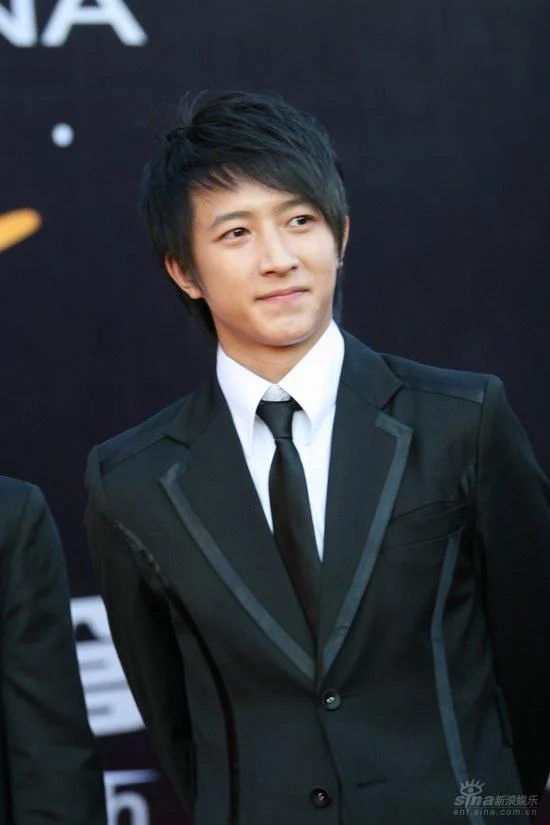
The relationship between SM Entertainment and its roster of artists has historically been characterized by systemic tension. The agency, a pioneer in the K-pop industry, has faced multiple high-profile legal challenges regarding its management practices. Most notably, the 2009 departure of three members of TVXQ (who later formed JYJ) and the exit of Super Junior’s Hangeng served as precursors to the Kris Wu controversy. These cases brought the term "slave contract" into the mainstream, referring to long-term, restrictive agreements that often lasted over a decade and offered little autonomy to the performers. Despite subsequent interventions by the Korea Fair Trade Commission to standardize contract lengths to seven years, the underlying friction regarding artist treatment and financial transparency remained a persistent issue within the industry.
Chronology of the Conflict
The timeline of the Kris Wu lawsuit is marked by its suddenness and the immediate, coordinated response from both the agency and the remaining members of EXO. On May 7, 2014, EXO released Overdose, which immediately topped charts across Asia. On May 15, news broke that Kris had filed his lawsuit and had effectively ceased participation in group activities. The timing was perceived as a tactical move by some and a desperate act of self-preservation by others.
In the 48 hours following the announcement, the remaining eleven members of EXO appeared to distance themselves from their leader. Several members, including Chanyeol, Sehun, and Baekhyun, unfollowed Kris on social media platforms like Instagram. On May 15, Tao, a fellow member of EXO-M and a close associate of Kris, posted a lengthy message on Weibo expressing a sense of betrayal. He stated that while many wanted to believe the group would stay together forever, "someone has to leave us," and alluded to the "ambition" of the departing member.
By May 23, 2014, the group proceeded with their inaugural concert at the Olympic Gymnastics Arena in Seoul as an eleven-member unit. SM Entertainment moved swiftly to scrub Kris’s presence from the event, reportedly withdrawing merchandise featuring his likeness and offering refunds to fans who felt the "OT12" (One True Twelve) experience had been compromised. This rapid reorganization signaled the agency’s intent to maintain business continuity despite the loss of a key member.
Legal Allegations and Management Practices
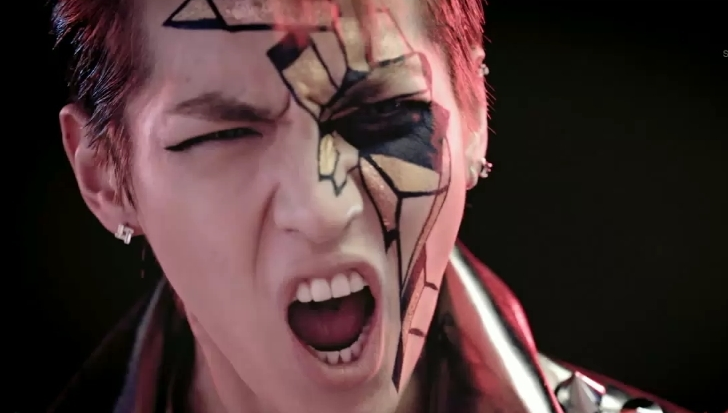
The legal grounds for Kris Wu’s lawsuit focused on three primary areas: the validity of the contract, the management of his professional activities, and financial compensation. Legal representatives for Kris argued that SM Entertainment treated the artist as an object of control rather than a creative partner. They claimed that the agency unilaterally decided all schedules without considering the artist’s health or personal preferences. Furthermore, the lawsuit alleged that the revenue distribution was skewed heavily in favor of the agency, leaving the artist with insufficient compensation relative to the group’s massive commercial success.
Medical concerns were also cited. Reports emerged suggesting that Kris had been diagnosed with myocarditis, an inflammation of the heart muscle, and that the agency had failed to provide adequate rest or medical attention. These allegations mirrored those made by Hangeng years prior, who also cited health issues and restrictive management as primary reasons for his departure to China.
The Sociocultural Paradigm: Jeong and Haan
To understand why the reaction to Kris’s departure was so visceral—characterized by accusations of "betrayal" from fans and colleagues—it is necessary to examine the Korean cultural framework of jeong (情). Jeong is a concept that transcends simple friendship or affection; it represents a deep, collective emotional bond formed through shared experiences, loyalty, and time. In the context of a K-pop group, where members train together for years and live in communal dormitories, jeong is the glue that binds the "family" unit.
When Kris filed his lawsuit without prior warning to his teammates, he was perceived as having violated the sanctity of jeong. In the collectivist culture of South Korea, individual needs are often expected to be subordinated to the welfare of the group. By prioritizing his legal and personal grievances over the group’s upcoming concert, Kris was seen as severing a sacred tie.
According to a 2006 study by Chung and Cho from the UCLA School of Medicine, the violation of jeong leads to the manifestation of haan (恨). Haan is a uniquely Korean emotion described as a mixture of sorrow, resentment, and unresolved grief. The study notes that "the warmer and more tender the jeong-based relationship, the more bitter and profound the agony of haan which arises when jeong is broken." The intense backlash from the remaining EXO members and a segment of the fanbase can be analyzed as a collective experience of haan. The sense of "betrayal" was not merely a reaction to a broken contract, but a response to the perceived destruction of a shared emotional identity.

Comparative Industry Analysis
The departure of Kris Wu also highlighted the specific challenges faced by foreign idols in the South Korean entertainment system. Super Junior’s Heechul, speaking on the variety program Ssulzun, offered a comparative analysis between Kris and Hangeng. Heechul noted that when Hangeng left in 2009, the environment for Chinese idols was significantly more restrictive; Hangeng was often unable to appear on certain broadcasts due to visa and regulatory issues. Heechul argued that by 2014, those barriers had largely been removed, implying that Kris’s complaints carried less weight because he had been granted more opportunities than his predecessors.
However, industry analysts suggest that the "China Line" of idols faces unique pressures. While they are essential for a group’s expansion into the lucrative Chinese market, they often feel like outsiders within the rigid hierarchy of Korean agencies. The success of Hangeng’s solo career in China provided a blueprint for Kris, suggesting that a departure from SM Entertainment could lead to greater individual autonomy and financial gain in his home country.
Market Impact and Institutional Response
The financial implications of the lawsuit were immediate. On the day the news broke, SM Entertainment’s stock price plummeted, wiping out billions of won in market capitalization. As one of the "Big Three" agencies, SM’s stability is often seen as a bellwether for the K-pop industry at large. The lawsuit raised concerns among investors regarding the sustainability of the agency’s "globalization" strategy, which relies heavily on recruiting and training foreign talent.
In response to the crisis, SM Entertainment intensified its public relations efforts. Interviews with the remaining members of EXO-M—Xiumin, Chen, Luhan, Lay, and Tao—were released, in which they expressed disappointment and a renewed commitment to the group. These statements served to stabilize the brand and reassure the public that the "EXO Planet" was still intact. However, the use of these interviews was also critiqued by some as a calculated move by the agency to manipulate public opinion and leverage the concept of jeong to vilify the departing member.
Broader Implications for the K-pop Industry
The Kris Wu vs. SM Entertainment case served as a catalyst for a broader discussion on the ethics of the K-pop training system. It forced a confrontation between the industry’s polished, "perfect" image and the grueling reality of its operational methods. The conflict illustrated that legal frameworks and emotional frameworks often operate at cross-purposes in the Korean entertainment landscape. While a legal challenge may be a legitimate pursuit of labor rights, it can be socially interpreted as a moral failure.

Furthermore, the event foreshadowed future departures. Within months, Luhan would follow Kris in filing a similar lawsuit, followed by Tao in 2015. This exodus of the Chinese members of EXO-M forced SM Entertainment to re-evaluate how it manages international talent, eventually leading to more flexible arrangements, such as the establishment of personal studios for Chinese members like Lay Zhang.
In conclusion, the lawsuit filed by Kris Wu was more than a contractual dispute; it was a cultural flashpoint that exposed the friction between individual rights and collective obligations. The language of "betrayal" and "loyalty" used by stakeholders—from the agency and the members to the fans—highlights the powerful influence of jeong and haan in shaping the narrative of K-pop. As the industry continues to expand globally, the lessons learned from the 2014 EXO crisis remain relevant, serving as a reminder that the management of human emotion is as critical as the management of legal contracts in the world of global entertainment.
Related News