
The lawsuit cited several grievances, including the violation of basic human rights, an utter disregard for the artist’s health, unfair profit distribution, and a lack of autonomy in managing his own career. While these legal arguments followed a pattern seen in previous industry disputes, the timing and the suddenness of the departure catalyzed a multifaceted reaction from the remaining eleven members of EXO, the management at SM Entertainment, and a global fanbase. To understand the gravity of this event, one must look beyond the courtroom and examine the historical, economic, and cultural frameworks that define the relationship between a K-pop idol and their agency.
A History of Friction: The Precedent of "Slave Contracts"
The conflict between Kris and SM Entertainment did not occur in a vacuum. For years, the agency has faced scrutiny regarding its "artist rota," often characterized by long-term, restrictive agreements colloquially known as "slave contracts." The most notable precursor was the 2009 legal battle involving three members of TVXQ—Kim Jae-joong, Park Yoo-chun, and Kim Jun-su—who later formed the group JYJ. That lawsuit centered on a 13-year contract duration and what the members described as "unfair" revenue sharing.
Following the TVXQ incident, the Fair Trade Commission (FTC) in South Korea introduced "Standardized Contract" regulations to limit contract lengths to seven years. However, the emotional and professional scars remained. Shortly after the TVXQ fallout, Hangeng, the only Chinese member of Super Junior at the time, also filed for contract termination, citing similar issues of overworking and restrictive clauses. Kris’s departure was seen by many industry analysts as a continuation of this trend, particularly among non-Korean idols who found themselves navigating a rigid corporate hierarchy while separated from their families and home cultures.
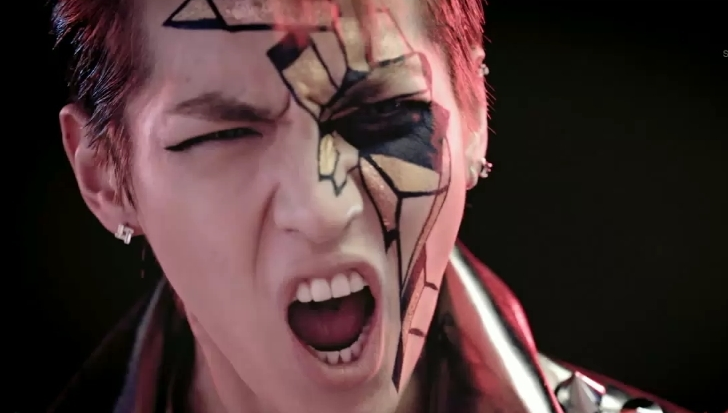
Chronology of the 2014 Crisis
The timeline of the Kris-EXO controversy moved with lightning speed, fueled by the immediacy of social media and the high-stakes nature of the upcoming concert tour.
- May 15, 2014: News breaks that Kris has filed a lawsuit through the law firm Hankyul. SM Entertainment’s stock prices immediately take a hit, dropping significantly within hours of the announcement.
- May 16–18, 2014: Members of EXO begin to unfollow Kris on Instagram. Tao, a fellow EXO-M member and close friend of Kris, posts a lengthy message on Weibo expressing feelings of betrayal and confusion.
- May 21, 2014: SM Entertainment announces that the "Lost Planet" concert will proceed with the remaining 11 members. All merchandise featuring Kris is withdrawn from sale, and the agency offers refunds to fans who no longer wish to attend.
- May 23, 2014: During a press conference for the concert, the remaining members of EXO-M—Xiumin, Lay, Chen, Tao, and Luhan—publicly express their heartbreak. Xiumin describes the situation as "embarrassing" and "upsetting" given the timing.
- Post-May 2014: Kris remains in China, eventually transitioning into a solo career in acting and music, while SM Entertainment pursues counter-lawsuits regarding his unauthorized activities.
The Cultural Significance of Jeong and Haan
To the Western observer, Kris’s lawsuit might appear as a standard breach-of-contract dispute or a labor rights issue. However, in the context of South Korean society, the reaction of "betrayal" voiced by fans and fellow members is tied to the profound concept of jeong.
Jeong is an essential component of the relational mode in Korea. It refers to a deep, collective bond of affection, kinship, and loyalty that develops over time through shared experiences. Within a K-pop group, jeong is the "glue" that binds members together, often marketed to fans as an unbreakable brotherhood. When Kris filed his lawsuit without warning his teammates—leaving them to re-choreograph a full-length concert in seven days—he was perceived as having violated the jeong that the group and the fans had invested in him.
The violation of jeong leads to a secondary emotional state known as haan. In psychological and anthropological terms, haan is a form of collective resentment, grief, or "bitter agony" that arises when loyalty is betrayed. Research by Chung and Cho from the UCLA School of Medicine suggests that the more "tender" the original jeong-based relationship, the more profound the haan when that bond is broken. This explains why the members’ responses were not merely professional but deeply personal and emotional. Tao’s Weibo post, which spoke of people "taking sides with the smaller number," reflected this sense of wounded collective identity.

Institutional Response and Public Perception
SM Entertainment’s strategy during the crisis appeared to leverage these cultural sentiments to maintain the group’s stability. By facilitating interviews where members expressed their disappointment, the agency shifted the narrative from a labor dispute (Kris vs. a Multi-Million Dollar Corporation) to a personal betrayal (Kris vs. His Brothers).
This tactic was previously observed during the JYJ and Hangeng departures. When Junsu of JYJ tweeted a cryptic message regarding loyalty, Super Junior’s Shindong and Sungmin publicly called him out for "betraying" the agency and the group. Similarly, during Kris’s departure, Super Junior’s Heechul commented on the variety show War of Words, comparing Kris’s situation to Hangeng’s. Heechul noted that while Hangeng faced genuine barriers—such as only being allowed to appear on two broadcast stations due to visa issues—Kris had been given ample opportunities. This comparison served to frame Kris’s complaints as "petty" or "discourteous" to the fans who had expected an "OT12" (One True 12) performance.
Economic and Industry Implications
The financial stakes of the Kris-SM conflict were massive. EXO was at the height of its "Growl" era popularity, serving as the primary engine for SM Entertainment’s revenue growth in 2013 and 2014.
- Stock Market Volatility: On the day the lawsuit was announced, SM Entertainment’s shares fell by 5.82%, wiping out billions of won in market capitalization.
- Logistical Costs: The agency had to overhaul the entire production of the "Lost Planet" tour. This included re-recording vocal tracks, re-editing VCR footage, and re-choreographing dozens of songs originally designed for 12 members.
- The China Market: Kris’s departure signaled a potential vulnerability in the "localized" K-pop model. SM had designed EXO-M specifically to conquer the Chinese market. Losing the leader of that unit threatened the agency’s long-term strategy in the region, a concern that would be exacerbated later that year when Luhan also filed for contract termination.
A Multifaceted Conundrum
The lawsuit filed by Kris Wu against SM Entertainment remains a landmark case in the K-pop industry because it highlights the friction between the legal framework of labor and the emotional framework of the idol-fan relationship. While Kris’s legal team argued for the right to health, fair pay, and autonomy—rights that are arguably universal—the "court of public opinion" in Korea judged him through the lens of collectivist loyalty.

There is no simple "good guy" or "bad guy" in this narrative. Kris may have been a victim of a grueling, exploitative system, but the remaining members and the fans were also victims of a sudden disruption that threatened their collective goals. The phrase "We Are One," which served as EXO’s official greeting, became a point of irony and pain.
Ultimately, the Kris lawsuit forced the K-pop industry to reckon with the sustainability of its management models. It prompted a gradual, albeit slow, shift toward better treatment of foreign idols and more transparent communication between agencies and talent. However, the emotional scars of the "Lost Planet" apocalypse serve as a reminder that in the world of K-pop, the business is never just business—it is a complex web of cultural expectations, shared identity, and the heavy burden of jeong.