The Societal and Cultural Implications of Plastic Surgery in South Korea Examining the G.NA Debate and the Miss Daegu 2013 Controversy
Article Editorial Team

The discourse surrounding aesthetic surgical enhancement in South Korea has evolved from a whispered private matter into a central pillar of national cultural identity and public debate. While the South Korean entertainment industry, often referred to as K-pop, has long been associated with high standards of physical perfection, recent public exchanges and high-profile events have brought the complexities of these standards to the forefront of international attention. The intersection of personal autonomy, celebrity influence, and systemic societal pressure was perhaps most vividly illustrated by a public debate involving the solo artist G.NA and the subsequent viral controversy surrounding the Miss Daegu 2013 beauty pageant.
In the contemporary South Korean landscape, the presence of plastic surgery is nearly impossible to ignore. From the "beauty belt" of Apgujeong in Seoul’s Gangnam District to the ubiquitous advertisements lining subway stations, the industry is a multi-billion-dollar enterprise. However, the psychological and social implications of this phenomenon remain a point of contention, particularly when the line between "personal satisfaction" and "societal conformity" becomes blurred.
The Celebrity Defense: G.NA and the Argument for Personal Satisfaction
The role of public figures in normalizing or defending plastic surgery is significant in a culture where celebrities serve as the primary templates for beauty. During a broadcast of a popular variety program, solo singer G.NA engaged in a notable exchange with comedian Lee Yoon-suk regarding the ethics and motivations behind cosmetic procedures. The debate was sparked by Lee’s assertion that his wife seeking plastic surgery would constitute a "violation of their marriage oath." Lee argued that the rationale of "feeling better about oneself" was insufficient to justify altering one’s natural features.
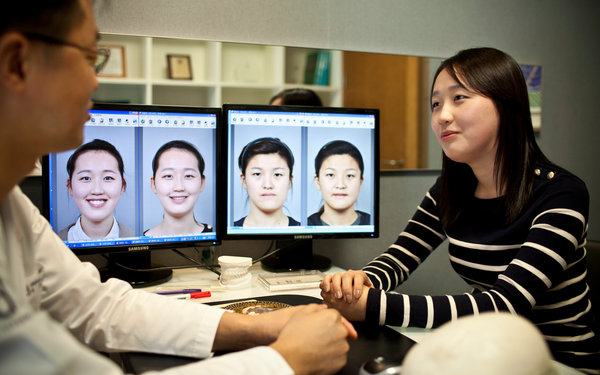
G.NA countered this perspective by emphasizing the psychological benefits of aesthetic improvements. She cited her grandfather’s hair transplant as a transformative experience that significantly increased his happiness and self-esteem. Her argument centered on the concept of "personal satisfaction," suggesting that if a procedure allows an individual to navigate the world with greater confidence, it should be viewed as a positive tool for self-improvement rather than a betrayal of nature.
While G.NA’s rebuttal was met with mixed reactions, it highlighted a growing sentiment among the younger generation: that the body is a customizable asset. However, critics point out that G.NA herself has often been the subject of intense scrutiny regarding her appearance, with many observers noting her features as quintessential examples of surgical precision. This creates a paradox where celebrities defend the practice as a personal choice while simultaneously operating within an industry that arguably mandates such changes as a prerequisite for success.
The Miss Daegu 2013 Controversy and the "Clone" Phenomenon
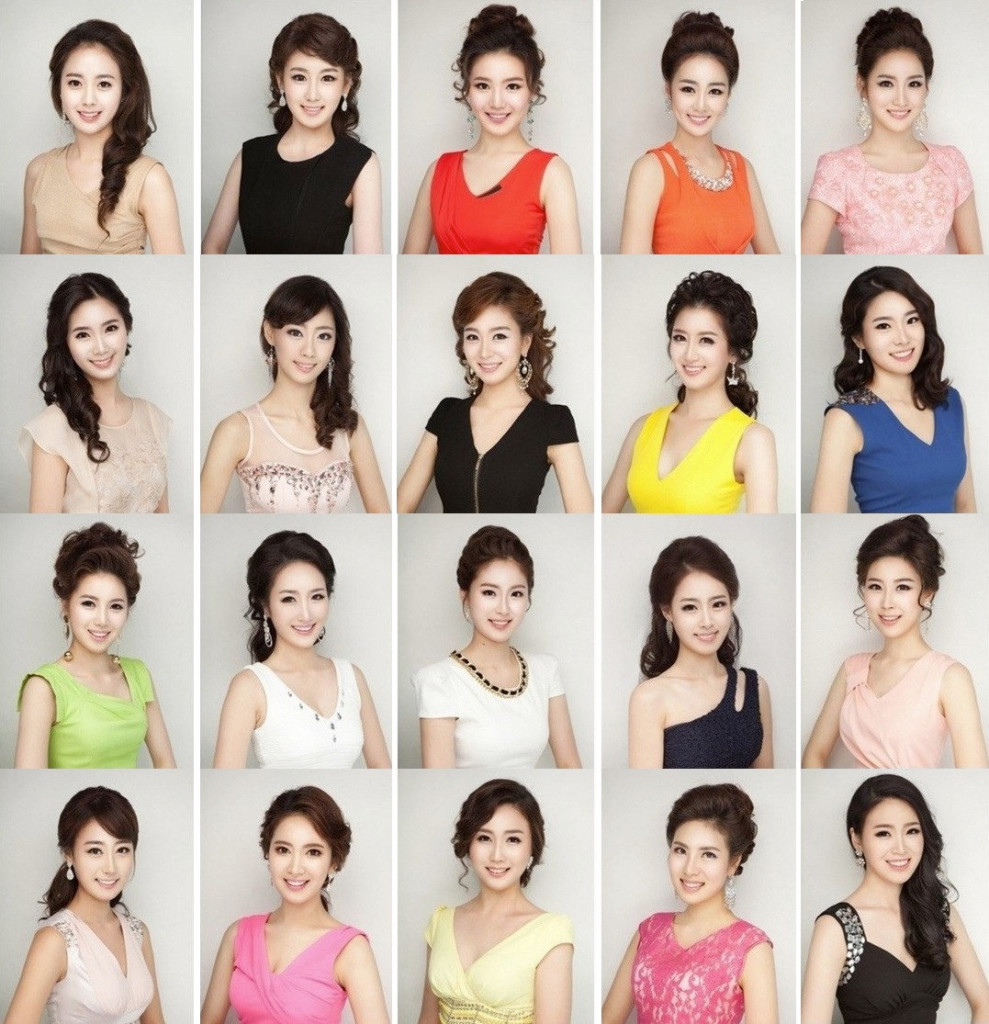
The theoretical defense of plastic surgery as a tool for "individuality" faced a severe challenge in April 2013, when photos of the twenty candidates for the Miss Daegu beauty pageant went viral. The images sparked an international firestorm on social media platforms and news outlets, as observers noted a striking, almost identical similarity between the contestants. The women shared nearly identical features: large, almond-shaped eyes with pronounced double eyelids, high and narrow nose bridges, porcelain skin, and the "V-line" heart-shaped jawline.
The controversy, which became known globally as the "Korean Plastic Surgery Clone" incident, raised profound questions about the homogenization of beauty. While some defenders argued that the similarities were exacerbated by heavy pageant makeup and uniform lighting/editing styles, the event served as a visual manifestation of a singular beauty ideal. If the purpose of plastic surgery is to enhance one’s unique features, the Miss Daegu images suggested the opposite: a collective move toward a manufactured, standardized template.

The eventual winner of the Miss Korea 2013 title, Kwak Ka-hyun, further fueled this debate. As a representative of the nation’s beauty, her victory was seen by some as an endorsement of the "surgically enhanced" look over "natural" features. This sparked a domestic backlash where the term "Sung-Gwe" (a portmanteau of "seonghyeong" meaning plastic surgery and "goemul" meaning monster) began to circulate more frequently in online communities to describe those who had undergone excessive procedures to fit the standard.
Statistical Context: South Korea as the Global Capital of Surgery
To understand the intensity of the debate, one must look at the data provided by the International Society of Aesthetic Plastic Surgery (ISAPS). For several years leading up to and following 2013, South Korea has consistently ranked as the country with the highest number of cosmetic procedures per capita.
Data from 2011 indicated that approximately 20% of women in Seoul between the ages of 19 and 49 admitted to having undergone some form of surgical enhancement. The most common procedures include:
- Blepharoplasty (Double Eyelid Surgery): A procedure to create a crease in the upper eyelid, intended to make the eyes appear larger and more "open."
- Rhinoplasty: Reshaping the nose to achieve a higher bridge and a more refined tip.
- V-line Bone Contouring: A more invasive surgery involving the shaving of the jawbone to create a slimmer, more feminine facial structure.
The economic impact is equally staggering. The medical tourism industry in South Korea, driven largely by plastic surgery, attracts hundreds of thousands of international patients annually, particularly from China and Southeast Asia, who seek the "K-beauty" look.

Chronology of the Aesthetic Shift in South Korea
The journey toward this current state of "lookism" can be traced through several key phases:
- Post-Korean War Era: The origins of double eyelid surgery in Korea are often linked to Dr. Ralph Millard, an American military surgeon who performed the procedure in the 1950s. Initially, it was sometimes seen as a way for Koreans to "Westernize" their appearance to better integrate with or appeal to the American presence.
- The 1990s and the Rise of Hallyu: As the Korean Wave (Hallyu) began to spread, the faces of actors and singers became the nation’s most visible exports. The industry began to prioritize a specific aesthetic that blended traditional Korean features with more pronounced, "modern" enhancements.
- The Mid-2000s Normalization: Plastic surgery transitioned from a luxury for the elite to a common graduation gift for high school students. It became viewed as a practical investment in one’s future.
- 2012-2013 Public Discourse: The G.NA debate and the Miss Daegu controversy marked a turning point where the public began to openly question the psychological toll of these rigid standards.
Employment Plastic Surgery: Beyond Vanity
One of the most critical, yet often overlooked, drivers of plastic surgery in South Korea is the professional landscape. In a highly competitive job market, "lookism" is a documented phenomenon. Many companies require a photograph on resumes, and it is widely understood that "good looks" constitute a "spec" (a term used by South Korean youth to describe qualifications like TOEIC scores or internships).
For many young South Koreans, undergoing surgery is not an act of vanity but a pragmatic career move. If two candidates have identical academic qualifications, the one who adheres more closely to the societal beauty standard is often perceived as more "diligent" or "self-disciplined." This systemic pressure complicates the argument of "personal choice" raised by celebrities like G.NA; when a procedure is required to secure a livelihood, the element of choice is significantly diminished.
The Role of Media and the Absence of Diverse Representations
A primary factor in the homogenization of Korean beauty is the lack of diverse representations in mainstream media. Unlike Western media, which has seen movements toward "body positivity" and the inclusion of various ethnic and physical types (as seen in the rise of figures like Lena Dunham or the celebration of different body shapes by artists like Beyoncé), South Korean media remains largely monolithic.
In the South Korean entertainment industry, those who do not fit the "ideal" are often relegated to comedic roles. Comedians such as Kim Shin-young or Jung Ju-ri are frequently the targets of jokes centered on their appearance, reinforcing the idea that "non-standard" looks are a defect to be mocked. This creates a cultural environment where there is no "middle ground" between being traditionally beautiful and being a "gag person."
Furthermore, the "Natural Beauty" (Jayeon Miin) trope in Korean media often serves to further stigmatize those who have had surgery. While the industry demands perfection, it also prizes the illusion that such perfection was achieved without effort. This places celebrities in a "double bind": they must be perfect to be successful, but they are shamed if they are caught using the only tools available to achieve that perfection.
Implications and the Path Forward
The debates sparked by G.NA and the Miss Daegu contestants reflect a society at a crossroads. On one hand, the plastic surgery industry is a source of national pride, economic revenue, and individual empowerment for some. On the other, it has created a "race to the bottom" where the pursuit of an unattainable and singular ideal has led to a loss of visual and cultural diversity.
The long-term implications of this trend include a potential crisis of identity among the youth and a continued escalation of "surgical requirements" to remain competitive in social and professional spheres. However, there are signs of a burgeoning counter-narrative. In recent years, some K-pop groups and independent artists have begun to embrace more diverse looks, and "honesty" about surgery—as seen in the frank admissions by members of groups like Brown Eyed Girls—is starting to replace the era of denial.

Ultimately, the issue is not the existence of plastic surgery itself, but the societal structures that make it feel mandatory. Until South Korean society—and its media—can create space for a broader definition of beauty that includes "natural" features, diverse body types, and unique facial structures, the cycle of conformity is likely to continue. The Miss Daegu "clones" were not merely a group of women who shared a doctor; they were a reflection of a society that, at that moment, struggled to value anything that fell outside of a very narrow, manufactured frame.
Related News