The Societal Impact and Ethical Debates Surrounding Cosmetic Surgery in South Korea’s Entertainment Industry
Article Editorial Team

The intersection of aesthetic enhancement and cultural identity has become a focal point of intense public discourse in South Korea, a nation that has frequently been labeled the plastic surgery capital of the world. In the dense landscape of the Korean entertainment industry, known as K-entertainment, the prevalence of cosmetic procedures is so pervasive that it is nearly impossible to discuss celebrity culture without addressing the surgical interventions that often define it. Digital platforms such as Google, Naver, and Daum frequently see search queries for popular idols and actors automatically supplemented with terms like "plastic surgery" or "before and after." This phenomenon reflects a broader societal obsession with physical perfection, where subtle changes in a star’s jawline or eyelid fold become the subject of minute analysis on online message boards and international fan forums.
While the topic has historically been treated with a degree of discretion, recent public exchanges between celebrities and the emergence of controversial beauty pageant results have brought the conversation into the mainstream. The debate is no longer just about whether a specific individual has "gone under the knife," but rather about the systemic pressures that necessitate such changes and the impact this has on the collective psyche of the South Korean public.
The Public Debate: Personal Satisfaction versus Marital Fidelity
A significant moment in this ongoing dialogue occurred during a televised exchange between the solo artist G.NA and comedian Lee Yoon-suk. The discussion was sparked when Lee voiced his disapproval regarding the possibility of his wife undergoing plastic surgery, characterizing such an act as a "violation of their marriage oath." Lee’s argument centered on the belief that natural beauty should be preserved and that the pursuit of surgical enhancement often stems from external pressures rather than internal needs.
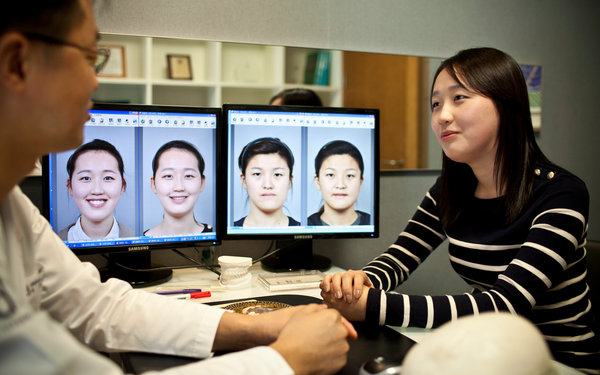
In a spirited rebuttal, G.NA defended the practice, emphasizing the importance of "personal satisfaction and happiness." She shared a personal anecdote involving her grandfather, who she claimed experienced a significant boost in self-esteem and general happiness after receiving hair transplants. G.NA’s perspective aligns with a common defense of cosmetic surgery: that it serves as a tool for self-empowerment. For many individuals, correcting a perceived physical flaw can alleviate debilitating insecurities, much like orthodontic work improves a smile or dermatological treatments clear skin.
However, the debate highlighted a fundamental gender divide in the perception of beauty. While Lee argued that a husband’s validation should be sufficient for a woman to feel "perfect," G.NA countered that a woman’s desire to alter her appearance is often independent of male approval and is instead tied to her own sense of self-worth. Despite the brevity of her argument, G.NA’s stance represented a growing sentiment among younger generations who view the body as a canvas for personal agency.
The Miss Daegu 2013 Controversy and Aesthetic Uniformity
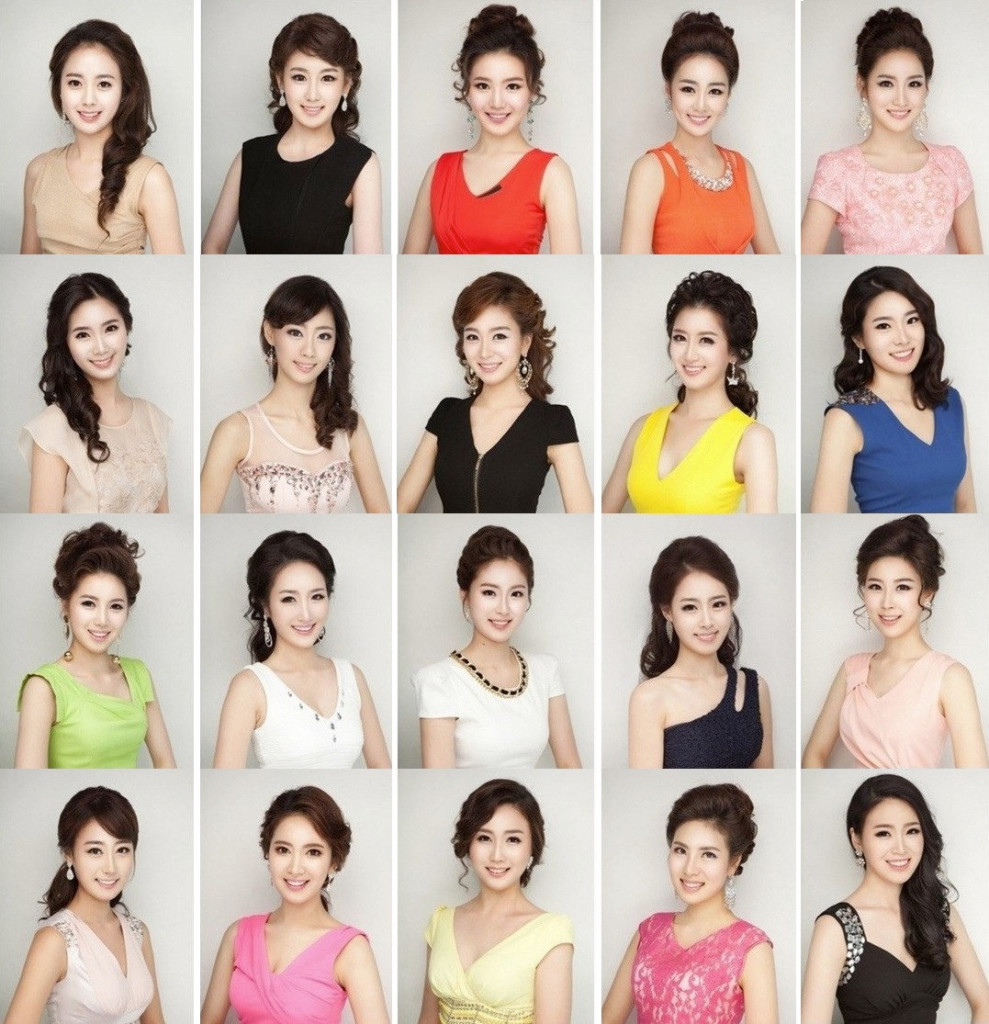
The tension between personal choice and societal pressure reached a boiling point with the release of the official photographs for the Miss Daegu 2013 contestants. The images, which featured twenty candidates for the regional beauty title, sparked an international viral sensation—not for the contestants’ beauty, but for their striking resemblance to one another. Critics and netizens pointed out that the women appeared to be "clones," sharing nearly identical features: large eyes with prominent double eyelids, high and narrow nose bridges, porcelain-fair skin, and the "V-line" jaw shape that has become the gold standard of Korean beauty.
This incident served as a stark visual representation of the homogenization of beauty standards in South Korea. While the contestants were undoubtedly beautiful by conventional standards, their uniformity suggested that the "ideal face" had become a manufactured product. The controversy raised difficult questions about the nature of beauty pageants in a country where surgical enhancement is both accessible and socially encouraged. If the goal of a pageant is to find a representative of national beauty, the Miss Daegu incident suggested that this representative might be a reflection of surgical skill rather than natural diversity.

Statistical Context: South Korea’s Cosmetic Surgery Landscape
To understand the depth of this issue, one must look at the data. According to the International Society of Aesthetic Plastic Surgery (ISAPS), South Korea consistently ranks as having the highest rate of plastic surgery per capita globally. In Seoul, particularly in the affluent Gangnam District, there is an area known as the "Beauty Belt" in Apgujeong-dong, which houses over 400 specialized clinics within a few square miles.
The most common procedures include:
- Blepharoplasty (Double Eyelid Surgery): The most frequent procedure, aimed at creating a crease in the eyelid to make the eyes appear larger and more "Westernized."
- Rhinoplasty (Nose Job): Focused on elevating the bridge of the nose and refining the tip.
- V-line Jaw Surgery: A more invasive procedure involving the shaving of the jawbone to create a slim, heart-shaped face.
- Epicanthoplasty: A procedure to remove the Mongolian fold of the eye to lengthen it horizontally.
The ubiquity of these procedures is supported by an aggressive advertising industry. Advertisements for plastic surgery are prominent in subway stations, on buses, and across digital media, often featuring "before and after" transformations that promise not just a new face, but a new life, a better job, and a more successful romantic future.
The Role of Media and the Lack of Diverse Representation
A critical factor in the perpetuation of these standards is the role of the South Korean media. Unlike in some Western markets, where voices like Tina Fey, Lena Dunham, or Amy Schumer have championed diverse body types and criticized unrealistic beauty standards, the South Korean entertainment industry maintains a rigid hierarchy of appearance.

In K-pop and K-drama, the "visual" of a group is often the most celebrated member, and their career longevity is frequently tied to their ability to maintain a youthful, surgically-enhanced aesthetic. When celebrities are revealed to be "natural beauties"—meaning they have not had surgery—it becomes a major news headline, further reinforcing the idea that natural beauty is an anomaly rather than the norm.
Conversely, those who do not fit the narrow definition of beauty are often relegated to "gagman" or "gagwoman" roles. Comedians like Kim Shin-young or Jung Ju-ri frequently build their acts around self-deprecating humor regarding their looks. This creates a binary in the media: one can either be "beautiful" (and therefore a serious actor or idol) or "unattractive" (and therefore a comedic object). There is very little middle ground for individuals who are talented but do not conform to the "V-line" and "double eyelid" paradigm.
Socio-Economic Pressures and "Employment Surgery"
The drive for plastic surgery in South Korea is not merely a matter of vanity; it is increasingly a socio-economic necessity. The term chwi-eop seong-hyeong (employment surgery) has entered the local lexicon, referring to the practice of undergoing cosmetic procedures to improve one’s chances in the competitive job market.
In South Korea, resumes often require a photograph, and it is a widely held belief—supported by various surveys—that attractive candidates have a distinct advantage during the hiring process. Employers often view a "well-managed" appearance as a sign of self-discipline and competence. Consequently, many parents gift their children plastic surgery procedures upon high school or university graduation, viewing it as a practical investment in their professional future.
Analysis of Implications: The Vicious Cycle of Perfection
The convergence of media glorification, economic pressure, and surgical accessibility has created a self-perpetuating cycle. When the "ideal" face is constructed through surgery and then celebrated as the pinnacle of beauty, it places immense pressure on the rest of the population to conform. This leads to a loss of ethnic and individual diversity, as unique facial features are traded for a standardized, "manufactured" look.
Furthermore, the normalization of invasive surgeries carries significant health risks. Procedures like jawbone shaving are complex and require long recovery periods, with potential complications including nerve damage and permanent numbness. Despite these risks, the social rewards of "looking the part" often outweigh the fears of the operating table for many young Koreans.
The defense offered by G.NA—that surgery provides personal happiness—is valid on an individual level. However, when viewed through a sociological lens, that "happiness" is often contingent on meeting a standard that has been externally imposed. If the choice to get surgery is made because one feels they cannot succeed or be loved without it, the "choice" itself becomes a form of societal coercion.
Conclusion: The Path Toward Aesthetic Pluralism
The debate sparked by G.NA and the Miss Daegu contestants reflects a nation at a crossroads. While South Korea’s medical expertise in cosmetic surgery is world-renowned and a significant driver of medical tourism, the cultural cost of this success is becoming increasingly apparent.

For a shift to occur, the South Korean media must begin to embrace a more inclusive definition of beauty. There are nascent signs of change; some celebrities have begun to speak more honestly about the pressures of the industry, and there is a growing "escape the corset" movement among young women who reject traditional beauty standards. However, until the systemic link between appearance and success is severed, the "beauty belt" of Gangnam is likely to remain as busy as ever. The challenge for South Korean society lies in moving away from a single, manufactured ideal toward a culture that celebrates aesthetic pluralism and self-acceptance.
Related News