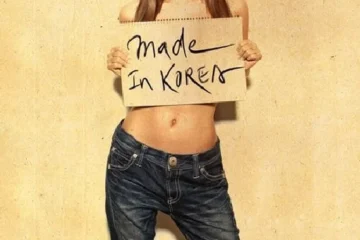
The Socioeconomic Evolution of South Korea’s Bean Paste Girl From Post-War Frugality to Global Consumerism
Article Editorial Team

The global explosion of Psy’s "Gangnam Style" in 2012 introduced international audiences to the vibrant, neon-lit aesthetics of Seoul’s most affluent district, but for those familiar with the nuances of South Korean society, the music video offered a biting satire of a specific cultural archetype: the "dwenjang-nyeo," or "bean paste girl." While Western journalists initially focused on the "horse dance" and the catchy hook, analytical deep dives eventually unearthed the term used to describe young women who allegedly sacrifice basic necessities to maintain a facade of luxury. The "bean paste girl" has since become a fixture in contemporary South Korean discourse, serving as a lightning rod for debates regarding consumerism, gender roles, and the psychological scars of rapid modernization.
To understand the weight of the term, one must first understand its culinary namesake. Dwenjang refers to fermented soybean paste, the foundation of dwenjang jjigae, a humble, pungent, and deeply traditional stew. For generations, this soup has represented the bedrock of the Korean diet—affordable, nutritious, and ubiquitous in every household and low-cost cafeteria. A bowl of dwenjang jjigae typically costs between 3,500 and 5,000 Korean Won (approximately $3 to $4 USD), making it the ultimate symbol of a frugal, no-frills lifestyle. The "bean paste girl" label is applied to a woman who eats this cheap meal in private so that she can afford to be seen in public with a 6,500 Won Starbucks Frappuccino or a multi-million Won designer handbag.
The Multi-Faceted Definition of the Dwenjang-Nyeo
The term is not monolithic; its definition shifts depending on who is wielding it as a pejorative. At its most common level, it describes a woman from a modest background who lives with her parents to save money, only to spend her entire paycheck on luxury goods. In this view, the bean paste girl is a victim of "conspicuous consumption," prioritizing the appearance of wealth over actual financial stability.
Other interpretations are more cynical. Some critics use the term to describe women who "mooch" off their partners or families to fund their taste for Western imports. In this context, the bean paste girl is seen as a social climber who uses brand names like Chanel, Louis Vuitton, or Prada as a shortcut to a higher social class. A third, more abstract definition characterizes her as a "wannabe Westerner"—someone who has traded Korean values for a shallow, imported identity. To these critics, if you stripped away the $1,500 worth of accessories, the woman underneath is nothing more than a "bucolic" or "ordinary" Korean, a sentiment that reveals a deep-seated anxiety about the loss of national authenticity in the face of globalization.
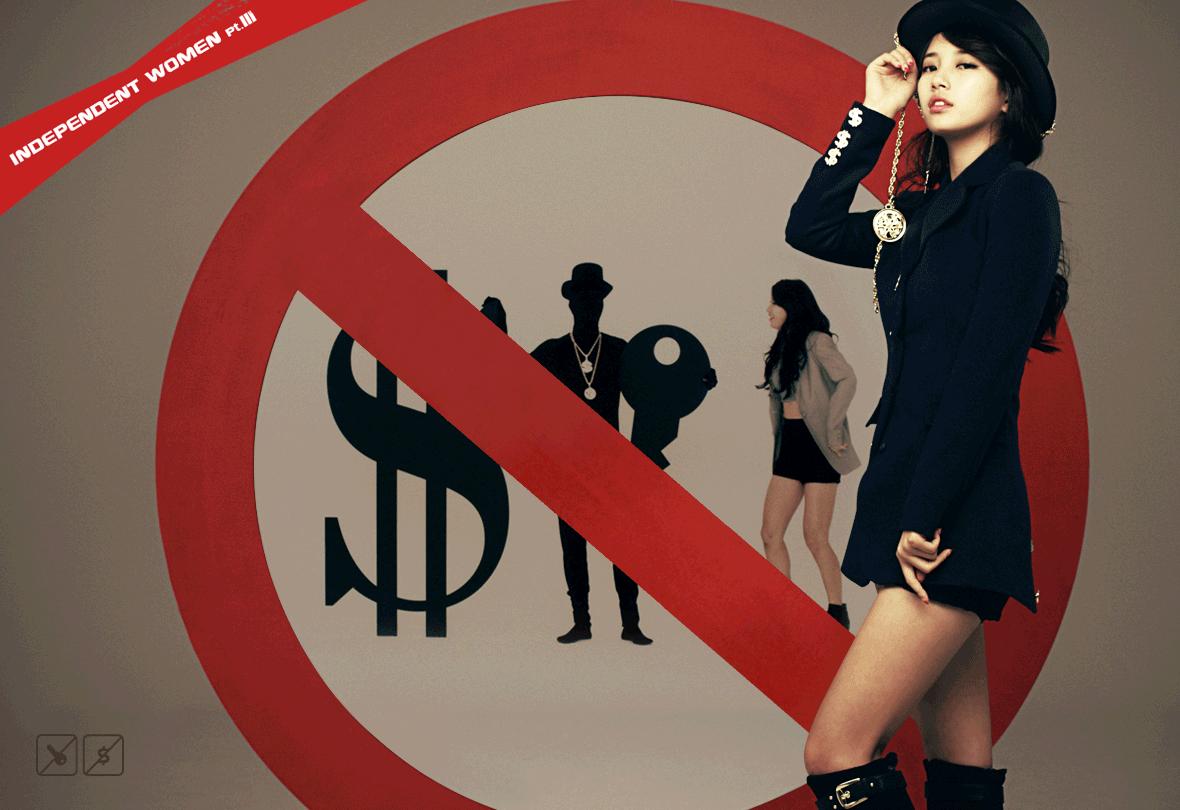
Conversely, a minority of feminist scholars have attempted to reclaim the term. They argue that the bean paste girl is actually a "fiscal feminist" or a "Miss A" archetype—referencing the K-pop group’s lyrics about independent women. In this reading, if a woman works hard to earn her own money and chooses to spend it on a Chloe handbag rather than traditional savings, she is asserting her autonomy in a patriarchal society. However, this interpretation remains in the minority, as the term is overwhelmingly used with derogatory intent.
Historical Chronology: From Ethiopia’s Aid to Global Excess
The emergence of the bean paste girl cannot be understood without examining South Korea’s "Miracle on the Han River." The nation’s transition from an impoverished agrarian society to an OECD powerhouse occurred with a speed that is historically unprecedented, leaving a profound "compressed modernization" gap in the collective psyche.
1950s–1960s: The Era of Survival
Following the devastation of the Korean War, South Korea was one of the poorest nations on Earth. In the 1950s, the country’s GDP per capita was lower than that of many Sub-Saharan African nations; notably, Ethiopia sent both troops and financial aid to assist the struggling peninsula. During this time, dwenjang jjigae was not a choice but a necessity. Survival was the only priority, and North Korea, backed by the Soviet Union, actually maintained a stronger economy than the South for several years.
1961–1979: The Park Chung-hee Mandate
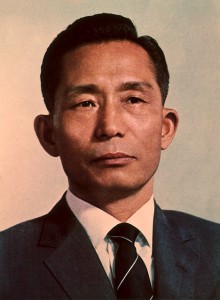
When General Park Chung-hee took power in a 1961 coup, he initiated a series of aggressive Five-Year Plans. His administration fostered the Saemaul Undong (New Village Movement), which preached the virtues of diligence, self-help, and, most importantly, extreme frugality. During this era, kwasobi (excessive spending) was treated as a moral failing and a betrayal of the state. Government campaigns actively shamed those who purchased foreign luxury goods, viewing every dollar spent on imports as a dollar stolen from national development.
1980s–1990s: The Shift to Consumption
By the late 1980s, particularly following the success of the 1988 Seoul Olympics, the narrative began to shift. South Korea had joined the ranks of developed nations. The children of the war generation, who had grown up hearing stories of starvation, now found themselves with disposable income. The 1990s saw the opening of high-end department stores and the arrival of global luxury franchises. The old warnings against kwasobi began to ring hollow to a generation that wanted to enjoy the fruits of their parents’ labor.
2000s–Present: The Status Symbol Economy
In the 21st century, the drive for status intensified. South Korea became one of the most competitive societies in the world, where one’s "spec" (specifications, such as education and physical appearance) determines their social value. In this environment, luxury goods became a visual shorthand for success. According to data from Morgan Stanley, South Koreans have recently become the world’s biggest spenders on personal luxury goods per capita, spending an average of $325 per person annually—far outstripping the $280 spent by Americans or the $55 spent by Chinese consumers.
Supporting Data and Societal Implications
The "bean paste girl" phenomenon is supported by staggering economic data regarding the South Korean coffee and luxury markets. As of 2023, Seoul has more Starbucks locations than any other city in the world, including New York and London. The "coffee culture" in Korea is not merely about caffeine; it is about the "space" and the "brand." Holding a cup with a specific logo provides a sense of belonging to the urban elite.

Furthermore, the luxury market in Korea has shown remarkable resilience. Even during economic downturns, brands like Hermès and Chanel report record profits in the Korean market. This "Veblen effect"—where demand for a good increases as its price rises—is central to the bean paste girl’s lifestyle. The handbag is not a utility; it is an entry ticket into a perceived higher echelon of society.
Official Responses and the Gender Gap
The lack of a "bean paste boy" (dwenjang-nam) equivalent is perhaps the most telling aspect of this social critique. While young men also spend exorbitant amounts on imported cars, high-end electronics, and designer streetwear, they are rarely subjected to the same level of public vitriol.
Sociologists point to South Korea’s persistent gender inequality as the root cause. The World Economic Forum’s Global Gender Gap Report consistently ranks South Korea near the bottom among developed nations. In a society where women often face a "glass ceiling" in the corporate world and are judged heavily on their appearance, the acquisition of luxury goods becomes one of the few avenues available to project power or status. The vilification of the "bean paste girl" can thus be viewed as a form of social policing, where women are shamed for participating in the very consumerist culture that the capitalist system encourages.
Broader Impact and the Future of Korean Identity
The "bean paste girl" is a symptom of a deeper national identity crisis. As South Korea continues to export its culture through the "Hallyu" (Korean Wave), it remains locked in a domestic struggle between its traditional Confucian roots—which value modesty and community—and a hyper-capitalist reality that rewards individualism and display.
Psy’s "Gangnam Style" may have brought the term to the world’s attention, but the phenomenon is far from a punchline. It represents the tension of a nation that moved from "bean paste" to "Bottega Veneta" in a single lifetime. Whether the term will eventually fade or evolve into a new form of social labeling remains to be seen, but for now, the "bean paste girl" stands as a complex symbol of the psychological price of the Korean Dream. As the nation grapples with low birth rates and high youth unemployment, the pressure to "look the part" of a successful citizen continues to drive the consumption patterns that created the dwenjang-nyeo in the first place.
Related News