The South Korean Celebrity Recruit Scandal and the Dissolution of the Defense Media Agency Public Relations Unit
Article Editorial Team
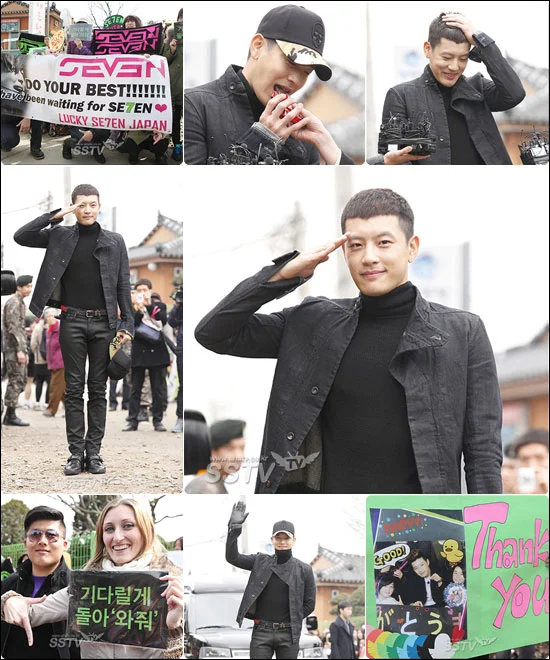
The integrity of South Korea’s mandatory military service system faced one of its most significant challenges in June 2013, following a series of high-profile misconduct cases involving celebrity soldiers. The controversy, which centered on pop stars Se7en (Choi Dong-wook) and Sangchu (Lee Sang-chul) of the hip-hop duo Mighty Mouth, exposed deep-seated systemic issues within the Defense Media Agency’s "celebrity recruit" program. The ensuing public outcry and subsequent government investigation led to a radical restructuring of how the Ministry of National Defense (MND) manages high-profile conscripts, ultimately resulting in the total abolition of the public relations unit that had existed for sixteen years.
The Foundation of Mandatory Conscription in South Korea
To understand the gravity of the 2013 scandal, one must first consider the socio-political necessity of the South Korean draft. Under the Constitution of the Republic of Korea and the Military Service Act, all able-bodied male citizens are required to perform military service. As of 2013, the duration for the Army and Marines was 21 months, 23 months for the Navy, and 24 months for the Air Force. This requirement stems from the unresolved conflict with North Korea; although an armistice was signed in 1953, a formal peace treaty was never established, leaving the two nations technically at war.
Military service is viewed as a "rite of passage" and a fundamental civic duty. Any perceived inequality in how this duty is performed—especially by those in positions of wealth or fame—is met with intense societal scrutiny. The "celebrity recruit" system, formally known as the Public Relations Unit of the Defense Media Agency, was established in 1997. Its stated purpose was to boost the morale of troops and promote the military’s image through radio broadcasts, televised performances, and promotional events. However, over time, the unit became a flashpoint for allegations of favoritism and lax discipline.
Chronology of the 2013 Misconduct Scandal
The catalyst for the program’s downfall began on the night of June 21, 2013. Several celebrity recruits, including Se7en and Sangchu, were stationed in Chuncheon, Gangwon Province, to participate in a military-sponsored concert commemorating the 63rd anniversary of the Korean War. Following the performance, a team of investigative journalists from the SBS program On Site 21 tracked the movements of the soldiers.
The investigation revealed that after 10:00 PM, the recruits left their temporary quarters in civilian clothing, carrying personal cell phones—both of which were strict violations of military protocol. The soldiers were filmed consuming alcohol at a local restaurant before returning to a motel. However, at approximately 2:30 AM, Se7en and Sangchu were observed leaving the motel and entering a massage parlor known for providing adult services. They remained inside for approximately 30 minutes.
When the SBS reporters confronted the two soldiers as they exited the establishment, a physical altercation ensued. The recruits attempted to seize the journalists’ cameras and microphones, an act of aggression that was captured on film and broadcast to a national audience. The footage sparked an immediate firestorm, as it appeared to confirm long-standing suspicions that celebrity recruits were operating under a different set of rules than the average conscript.
Supporting Data: Disparities in Leave and Furlough
The scandal prompted a broader look at the statistics surrounding celebrity soldiers. Data released by the Ministry of National Defense during the subsequent audit revealed a stark contrast between the experiences of regular soldiers and those in the PR unit.

Between 2009 and 2012, the average regular soldier received approximately 43 days of leave during their entire 21-month enlistment. In contrast, celebrity recruits averaged 75 days. Some high-profile stars received significantly more; for instance, the singer Rain (Jung Ji-hoon), who had been embroiled in a smaller controversy earlier in 2013 for meeting his girlfriend, actress Kim Tae-hee, while on official duty, had reportedly taken over 90 days of leave during his service.
Furthermore, the SBS report highlighted the luxury accommodations provided to the PR unit at their base in Seoul. While frontline soldiers slept in communal barracks and had restricted access to technology, celebrity recruits were found to have access to private gym facilities, gaming consoles, and personal internet access. The "celebrity soldier" designation had effectively created a privileged class within an institution built on the principle of egalitarian sacrifice.
Official Responses and the "Knee Therapy" Defense
In the immediate aftermath of the On Site 21 broadcast, the Ministry of National Defense launched a special audit into the Defense Media Agency. The initial defense offered by military officials and the representatives of the soldiers was met with widespread derision. They claimed that the recruits had visited the massage parlor not for illicit services, but for "knee therapy" to treat minor injuries sustained during their performance.
This explanation failed to appease the public or the Ministry’s internal investigators. Sangchu later attempted to take full responsibility for the incident, citing his seniority over Se7en, but the damage to the unit’s reputation was irreparable. The Ministry’s audit concluded that the management of the PR unit was "deeply flawed," citing a lack of oversight by commanding officers who had essentially allowed the stars to manage their own schedules and conduct.

The Abolition of the Celebrity Recruit System
On July 18, 2013, the Ministry of National Defense officially announced the permanent abolition of the celebrity recruit system. In a formal statement, the Ministry acknowledged that the program had failed its primary mission of improving the military’s image and had instead fostered "distrust and a sense of alienation" among regular soldiers and the general public.
The fallout was swift:
- Disciplinary Action: Eight celebrity recruits involved in the June incident were sentenced to military jail (confinement in a guardhouse) for terms ranging from 10 to 11 days.
- Reassignment: The 15 remaining celebrity recruits were reassigned to regular field units. To prevent further accusations of favoritism, those with the most significant disciplinary infractions were sent to frontline infantry divisions near the Demilitarized Zone (DMZ).
- Program Closure: The Defense Media Agency’s PR unit was shuttered, and its promotional duties were absorbed by civilian contractors or regular soldiers with relevant skills who were not granted special status.
Broader Impact and Societal Implications
The 2013 scandal serves as a landmark event in South Korean cultural history, signaling a shift in how the public views the intersection of Hallyu (the Korean Wave) and civic duty. Prior to this event, there was a quiet acknowledgement that stars might receive "soft" assignments to protect their physical appearance and career longevity. Post-2013, this tolerance vanished.
The incident also had a profound effect on the career trajectories of the involved artists. Se7en, who was once one of Asia’s most prominent soloists, saw his public image severely tarnished. His long-term relationship with actress Park Han-byul ended shortly after the scandal, and his return to the entertainment industry was met with a cold reception that lasted for years.

In the decade since the abolition of the PR unit, the strategy for South Korean celebrities entering the military has shifted toward "image rehabilitation" through hardship. Stars now frequently volunteer for the most grueling branches of service, such as the Marine Corps or Special Forces, to prove their dedication to the country. Notable examples include Hyun Bin, Lee Seung-gi, and members of various idol groups who have sought out active-duty roles in frontline units.
Conclusion
The dissolution of the celebrity recruit system was a necessary correction for a military struggling to maintain morale among its conscripted force. By prioritizing the principle of "fairness" over "promotion," the South Korean Ministry of National Defense reinforced the idea that military service is a shared burden that admits no exceptions based on social status. While the 2013 scandal was a moment of national embarrassment, it ultimately led to a more transparent and equitable conscription process, ensuring that the "defense of the fatherland" remains a duty performed with equal commitment by all.
Related News