Toxic Fandom Culture and the Erosion of Privacy in the K-pop Industry
Article Editorial Team
The global expansion of South Korean popular music, known as K-pop, has been fueled by a level of fan dedication that is arguably unparalleled in the modern entertainment landscape. Fans are known to organize elaborate commemorative projects, donate millions of won to charitable causes in the names of their favorite idols, and provide the financial backbone of the industry through physical album sales and digital streaming. However, this fervent devotion has a documented dark side. Recent incidents involving prominent idols from f(x), Super Junior, and SHINee have highlighted a growing crisis: the increasingly intrusive and often toxic behavior of certain fan segments that seek to dictate the personal lives and professional boundaries of the artists they claim to support.
The Digital Siege: Krystal Jung and the Cost of Social Media Presence
In early 2013, the power of digital harassment became strikingly evident when Krystal Jung, a member of the girl group f(x), was forced to deactivate her personal Instagram account, @kjungxox. The catalyst for this withdrawal was not a scandal of the artist’s making, but rather the actions of another high-profile idol, G-Dragon of BIGBANG. When G-Dragon "liked" several of Krystal’s photos, a segment of his fanbase interpreted the interaction as a sign of a burgeoning romance.
The subsequent backlash was immediate and severe. Krystal’s comment sections were flooded with vitriol, ranging from personal insults to direct threats. Simultaneously, her account became the target of multiple hacking attempts. The digital siege reached a point where the artist deemed the platform untenable. This incident underscores a recurring theme in K-pop fandom: the policing of female idols by the fanbases of male idols. In this ecosystem, a simple digital interaction is often treated as a breach of an unspoken contract of "availability" that fans demand from their biases. The deletion of Krystal’s account served as a sobering reminder that for K-pop stars, social media is often less a tool for connection and more a liability for targeted harassment.
The "Only 13" Doctrine: Institutionalizing Fan Exclusion
While digital harassment targets individuals, organized fan movements often seek to influence the very structure of K-pop groups. A primary example is the long-standing "Only 13" movement associated with Super Junior. Since the group’s inception, a vocal minority of the fanbase (E.L.F.) has campaigned against the inclusion of new members, specifically Henry Lau and Zhou Mi, who were added to the sub-unit Super Junior-M.
In July 2013, the pressure from these "Only 13" supporters reached a threshold that compelled the group’s leadership to respond. Eunhyuk, a senior member of Super Junior, issued a formal statement clarifying that Henry and Zhou Mi were not "official" members of the main group but were restricted to the Super Junior-M sub-unit. This clarification followed intense demands from fans to "clearly define the boundaries" between the original members and the "guest" members.
This institutional concession highlights a significant power imbalance. When entertainment agencies and artists are forced to publicly categorize their colleagues as "guest members" to appease a demanding fanbase, it legitimizes the idea that fans have a say in corporate personnel decisions. The "Only 13" sentiment represents a form of consumer entitlement where the "product"—in this case, the group’s lineup—is viewed as a static entity owned by the purchasers, rather than a creative project managed by the agency and the artists.
The Apology for Normalcy: Jonghyun and the Cinema Incident
The intrusion into the private lives of idols reached a peak of absurdity in August 2013, involving SHINee’s Jonghyun. After being spotted at a movie theater with a female friend, rumors of a romantic relationship began to circulate on various community portals. Despite the lack of any evidence suggesting anything beyond a platonic outing, the internal pressure from the SHINee fanbase was significant enough to prompt a public apology from Jonghyun on his Twitter account.

"Even though it’s not something I should be sorry about, I’m sorry," Jonghyun wrote, acknowledging the "breaths of relief" fans would take upon hearing that the woman was merely a non-celebrity friend. This statement is a poignant reflection of the psychological burden placed on idols. The necessity to apologize for engaging in a common social activity—going to the movies—demonstrates the "perfection mandate" imposed on K-pop stars. They are expected to maintain an image of perpetual singlehood and accessibility, effectively functioning as "virtual partners" for their audience. When this illusion is threatened by the reality of the idol’s human needs and social life, the artist is often the one forced to perform penance.
The Physical Risk: Airport Chaos and Lack of Security
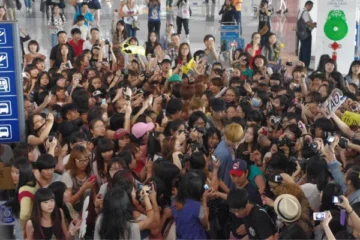
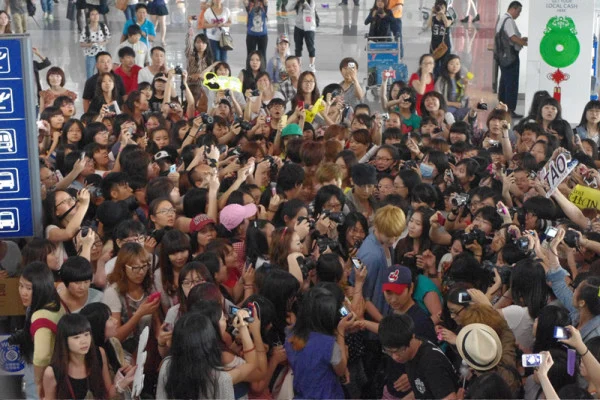
Beyond digital harassment and psychological pressure, the physical safety of idols is frequently compromised by fan behavior. International airports have become the primary theaters for "sasaeng" (obsessive fan) activity. High-profile groups like EXO have frequently been swarmed by hundreds of fans who bypass security barriers, leading to dangerous stampedes.
In these environments, it is not uncommon for both fans and artists to be shoved, stepped on, or even physically assaulted. There have been reported instances of fans attempting to touch idols inappropriately or shoving cameras directly into their faces. Despite these recurring dangers, entertainment agencies have often been slow to implement rigorous security protocols, partly out of fear of alienating the consumer base. This lack of intervention sends a dangerous message: that the idol’s physical personal space is a secondary concern to the fan’s desire for proximity.
Analysis of Implications: The Parasocial Paradox
The root of these issues lies in the "parasocial relationship," a term used by sociologists to describe a one-sided relationship where one party extends emotional energy and interest toward a persona who is unaware of their existence. In K-pop, these relationships are not accidental; they are meticulously engineered by agencies through "fan service," "private" messaging apps, and marketing strategies that emphasize the idol’s devotion to the fans.

However, when this marketing succeeds too well, it fosters a sense of ownership. Fans begin to view idols not as employees or independent artists, but as characters in a narrative they have purchased. This leads to several systemic problems:
- Dehumanization: Idols are held to standards of "perfection" that are impossible to maintain, leading to mental health crises and burnout.
- Corporate Complicity: Agencies often prioritize short-term profit from "vocal" fanbases over the long-term well-being of their artists, leading to a culture of appeasement.
- The Netizen Effect: The anonymity of the internet allows "netizens" to exert disproportionate influence through coordinated smear campaigns, which can end an idol’s career over minor or fabricated transgressions.
Conclusion: The Path Toward a Sustainable Fandom
The current state of K-pop fandom is at a crossroads. While the industry continues to break records and reach new international markets, the "gritty" side of the fan-artist relationship remains a threat to its sustainability. The incidents involving Krystal, Jonghyun, and Super Junior are not isolated events; they are symptoms of a culture that lacks clear boundaries.
For the industry to mature, several shifts are necessary. First, entertainment agencies must prioritize the physical and mental health of their artists by providing better security and refusing to pander to unreasonable fan demands. Second, the artists themselves must be empowered to assert their boundaries without fear of career-ending backlash. Finally, the broader fan community must engage in self-regulation. If the same organizational skills used to fund charities were applied to condemning harassment and respecting privacy, the "other side of the K-pop coin" might finally begin to shine.
The customer may be "always right" in traditional retail, but in the business of human entertainment, that adage is a dangerous fallacy. It is time for the K-pop industry to recognize that while fans buy the music, they do not own the person behind it. The blind negativity and inappropriate behavior observed in 2013 serve as a cautionary tale for the future: without mutual respect, the very passion that built K-pop could be the force that eventually undermines it.
Related News