
The global explosion of Psy’s 2012 viral hit "Gangnam Style" did more than just introduce the world to a catchy horse-riding dance; it provided a window into the complex social hierarchies and consumerist anxieties of modern South Korea. Central to the song’s satirical bite is the concept of the "dwenjang-nyeo" (된장녀), or "Bean Paste Girl." While Western audiences largely perceived the music video as a colorful parody of wealth, Korean domestic audiences recognized a pointed critique of a specific demographic: women who allegedly sacrifice basic necessities to maintain a façade of high-class, Westernized luxury. This term has since evolved into a fixture of Korean social discourse, reflecting deeper issues of gender inequality, rapid economic modernization, and the psychological weight of status symbols in a hyper-competitive society.
The Etymology and Culinary Roots of a Derogatory Label
The term "bean paste girl" is derived from dwenjang (fermented soybean paste), a staple ingredient in Korean cuisine. Specifically, it refers to dwenjang jjigae, a humble, pungent, and highly affordable stew. For decades, this dish has represented the bedrock of the Korean diet—it is the "comfort food" of the masses, typically served in small, no-frills restaurants for a few thousand won. In the cultural lexicon, dwenjang symbolizes the traditional, the domestic, and the economically modest.
The irony of the "Bean Paste Girl" label lies in the juxtaposition between this cheap meal and the expensive habits the woman is accused of harboring. The archetype describes a woman who eats a 4,000 KRW (approximately $3.00) bowl of bean paste stew for lunch so that she can spend 6,500 KRW ($5.00) on a designer coffee at an upscale franchise like Starbucks. In this context, the "bean paste" serves as a marker of the hidden poverty or frugality required to fund an outward display of "Gangnam-style" luxury.
The Historical Context: From Austerity to Excess
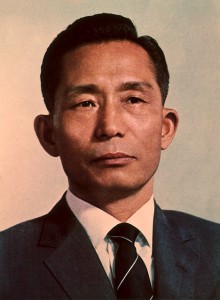
To understand why a woman’s coffee habits became a matter of national debate, one must look at South Korea’s unprecedented economic trajectory. Following the devastation of the Korean War (1950–1953), South Korea was one of the poorest nations on Earth, receiving significant foreign aid from countries that are today far less developed. Under the authoritarian leadership of President Park Chung-hee in the 1960s and 70s, the nation underwent the "Miracle on the Han River," a period of compressed modernization.
During this era, the government enforced a strict culture of austerity. The term kwasobi (excessive spending) was treated as a moral failing and a betrayal of the national effort to build a self-sufficient economy. Citizens were exhorted to save every won, work grueling hours, and avoid imported luxury goods. However, by the 1990s, South Korea had joined the ranks of the world’s wealthiest nations. The transition from a culture of extreme scarcity to one of sudden abundance created a "consumption shock."
As the nation became affluent, the old taboos against kwasobi began to erode, replaced by a fierce desire for status markers. In a society where social standing was traditionally rigid, designer handbags, European cars, and expensive coffee became the new currency of class. The "Bean Paste Girl" emerged as the scapegoat for this collective shift, embodying the anxieties of a society caught between its frugal past and its materialistic present.
Defining the Archetype: Three Perspectives
The definition of a "Bean Paste Girl" is not monolithic; it varies depending on the critic’s perspective. Sociologists and cultural observers generally categorize the phenomenon into three distinct interpretations:

- The Frugal Posturer: This is the most common definition. It describes a woman from a middle- or lower-class background who lives with her parents to save money. She avoids spending on nutritious food or essential services, instead funneling every spare cent into a single "it-bag" from a brand like Louis Vuitton or Chanel. The critique here is directed at her perceived vanity and her willingness to suffer physical or nutritional "poverty" for the sake of a deceptive appearance.
- The Dependent Consumer: In this iteration, the "Bean Paste Girl" is seen as a "moocher" who relies on the financial support of her parents or a boyfriend to fund her lifestyle. This version of the trope is heavily laden with gendered resentment, suggesting that women use their romantic relationships as a vehicle for social mobility and luxury consumption without contributing their own labor.
- The "Wannabe" Westerner: This perspective focuses on the cultural aspect of her consumption. She is criticized for rejecting traditional Korean values in favor of a superficial, imported "Western" lifestyle. The focus on Starbucks is particularly symbolic here; in the early 2000s, carrying a Starbucks cup in Seoul was seen as a deliberate signal of being "modern," "global," and "sophisticated," distinguishing the holder from the "rustic" masses.
Economic Data and the Luxury Market
The "Bean Paste Girl" phenomenon is supported by tangible economic trends. South Korea consistently ranks as one of the world’s largest markets for luxury goods per capita. According to data from analysts at Morgan Stanley, South Koreans’ total spending on personal luxury goods grew significantly over the last decade, with the country often outspending much larger economies like Japan or the United States on a per-person basis.
In 2022, per capita spending on luxury goods by South Koreans reached approximately $325, compared to $280 for Americans and $50 for Chinese citizens. This high demand for "Veblen goods"—items for which demand increases as the price increases—underpins the social pressure that creates the "Bean Paste Girl." For many young Koreans, a designer accessory is not just a fashion choice; it is a necessary "uniform" required to be taken seriously in professional and social circles.
The Gendered Double Standard: Where is the "Bean Paste Boy"?
A critical point of contention in the "Bean Paste Girl" discourse is the conspicuous absence of a male equivalent. While men in South Korea also engage in conspicuous consumption—spending exorbitant amounts on electronics, high-end watches, and imported cars—they are rarely subjected to the same level of vitriolic public labeling.
Sociologists point to South Korea’s deeply entrenched patriarchal structures as the reason for this disparity. Critics argue that the "Bean Paste Girl" trope is a form of "misogyny-lite," a way for society to police women’s financial autonomy and social behavior. While a man’s purchase of a luxury car is often viewed as a sign of success or professional achievement, a woman’s purchase of a luxury handbag is frequently dismissed as shallow vanity.

Furthermore, South Korea’s gender pay gap remains the highest among OECD nations. The irony is that many women labeled as "Bean Paste Girls" are actually young professionals using their own hard-earned income to navigate a world that judges them harshly based on their appearance. In this light, some feminist scholars have attempted to reclaim the term, viewing the "Bean Paste Girl" as a symbol of a woman who prioritizes her own desires and "small joys" (sohwakhaeng) over traditional expectations of saving for a future husband or family.
Social Media and the Digital Amplification
The rise of social media platforms like Instagram has only intensified the pressures associated with the "Bean Paste Girl" phenomenon. The "Instagrammable" lifestyle requires a constant stream of high-end backdrops: luxury hotel "staycations," expensive afternoon tea sets, and the latest designer collaborations.
The digital age has transformed the "Bean Paste Girl" from a local Seoul stereotype into a globalized performance of wealth. The pressure to "look the part" has led to the rise of "rent-a-bag" services and a thriving market for high-quality imitations, as individuals strive to meet the aesthetic standards of their digital peers without the necessary financial backing.
Broader Implications and the Future of Korean Consumerism
The "Bean Paste Girl" debate serves as a microcosm of the tensions within South Korean society. It touches upon the "Hell Joseon" sentiment—a term used by young Koreans to describe the harsh, competitive, and hopeless state of the modern economy. With skyrocketing real estate prices making homeownership an impossible dream for many, young people have pivoted toward "flex culture," spending their disposable income on immediate, visible luxuries rather than saving for a future they believe they will never attain.
As South Korea continues to navigate its identity as a global cultural powerhouse, the "Bean Paste Girl" label may eventually lose its sting, but the underlying issues of social stratification and gendered criticism remain. The phenomenon is a reminder that consumption is rarely just about the product; it is a complex language used to communicate status, aspiration, and the desperate desire to belong in a rapidly changing world. Whether through a cup of coffee or a designer tote, the "Bean Paste Girl" is ultimately a product of a society that demands perfection and prestige, often at the cost of one’s own "bean paste" foundations.