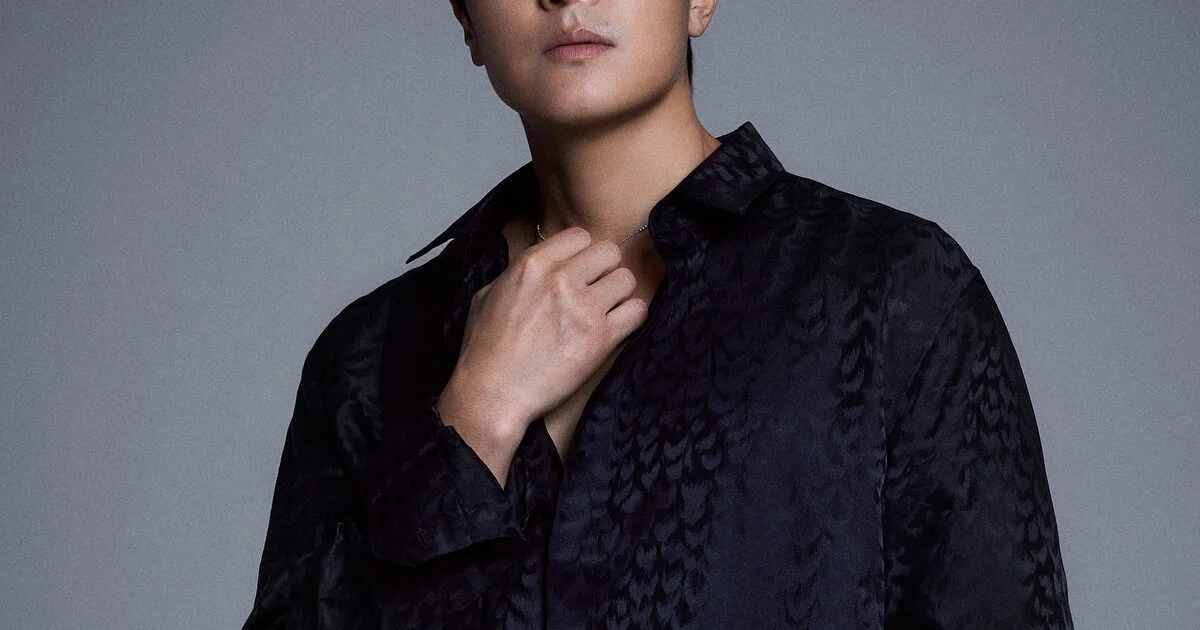
Seoul, South Korea – Kim Dongwan, a prominent member of the iconic K-Pop group Shinhwa, is currently embroiled in a fresh wave of controversy, drawing sharp criticism even from his dedicated fanbase, following his public comments in defense of YouTuber Park We. This incident marks another instance where Kim Dongwan’s social media activity has ignited public debate, highlighting the increasing scrutiny placed on public figures and the complex dynamics of celebrity influence.
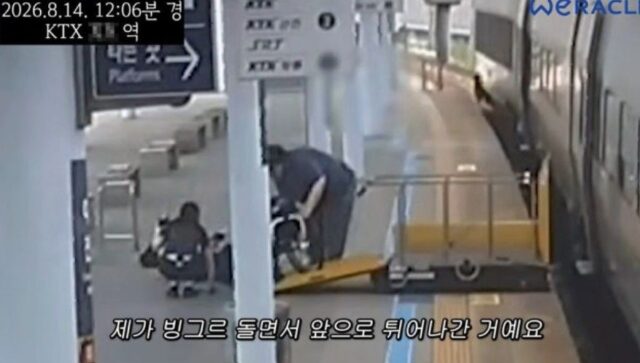
The genesis of the current controversy lies with Park We, a well-known paraplegic YouTuber who recently became the subject of widespread public criticism. Park We, who has cultivated a significant online presence by sharing his experiences living with a disability, uploaded a video titled “Why I’m Revealing CCTV Footage” to his YouTube channel. The footage depicted an incident where he fell while disembarking a KTX high-speed train on a ramp, allegedly due to a social service worker’s foot catching the wheel of his wheelchair.
The video quickly went viral, but instead of garnering widespread sympathy for Park We, it ignited a fierce backlash from viewers who accused him of recklessness and insensitivity. Many perceived the release of the unedited CCTV footage as an unnecessary public shaming of the social service worker involved, who, according to later statements, had reportedly apologized on the spot for what appeared to be an unintentional mishap. Critics argued that the video focused disproportionately on the worker’s error rather than addressing broader systemic issues of accessibility or offering a constructive dialogue. The incident sparked a broader discussion about accountability, the ethics of content creation, and the appropriate way to address personal grievances, especially when involving individuals in service roles.
Following the intense public scrutiny, Park We issued a direct apology, acknowledging his misjudgment. In his statement, he admitted, "I thought negatively about the mistakes made in the process of helping me better. My way of delivering the message was immature and thoughtless." Despite this apology, the public backlash showed little sign of subsiding. The incident led to a significant drop in his subscriber count, illustrating the severe repercussions public figures face when their actions are perceived negatively by their audience. His channel, which previously boasted over a million subscribers, saw a notable decline, reflecting the severity of the public’s disapproval.
Kim Dongwan’s Intervention and Initial Public Statement
Amidst the escalating debate surrounding Park We, Kim Dongwan chose to weigh in, adding his perspective to the contentious discussion. On his personal social media account, the Shinhwa member expressed sentiments that initially appeared to defend Park We’s perspective. He wrote, "He is new to having a disability. From his perspective as someone with a disability, he could only consider everything as such. And the stories that came from that moment gave a chance for people without disabilities to reflect."
This initial comment was perceived by many as an attempt to contextualize Park We’s actions, suggesting that his recent experience with disability might have influenced his perception of the incident. Park We became paraplegic following a fall in 2014, making his journey with disability relatively recent compared to those born with conditions or who experienced them earlier in life. Kim Dongwan’s statement aimed to foster empathy for Park We’s unique viewpoint, positing that his reaction, while perhaps flawed, stemmed from a place of personal experience that might not be immediately understood by others. He further added a broader observation about the speed of public judgment, stating, "I do not know all the details of this incident. But I do realize that the time it takes for an ordinary person to become news has become very short." This remark seemed to allude to the rapid spread of information and the swift condemnation that can befall individuals in the digital age, regardless of the full context.
Clarifications and Continued Backlash
However, Kim Dongwan’s initial comments did not quell the criticism; instead, they redirected some of it towards him. Recognizing the burgeoning negative reaction, he issued subsequent clarifications to elaborate on his stance and mitigate misunderstandings. He emphasized, "I have no personal connection or vested interest with Mr. Park We." This clarification was crucial in distancing himself from any perception of bias or ulterior motives, attempting to frame his comments as an independent observation rather than a personal endorsement.
He continued by expressing concern for the social service worker involved, stating, "I do not take lightly the fact that a social service worker who made a mistake without intent and apologized on site is being exposed to criticism." This statement directly addressed one of the core grievances of the public regarding Park We’s video – the perceived public shaming of an individual who made an accidental error and offered an immediate apology. Kim Dongwan’s words highlighted the vulnerability of service professionals and the disproportionate impact of online exposure.
Furthermore, he addressed the criticism directed at Park We’s method of releasing the video. "The method of releasing the video can be criticized," he conceded. Yet, he swiftly pivoted to express a larger societal concern: "However, what worries me is that such criticism often extends to condemning a person entirely by dragging up unverified past incidents. When I said ‘ordinary person,’ I meant someone who is immediately reported on without any filtering, not the extent of influence," he clarified. This clarification sought to distinguish between legitimate criticism of an action and the broader phenomenon of "cancel culture," where past behaviors, sometimes unverified or taken out of context, are used to completely discredit an individual. He stressed that his use of "ordinary person" was not to diminish Park We’s public influence but to lament the instant, unfiltered nature of public judgment in the digital era.
Finally, Kim Dongwan reiterated his core message: "Criticizing mistakes and collectively insulting a person are different things. My intention was that no one should be the target of such attacks. This is my fault and since there were critical comments, I will leave the original text as it is." This final statement served as both an apology for any misunderstanding caused by his remarks and a principled stand against what he perceived as excessive condemnation. By choosing to leave his original text unedited, he demonstrated a commitment to his perspective while acknowledging the validity of critical feedback.
Fan Reaction and Implications for Celebrity Responsibility
Despite Kim Dongwan’s detailed clarifications, the backlash against him, particularly from his own fanbase, continued unabated. This reaction underscores the evolving expectations placed on celebrities in the age of social media, where their words carry significant weight and are subject to immediate and intense scrutiny. Fans, who often feel a strong sense of ownership and protectiveness over their idols, voiced their disappointment and concern.
One long-time fan offered a poignant piece of advice, reflecting a common sentiment within the K-Pop fandom regarding public statements: "Our dear mother always said, ‘Staying silent gets you through just okay.’ Please stop using social media… What you write as your thoughts can be a stone thrown at someone else… the more you speak, the more you lose." This comment encapsulates the prevailing wisdom that in controversial situations, silence is often the safest and most strategic path for public figures. It also highlights the recognition that a celebrity’s words, even when well-intentioned, can have unforeseen and damaging consequences.
Another fan, identifying as a long-time supporter of Shinhwa, pleaded, "I’ve been a Shinhwa fan for a long time. Please just be quiet, that’s the safest path. This is my first comment on this account, please." The rarity of this fan’s comment further emphasizes the depth of their concern, indicating that the issue was significant enough to break their usual silence.
Other reactions echoed these sentiments, with comments such as "Better to stay quiet in times like this," "Even public service is new to him," and "It’s best to quit social media." A particularly insightful comment directly challenged Kim Dongwan’s earlier framing: "You yourself are not an ordinary person, so please be very careful with your remarks. That is the influence of someone who is not ordinary." This statement directly addresses the inherent contradiction in a celebrity, who wields considerable public influence, attempting to speak on behalf of "ordinary people" or underplaying the impact of their own words. It underscores the responsibility that comes with their platform and the expectation that they should exercise extreme caution.
Broader Context: Celebrity Social Media and Disability Advocacy in South Korea
This is not an isolated incident for Kim Dongwan, who has previously drawn attention for his outspokenness on social media. His history of engaging in public discourse, sometimes controversially, indicates a pattern of a celebrity willing to voice his opinions, even at the risk of public disapproval. In a highly image-conscious industry like K-Pop, where carefully curated personas are often the norm, Kim Dongwan’s willingness to engage directly in social commentary sets him apart, yet also exposes him to greater criticism.
The incident also shines a light on the broader landscape of disability advocacy and public perception in South Korea. While significant strides have been made in recent years to improve accessibility and raise awareness, challenges persist. Public transportation, for instance, has seen infrastructure improvements, but everyday experiences for individuals with disabilities can still be fraught with difficulties, relying heavily on the assistance of others. Social service workers play a crucial role in bridging these gaps, and incidents like the one involving Park We can bring to the forefront the complexities of providing and receiving assistance. There is a delicate balance between advocating for rights and improvements, and ensuring that individual service providers are not unfairly targeted.
The power of social media to shape public opinion and instigate "cancel culture" is another critical factor. Platforms like YouTube, Instagram, and X (formerly Twitter) provide immediate avenues for public figures to communicate directly with their audience, bypassing traditional media filters. While this offers unprecedented connection, it also means that statements, once made, are instantly amplified, dissected, and judged by millions. The speed at which a controversy can erupt and escalate, and the difficulty in reining in public sentiment, underscore the immense pressure on celebrities to meticulously consider every word they post.
The current situation with Kim Dongwan and Park We serves as a stark reminder of the multifaceted challenges public figures face in navigating complex social issues. It highlights the fine line between offering a thoughtful perspective and inadvertently fueling controversy, the evolving nature of fan expectations, and the enduring power of social media to hold celebrities accountable for their words and actions. As public discourse continues to shift towards greater scrutiny and immediate judgment, the imperative for celebrities to communicate with extreme care and sensitivity becomes ever more critical.