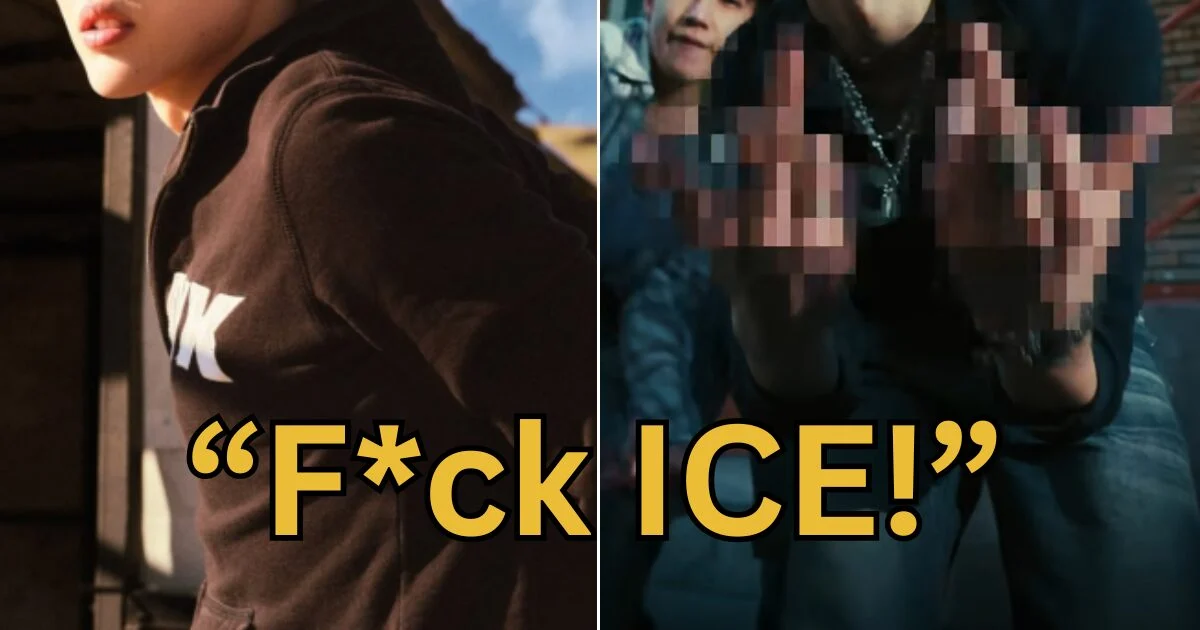
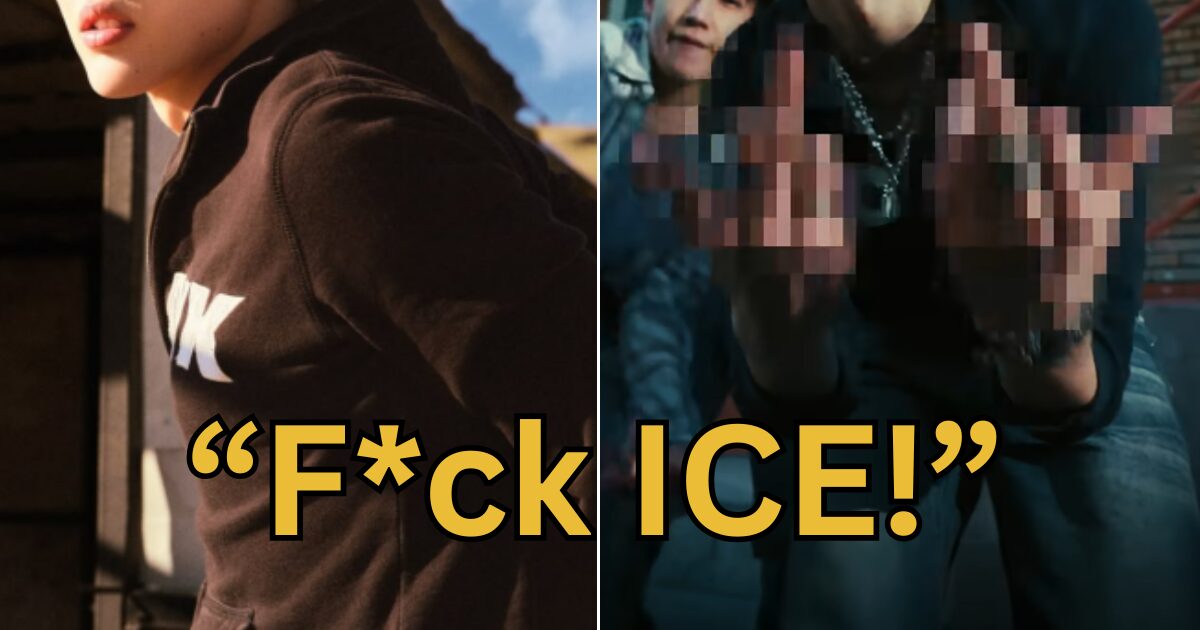
The nascent K-Pop group WAYF has ignited a firestorm of controversy and discussion with the release of their debut song, "WAYF BOYS DO," which includes the explicit lyric, "F*ck ICE," a direct reference to the U.S. Immigration and Customs Enforcement agency. The phrase, an unprecedented and stark political statement from a rookie K-Pop act, immediately went viral across social media platforms following the group’s official debut on August 7, 2026, prompting a diverse range of reactions from shock and support to criticism and concern within the global K-Pop community and beyond.
WAYF’s Pre-Debut Buzz and Unconventional Persona
Prior to their highly anticipated debut, WAYF had already garnered significant online traction throughout early 2026, cultivating a reputation for a bold and unapologetically explicit aesthetic. Their pre-debut teasers, which hinted at themes of clubbing, dating, and drinking—subjects often sanitized or subtly alluded to in the typically wholesome K-Pop industry—positioned them as a refreshing, albeit provocative, departure from the norm. This unconventional marketing strategy generated a substantial buzz, drawing in a segment of fans eager for a more mature and unrestricted idol concept. Their earlier viral article, titled "Clubbing, Dating, Drinking – Meet The New K-Pop Group Taking Social Media By Storm," highlighted their deliberate embrace of a more "real" and less polished image, hinting at a willingness to push boundaries that few could have predicted would extend to explicit political commentary.
The Controversial Debut: "WAYF BOYS DO"
WAYF officially launched their career on August 7, 2026, with the release of their debut single, "WAYF BOYS DO," accompanied by an official music video. The song, a high-energy track designed to introduce their defiant identity, quickly became the focal point of intense scrutiny. Within hours of its release, eagle-eyed netizens identified a segment where the members distinctly utter "F*ck ICE." This phrase immediately stood out not only for its profanity, which is rare in mainstream K-Pop, but more significantly for its direct political stance against a prominent governmental agency.
The U.S. Immigration and Customs Enforcement (ICE) agency has been a subject of intense debate and criticism globally, particularly regarding its enforcement policies, detention practices, and perceived human rights violations. Advocacy groups and human rights organizations have frequently condemned ICE’s operations, citing family separations, indefinite detentions, and harsh conditions for migrants and asylum seekers. Conversely, supporters of ICE argue for the necessity of border security and the enforcement of immigration laws. For a K-Pop group, especially one in its rookie phase, to explicitly take a side on such a contentious international issue is virtually unheard of, making WAYF’s lyric a watershed moment.
A Digital Avalanche: Initial Reactions and Viral Spread
The clip containing the controversial lyric rapidly disseminated across social media platforms, particularly X (formerly Twitter). Posts featuring the audio snippet amassed hundreds of thousands of views, likes, and retweets within a short period. User @haniglows, for instance, encapsulated the immediate sentiment of many by tweeting, "saying ‘Fuck ICE’ in your debut song is wild im #sold #wayfboysDO," signaling both shock and immediate endorsement. This sentiment was echoed by numerous others who praised the group for their bravery and willingness to address a significant socio-political issue. Many of these supporters were international fans, particularly from the Western hemisphere, who are often more accustomed to artists engaging in political commentary.
However, the reactions were far from uniform. While a significant portion of the international fanbase lauded the group’s audacity, a discernible undercurrent of concern emerged. Some long-time K-Pop enthusiasts questioned the potential repercussions for WAYF’s career, citing the industry’s historical aversion to overt political statements, especially those perceived as controversial or divisive. Others, particularly those unfamiliar with the complexities of U.S. immigration policy or those with differing political views, expressed confusion or outright condemnation.
The NCT WISH Connection: A Stark Contrast in Concepts
Adding another layer of intrigue to the unfolding narrative was the revelation that one of WAYF’s members, identified as Anderson, had almost debuted with NCT WISH, a group under SM Entertainment known for its bright, youthful, and universally appealing concept. User @zb1city highlighted this stark contrast, tweeting, "what takes me out about anderson is he almost made it into nct wish. COULD U IMAGINE ??", underscoring the dramatic divergence in artistic direction. NCT WISH, as part of the larger NCT brand, typically embodies a vibrant, performance-focused image, carefully curated to appeal to a broad demographic without venturing into explicit political or controversial territory. Anderson’s journey from a potential member of such a group to an artist in WAYF, a group that explicitly challenges political norms, symbolizes a growing bifurcation within the K-Pop landscape, where some artists are beginning to choose paths of greater creative and political expression. This background detail further emphasized WAYF’s unique and perhaps risky positioning.
Broader Fan Sentiment: Support and Affirmation
Beyond the initial shock, many fans quickly rallied behind WAYF, particularly those who resonate with the anti-ICE sentiment. Several tweets highlighted the perceived authenticity and lived experiences of the group members. User @boiznedo stated, "they are all immigrants they know their shit ✊🏽 nobody can do it like the wayf boys do indeed," suggesting that the lyric stems from a place of personal understanding and solidarity. This perspective resonates deeply with a global fanbase that increasingly values authenticity and social consciousness from their idols.

Another fan, @haruleofilms, reinforced this sentiment, tweeting, "bc they meant it when they said ain’t nobody doing it better than wayf boys do ✊🏽❤️🔥," implying that the group’s actions align with their self-proclaimed ethos of being unparalleled. Even those who might not typically gravitate towards such explicit music found themselves acknowledging the significance of the statement. User @minhosnopal commented, "ykw i can’t say this is a song i’ll like but i rlly do respect them for saying this," indicating a respect for the group’s stance, even if the musical style wasn’t their preference. This speaks to the power of a bold political statement to transcend musical tastes and capture broader attention. The fact that the members reportedly wrote their own lyrics, as noted by @boylliife ("and they wrote their own lyrics im kind of gagging"), further cemented their image as artists with genuine conviction rather than merely puppets of a management company.
Inferred Statements from Related Parties and Expert Analysis
The K-Pop industry, notoriously cautious about political statements, is likely grappling with how to address WAYF’s debut. While no official statements from WAYF’s agency were immediately available, industry analysts anticipate a carefully worded response.
- WAYF’s Agency (Inferred Statement: "Artistic Expression Amidst Global Dialogue"): It is plausible that WAYF’s management, having allowed such a lyric, might issue a statement emphasizing artistic freedom and the group’s unique identity. They might highlight the importance of artists reflecting diverse perspectives and societal concerns, without explicitly endorsing or retracting the "F*ck ICE" phrase. A statement could read: "WAYF is a group committed to authentic expression and diverse artistic narratives. Their debut song reflects the multifaceted experiences and perspectives that define their unique sound and message. We believe in empowering our artists to explore themes that resonate with them, contributing to broader dialogues in contemporary culture."
- K-Pop Industry Analysts (Analysis: "Navigating Uncharted Waters"): Dr. Lena Kim, a prominent K-Pop culture critic and professor at Seoul National University (hypothetical), might comment, "WAYF’s debut marks a significant deviation from the traditional K-Pop playbook. While groups like BTS have subtly addressed social issues, an explicit condemnation of a governmental agency is unprecedented. This move could either cement their status as trailblazers for a new generation of socially conscious idols or face severe backlash, potentially impacting their marketability in certain regions. It’s a high-risk, high-reward strategy that challenges the industry’s long-held neutrality." She might also point out that the global K-Pop audience is becoming increasingly diverse and politically aware, potentially creating a market for such content.
- Immigration Advocacy Groups (Inferred Statement: "A Voice for the Voiceless"): Organizations advocating for immigrant rights would likely commend WAYF. A spokesperson from "Migrant Voices United" (hypothetical) could state: "We applaud WAYF for using their platform to amplify the voices of the marginalized and to highlight the urgent human rights issues surrounding ICE. It is vital for artists to speak truth to power, and this statement from a globally recognized K-Pop group brings much-needed attention to a critical humanitarian crisis."
- Conservative/Pro-ICE Groups (Inferred Statement: "Unacceptable Politicalization"): Conversely, conservative groups or those supportive of ICE would likely condemn the lyric. A representative from "Americans for Border Security" (hypothetical) might release a statement: "It is deeply inappropriate and irresponsible for a foreign music group to interject themselves into U.S. domestic policy with such a vulgar and ill-informed statement. This politicalization of entertainment is divisive and disrespectful to law enforcement officers who work to secure our borders. We urge fans to boycott groups that promote such anti-American sentiments."
- SM Entertainment (Inferred Statement: "Focus on NCT WISH’s Vision"): Regarding Anderson’s past with NCT WISH, SM Entertainment would likely issue a brief, diplomatic statement to maintain distance while remaining professional. A hypothetical statement could be: "SM Entertainment respects the artistic paths of all individuals. While Anderson was a trainee within our system, NCT WISH has a distinct concept and vision, focusing on delivering positive energy and unique performances to their global fanbase. We wish all former trainees success in their endeavors." This would subtly reinforce NCT WISH’s apolitical stance.
Broader Implications for the K-Pop Industry
WAYF’s debut and its controversial lyric carry significant implications for the future trajectory of K-Pop:
- Shifting Landscape of Artistic Freedom: This event could signal a growing appetite, particularly among international fans, for K-Pop artists to engage with more mature and politically charged themes. It might empower other groups to explore similar avenues, gradually eroding the industry’s traditional self-censorship on sensitive topics.
- Market Segmentation and Global Reach: While the lyric might alienate a segment of the audience, particularly in more conservative markets or among those who prefer apolitical entertainment, it could also solidify WAYF’s appeal to a specific, socially conscious demographic. This could lead to greater market segmentation within K-Pop, with groups catering to niche audiences rather than universally appealing ones. The global nature of K-Pop’s fandom means that political stances taken by artists can resonate differently across various countries, potentially complicating international expansion strategies.
- Increased Scrutiny and Pressure: WAYF’s move will undoubtedly place greater scrutiny on K-Pop agencies and artists regarding their content. There might be increased pressure from fan bases for idols to take stances on social issues, but also pressure from industry stakeholders to maintain a neutral, commercially viable image.
- The Role of Idols as Cultural Commentators: Historically, K-Pop idols have been positioned as aspirational figures, often detached from overt political discourse. WAYF’s action challenges this paradigm, potentially opening a path for idols to be seen more explicitly as cultural commentators or activists, much like Western artists.
- Financial and Sponsorship Risks: Political controversy carries inherent financial risks, including potential loss of endorsement deals, decreased album sales in certain regions, or even difficulties securing performance venues. WAYF’s agency will need to carefully navigate these commercial challenges.
- Impact on Immigration Discussions: The sheer virality of the lyric means that the phrase "F*ck ICE" from a K-Pop song could become an unlikely cultural touchstone in discussions about immigration, especially among younger, globally connected audiences.
The Road Ahead for WAYF
As of August 7, 2026, WAYF stands at a critical juncture. Their debut has been anything but conventional, ensuring they are anything but overlooked. The "F*ck ICE" lyric has etched their name into K-Pop history, not just for their music, but for their audacious political statement. The challenge for WAYF and their agency will be to leverage this viral momentum, maintain artistic integrity, and navigate the inevitable backlash and intense scrutiny that will follow. Their future success will depend on their ability to cultivate a loyal fanbase that appreciates their unique brand of outspoken artistry, while strategically managing the controversies their bold approach is bound to generate. Whether they become a fleeting sensation or a lasting influence, WAYF has undeniably injected a potent dose of unfiltered reality into the meticulously crafted world of K-Pop.