
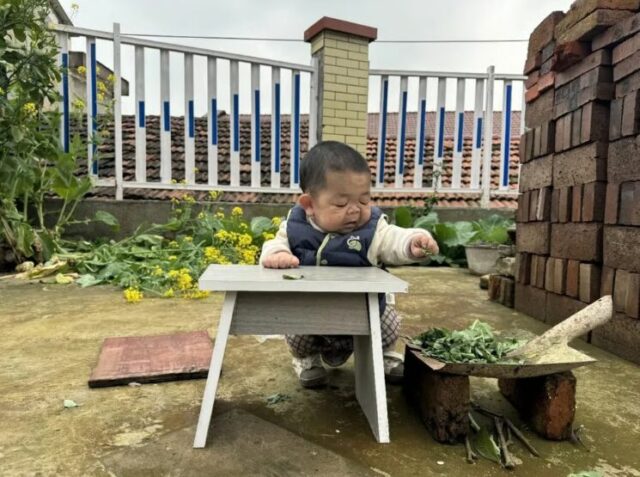
At a height of just 66 centimeters, Wang Junming, a 25-year-old man from China, presents a profound medical anomaly, his stature barely exceeding that of an average newborn baby, which typically measures between 48 and 50 centimeters. His physical development aligns with that of a five to six-month-old infant, a stark contrast to his chronological age. This extraordinary case has drawn significant international attention, not only highlighting the complexities of rare genetic disorders but also underscoring the critical role of social media in medical advocacy and the enduring power of familial devotion in the face of immense adversity.
The Unprecedented Challenge: A Life in Miniature
Wang Junming’s condition represents one of the most severe forms of growth deficiency, placing him in a category so rare that it challenges conventional medical understanding and societal norms. While newborn babies, particularly full-term infants, are typically within a range of 48-50 cm and weigh between 2.5 to 4.5 kg, Wang’s adult height is closer to the upper end of a healthy infant’s length. This discrepancy extends beyond mere physical size; it profoundly impacts his daily life, mobility, and cognitive development, which, according to medical assessments, currently functions at an infantile level. His unique situation serves as a poignant reminder of the vast spectrum of human development and the often-hidden struggles faced by individuals with ultra-rare conditions.
A Sister’s Devotion and the Power of the Internet
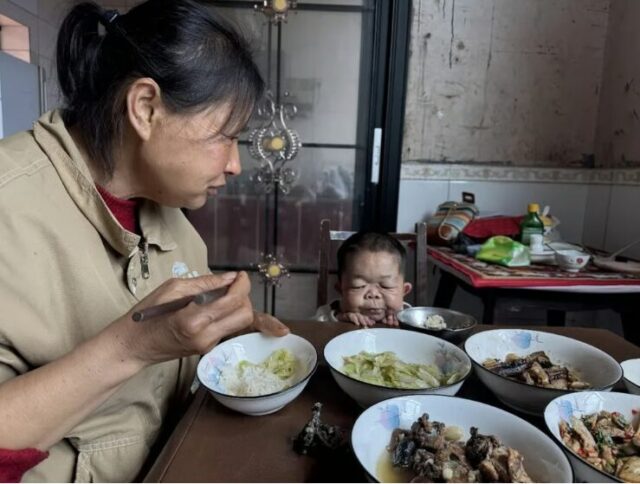
The story of Wang Junming first captured widespread public attention through the heartfelt efforts of his 21-year-old sister, Xiaoling. Utilizing popular online platforms, Xiaoling began sharing vignettes of their daily life, providing a candid glimpse into the challenges and triumphs of caring for her brother. Her authentic and moving content resonated deeply with viewers, rapidly building an audience of 163,000 followers almost overnight. This viral phenomenon transcended mere entertainment, transforming into a powerful mechanism for awareness and, ultimately, intervention. It was through this burgeoning online community that concerned individuals, recognizing the gravity of Wang’s condition, took the proactive step of contacting medical professionals, effectively bridging the gap between a private family struggle and the possibility of expert medical aid.

Medical Revelation: Unraveling a Rare Genetic Mystery
Following the public’s intervention, Wang was brought to the Second Xiangya Hospital of Central South University in Changsha, China, where he underwent comprehensive diagnostic evaluations. In February of the current year, endocrinologist Deng Chao delivered a definitive diagnosis: Wang suffers from pituitary hormone deficiency. This diagnosis was further refined through genetic testing, which identified an abnormal POU1F1 gene. Dr. Deng Chao elaborated that the POU1F1 gene plays a crucial role in the development and function of the pituitary gland, a master gland responsible for producing several vital hormones, including growth hormone. A mutation in this gene can severely impair the pituitary gland’s ability to produce these essential hormones, leading to profound developmental delays.
The rarity of Wang’s specific genetic mutation and its associated condition cannot be overstated. Dr. Deng Chao cited a 2021 study indicating that only 114 known cases of this particular POU1F1 gene abnormality have been documented worldwide. This places Wang Junming among an elite, albeit challenging, group of individuals whose lives are shaped by an exceptionally uncommon genetic blueprint. The typical diagnostic window for such conditions is usually between six months and three years of age, and with early intervention and consistent treatment, many affected children can achieve relatively normal height and cognitive development. Wang’s diagnosis at 25 years old, however, presents a significantly more complex and uncertain prognosis due to the prolonged period without essential hormonal support.
A Decades-Long Battle Against Undiagnosed Illness
Wang Junming’s journey through life has been marked by a decades-long struggle with an undiagnosed illness, a testament to the challenges faced by families in remote or socioeconomically disadvantaged regions in accessing specialized medical care. While the original article does not provide a precise chronology of his early life, it can be inferred that his abnormal growth was noticeable from infancy. During his childhood, the family faced another significant health crisis when Wang’s mother was diagnosed with cancer. Though she thankfully survived, this period of immense familial stress and medical focus on the mother likely diverted resources and attention away from Wang’s nascent developmental issues.
It was during this critical period that Xiaoling, then a young girl, stepped into a primary caregiving role for her brother, a responsibility she has steadfastly maintained into adulthood. The family did, at one point, seek medical advice for Wang, and medication was prescribed. However, the crushing weight of financial hardship prevented them from continuing the necessary treatment. Wang’s father, a bricklayer, earns approximately 3,000 yuan (roughly $450 USD) per month. This meager income, barely sufficient for basic necessities, made the ongoing costs of specialized medication and frequent hospital visits an insurmountable barrier. This scenario is tragically common in many parts of the world, where the cost of treating rare diseases, often requiring lifelong therapy, pushes families into deeper cycles of poverty, highlighting systemic inequities in healthcare access.
The POU1F1 Gene and Pituitary Function: A Scientific Overview
To understand the profound impact of Wang Junming’s condition, it is essential to delve deeper into the science behind the POU1F1 gene and pituitary hormone deficiency. The pituitary gland, a pea-sized structure located at the base of the brain, is often referred to as the "master gland" because it produces hormones that regulate numerous other endocrine glands and vital bodily functions, including growth, metabolism, reproduction, and stress response. The POU1F1 gene (also known as Pit-1) is a transcription factor, meaning it controls the expression of other genes. Specifically, POU1F1 is critical for the development of certain cell types within the anterior pituitary gland, which are responsible for producing growth hormone (GH), prolactin (PRL), and thyroid-stimulating hormone (TSH).
A mutation in the POU1F1 gene, as seen in Wang Junming, leads to combined pituitary hormone deficiency (CPHD), affecting the production of these crucial hormones. The deficiency of growth hormone is directly responsible for the severe short stature. TSH deficiency impacts thyroid function, affecting metabolism, energy levels, and cognitive development. Prolactin deficiency can affect reproductive health. The profound impact on Wang’s cognitive function, described as being at an infantile level, is likely a cumulative effect of these hormonal imbalances over decades, particularly the lack of growth hormone and potentially thyroid hormones during critical developmental periods. Early diagnosis and replacement therapy, typically involving synthetic growth hormone injections and other hormone replacements, are vital for mitigating the long-term effects of CPHD. However, in cases of delayed diagnosis like Wang’s, the window for achieving optimal physical and cognitive development may have largely closed, leading to a more challenging prognosis.
The Socioeconomic Burden of Rare Diseases
Wang Junming’s family’s struggle with financial hardship underscores the immense socioeconomic burden associated with rare diseases, particularly in regions with developing healthcare infrastructures. In China, while healthcare access has improved significantly in recent decades, out-of-pocket expenses can still be substantial, especially for specialized treatments, long-term care, and medications not fully covered by national insurance schemes. For a family earning approximately $450 USD per month, the recurring costs of medication, medical consultations, and potential therapies for a lifelong condition like pituitary hormone deficiency are simply unsustainable.
This situation highlights a critical gap in healthcare systems worldwide: the lack of comprehensive support for rare disease patients and their families. Many rare diseases require orphan drugs, which are expensive due to limited demand and high research and development costs. Furthermore, the specialized medical expertise required for diagnosis and management is often concentrated in urban centers, making access difficult for those in rural areas. The Wang family’s predicament is a stark illustration of how economic constraints can directly translate into delayed or foregone medical treatment, exacerbating the severity of conditions and impacting the quality of life for affected individuals.

Xiaoling’s Unwavering Commitment: A Future Forged in Hope
Xiaoling’s devotion to her brother is a central, deeply moving aspect of this narrative. Her commitment extends beyond merely sharing their story online; it permeates every aspect of her life. After graduating from nursing school, Xiaoling chose to remain in Changsha, a city that offers better medical facilities and opportunities for Wang, rather than returning to their hometown. She currently works at a local beauty clinic, but her long-term vision is far more ambitious and selfless. Driven by the urgent need to fund Wang’s ongoing treatment, Xiaoling plans to open a noodle stall and leverage her online presence through livestreams to generate additional income.
Her background in nursing provides her with a valuable understanding of Wang’s medical needs and the importance of consistent care. This professional insight, coupled with her profound sisterly bond, makes her an exceptionally dedicated advocate and caregiver. Xiaoling’s willingness to sacrifice her own personal and professional aspirations for her brother’s well-being is a powerful testament to familial love and responsibility, a common cultural value in many Asian societies where family ties are exceptionally strong and care for elderly or dependent family members is paramount. Her efforts represent a desperate but determined attempt to create a stable financial foundation for Wang’s uncertain future, ensuring he receives the best possible care despite the daunting odds.
Current Treatment and the Path Ahead: Navigating Uncertainty
Currently, Wang Junming is undergoing regular hormone therapy, a crucial intervention aimed at supplementing the hormones his pituitary gland is unable to produce. While such therapy can be highly effective when initiated early, the long delay in Wang’s diagnosis presents significant challenges. Dr. Deng Chao has maintained a cautious yet hopeful outlook, noting that the outcomes for an adult beginning hormone therapy for a condition that has impacted development for 25 years remain uncertain.
Despite the uncertainties, there have been encouraging signs of progress. Wang has shown small but significant improvements in awareness and interaction, such as recognizing his sister and demonstrating an understanding of object permanence by pointing to hidden items like her phone. These cognitive gains, however modest, offer a glimmer of hope that the therapy may indeed be improving his brain function and overall quality of life. The primary concern, according to his medical team, is whether his bones, which have remained underdeveloped for so long, will be able to support significant growth. Rapid growth at this stage could potentially lead to skeletal complications or undue stress on his fragile frame. The treatment plan is thus a delicate balance of hormone replacement and careful monitoring, with the ultimate goal of enhancing his mobility and cognitive abilities to the greatest extent possible.
Beyond the Individual: Broader Implications for Healthcare and Advocacy
Wang Junming’s case extends far beyond his individual plight, offering broader implications for healthcare systems, rare disease advocacy, and the role of social media in public health. His story vividly illustrates the critical need for early diagnosis and intervention in pediatric growth disorders, emphasizing the long-term consequences of delayed or absent treatment. It also highlights the persistent challenges in accessing specialized care and affordable medication for rare diseases, particularly for low-income families in rural areas.
The viral spread of Xiaoling’s content and the subsequent public intervention underscore the transformative potential of social media as a platform for medical advocacy. In an era where information travels instantly, online communities can mobilize support, raise awareness, and even facilitate crucial medical access for individuals who might otherwise remain overlooked. However, it also raises ethical considerations regarding privacy and the potential for exploitation, which must be carefully navigated by families and content creators. Ultimately, Wang’s story serves as a powerful call to action for improved rare disease policies, increased funding for research and treatment, and enhanced social safety nets to ensure that no family is forced to choose between essential medical care and basic survival.
Looking Forward: A Glimmer of Hope
Despite the profound challenges and the uncertain prognosis regarding his physical growth, there is a fundamental reassurance for Wang Junming and his family: his condition does not impact his natural life expectancy. While Xiaoling once harbored a whimsical, almost mythical belief that her descendants would care for Wang for thousands of years, the medical consensus provides a more grounded, yet equally valuable, perspective on his longevity. This means that the focus can now shift entirely from concerns about survival to maximizing his quality of life, fostering his cognitive development, and providing him with the most supportive and loving environment possible. The journey ahead for Wang Junming and Xiaoling will undoubtedly remain arduous, but it is a path now illuminated by diagnosis, ongoing treatment, and the unwavering dedication of a sister determined to secure a brighter future for her brother.