

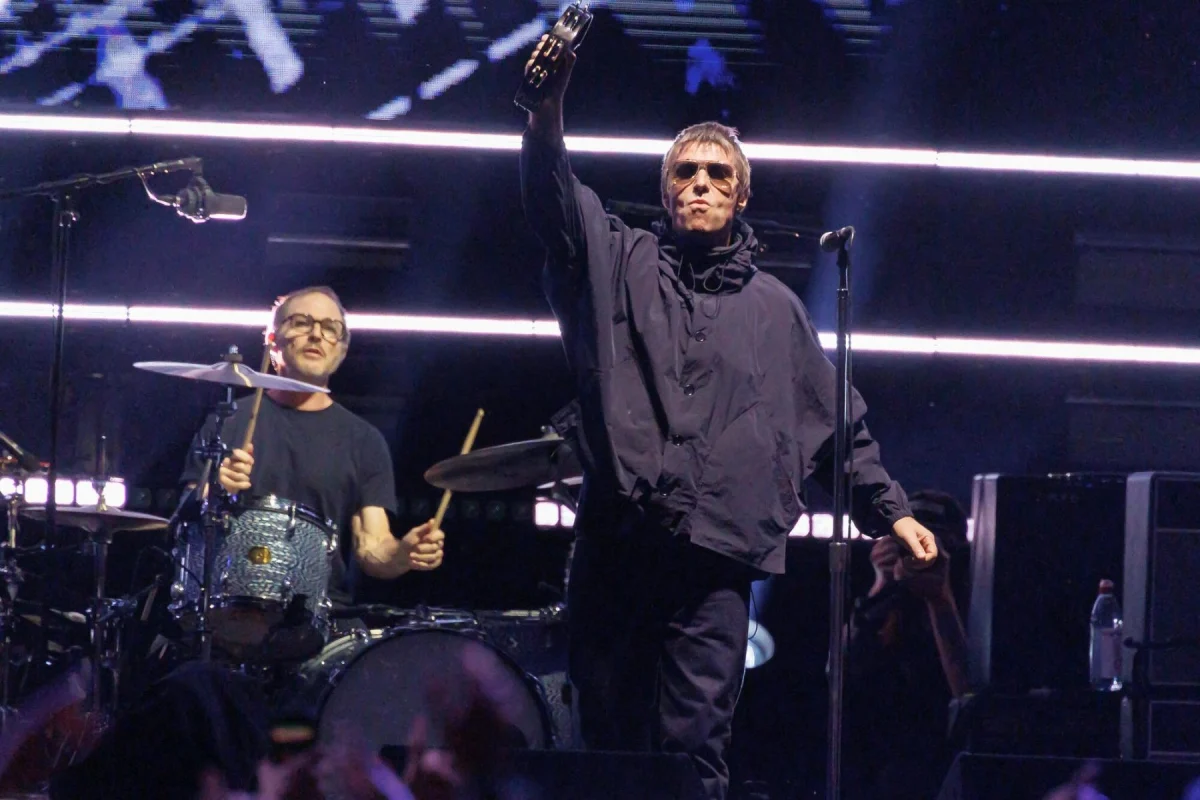
The dream of a FIFA World Cup final in 60 years has evaporated for England, but amidst the lingering disappointment of a semi-final exit, a surprising silver lining has emerged for the iconic British band Oasis. Their enduring anthem, "Wonderwall," has experienced a dramatic resurgence, climbing the U.K. Official Singles Chart and inching closer to the coveted number one spot – a feat it narrowly missed in its original 1995 release. This unlikely chart revival is inextricably linked to the Three Lions’ journey in the 2026 tournament, where the song became an unofficial soundtrack to the team’s campaign, uniting players and fans alike.
A Tournament Soundtrack Ignites Chart Success
England’s 2026 FIFA World Cup campaign came to a gut-wrenching end on Wednesday, July 15th, as Argentina secured a hard-fought victory with two late goals, dashing England’s hopes of reaching the final for the first time in six decades. This marked England’s third consecutive semi-final defeat, each exit more agonizing than the last, leaving a nation to ponder what might have been. However, for Liam and Noel Gallagher, the brothers behind Oasis, the tournament has inadvertently propelled their classic track "Wonderwall" back into the spotlight, presenting an opportunity for chart redemption.
The song’s adoption as an unofficial anthem began organically after England’s opening match against Croatia, a 4-2 victory. The in-stadium DJ’s decision to play "Wonderwall" after the win sparked an immediate and enthusiastic singalong, with key players like Harry Kane and Jude Bellingham joining the jubilant fans who had traveled to support the team. This spontaneous moment became a ritual, replicated after each subsequent England victory. Captain Harry Kane later described the rendition in Mexico City’s Azteca Stadium following their dramatic 3-2 win over the hosts as "one of the greatest moments in an England shirt."
Liam Gallagher, the charismatic frontman of Oasis, publicly embraced the song’s newfound status, sharing his support on X (formerly Twitter) with a message that read, "It’s hard work that singing Harry Kane cmon [sic] ENGLAND cmon WONDERWALL." His brother, Noel Gallagher, the song’s principal songwriter, reflected on the phenomenon, stating, "’Wonderwall’ belongs to the people, and it was a magical moment between the people and the players." This collective embrace has directly translated into a significant surge in streams and sales for the 1995 hit.
Chart Performance: A Near Miss Reimagined
According to a midweek sales flash from the Official Charts Company, "Wonderwall" has climbed to the second position on the U.K. Official Singles Chart. The song had already made a significant leap of 21 places in the previous week’s final tally, moving from number 32 to number 8. Its presence has also been felt on global streaming platforms, where it peaked at number 2 on Spotify’s Top 50 – Global charts and, as of Wednesday, held the number 3 spot on the U.K. version.
Music Week reported that "Wonderwall" garnered 19,210 sales across streaming and downloads in the current week, placing it behind only "Rein Me In" by Sam Fender and Olivia Dean, a track that has been breaking U.K. chart records. Even if the streaming numbers see a natural decline following England’s elimination, the song has established a robust foundation for this week’s chart, which operates on a weekly basis from Friday to Thursday. The anticipation builds as the final chart figures are awaited, determining whether "Wonderwall" can finally achieve the number one status it narrowly missed three decades ago.
A Legacy of Hits and a Chart Showdown
A number one on the U.K. Singles Chart would mark a significant achievement for the Gallagher brothers, adding to their impressive tally of eight previous chart-toppers. These include enduring hits like "Some Might Say" (1995), "Don’t Look Back in Anger" (1996), "D’You Know What I Mean?" (1997), "All Around The World" (1998), "Go Let It Out" (2000), "The Hindu Times" (2002), "Lyla" (2005), and "The Importance of Being Idle" (2005).

"Wonderwall" was the third single released in the U.K. from Oasis’s critically acclaimed sophomore album, (What’s The Story) Morning Glory? It followed "Some Might Say" and "Roll With It." The latter single was famously involved in a fierce and highly publicized chart battle with Britpop rivals Blur, a contest dubbed "The Battle of Britpop" by NME magazine. In that instance, Blur’s "Country House" ultimately triumphed over "Roll With It" by approximately 50,000 copies, a victory that many critics at the time deemed less significant than the cultural impact of the bands themselves. It is worth noting that "(What’s The Story) Morning Glory?" was released as a single in Australia, New Zealand, and Japan, and received radio play in North America.
Despite the intense competition of the Britpop era and the fierce chart battles of the 1990s, "Wonderwall" has demonstrated remarkable longevity. It is often the song that comes to mind when people are asked to name an Oasis number one, a testament to its enduring popularity. The track currently boasts an astonishing 2.8 billion streams on Spotify, more than double that of its closest competitor within Oasis’s discography, "Don’t Look Back in Anger." In 2024, "Wonderwall" was officially recognized as the band’s best-selling song in the U.K. Its initial global success also saw it peak at number 8 on the Billboard Hot 100, marking the band’s highest position on the U.S. chart.
The Unlikely Chart Obstacle: Robson & Jerome
The original chart run of "Wonderwall" in 1995 was famously thwarted by an unexpected contender: the pop duo Robson & Jerome. Comprising English actors Robson Greene and Jerome Flynn, the duo held the number one spot for three weeks with their double A-side single, "I Believe" / "Up On the Roof," preventing Oasis from reaching the summit.
This was not Robson & Jerome’s only chart success. Their first number one was also a double A-side, featuring covers of "Unchained Melody," famously popularized by The Righteous Brothers, and Vera Lynn’s iconic "White Cliffs of Dover." The single was released after the duo’s rendition of "Unchained Melody" was featured in the popular TV drama Soldier Soldier. "Melody" / "Dover" became the best-selling single in the U.K. in 1995, and their self-titled debut studio album also topped the year-end charts. It’s a notable piece of chart trivia that this same double A-side single held another significant Britpop track, Pulp’s "Common People," at bay at number 2.
However, the enduring legacy of "Wonderwall" far surpasses that of the Robson & Jerome hits. Even the duo themselves would likely concede that. Following Oasis’s highly anticipated reunion announcement in 2024, "Wonderwall" saw a surge to number 17 on the charts. To date, it has accumulated 106 weeks on the U.K. chart, surpassed only by their 1994 single "Whatever," which spent 113 weeks on the chart and peaked at number 3. In celebration of the band’s Live 25 tour, a live rendition of "Wonderwall" from their Dublin show was released as a streaming-only single, further cementing its place in the band’s live repertoire.
The Road Ahead: Chart Ambitions and Lingering Questions
England’s elimination from the World Cup on Wednesday may have ultimately impacted Oasis’s chances of a number one. The collective mood of the nation, deeply invested in the team’s success, might influence listening habits in the immediate aftermath. Furthermore, "Wonderwall" faces stiff competition in its bid for the top spot, needing to overcome "Rein Me In." This track by Sam Fender and Olivia Dean is currently enjoying its 16th non-consecutive week at number 1 on the U.K. Singles Chart, marking the longest run at the top for a British act and tying for second place on the all-time rankings with Bryan Adams’ "(Everything I Do) I Do It For You." The all-time leader for weeks at number 1 remains Frankie Laine’s version of "I Believe" (distinct from the Robson & Jerome hit), which spent 18 weeks at the top.
The question remains: can the accumulated hype from the World Cup campaign propel "Wonderwall" to number one? And will England’s decades-long wait for World Cup glory ever come to an end? While the latter remains a question for the future, the former’s outcome is imminent, poised to be revealed in the coming days. The journey of "Wonderwall" back up the charts, fueled by national pride and a shared love for a timeless anthem, offers a poignant reminder of how music and sport can intertwine, creating unexpected moments of cultural resonance. The enduring power of "Wonderwall" to connect with audiences, whether on a stadium singalong or a global streaming platform, underscores its status as more than just a song; it’s a cultural touchstone that continues to evolve and inspire.
Leave a Reply