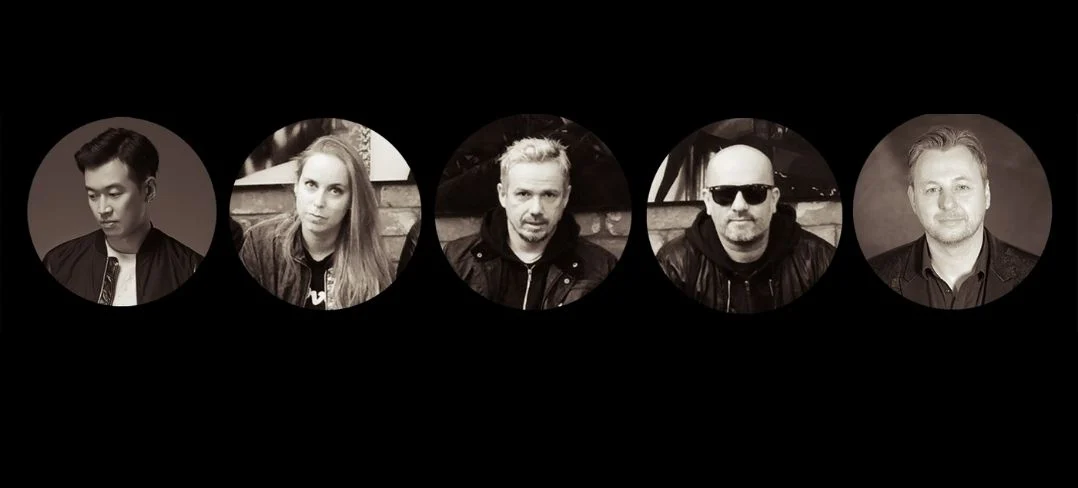
The landscape of modern K-pop is a sophisticated tapestry of global influences, and few entities have been as instrumental in weaving that fabric as the Norwegian music production collective Dsign Music. Since their explosive entry into the South Korean market in 2008, the team—comprising Anne Judith Wik, Ronnie Svendsen, Nermin Harambasic, and Jin Suk Choi—has redefined the sonic boundaries of the genre. With over 40 Billboard No. 1 hits and a Latin Grammy nomination to their name, Dsign Music has evolved from a group of Western songwriters experimenting with a new market into a foundational pillar of the Hallyu wave. Their recent collaboration with the global girl group TWICE on the track "Baby Blue Love" serves as a testament to their enduring relevance in an industry known for its rapid turnover and shifting trends.
The Genesis of a Transnational Partnership
The journey of Dsign Music into the K-pop industry began not in Seoul, but in Stockholm in 2008. During a pivotal meeting with their publisher, the team was introduced to the burgeoning Korean music scene. At the time, K-pop was beginning to incorporate more Western pop sensibilities, often seeking out European producers to provide a polished, high-energy sound that differed from the domestic ballads and R&B prevalent in Korea. Recognizing the potential for creative freedom within this market, the collective penned "Genie" (Tell Me Your Wish) for Girls’ Generation.
The success of "Genie" was instantaneous and monumental. It did more than just top domestic charts; it secured Dsign Music’s first Billboard No. 1 and established a long-standing relationship with SM Entertainment, one of South Korea’s "Big Four" entertainment agencies. This initial success provided a blueprint for how Western producers could collaborate with Eastern idols, blending high-concept production with the unique performance requirements of K-pop groups. Over the next 15 years, this partnership expanded to include work with industry titans such as NCT, EXO, MONSTA X, ITZY, and TWICE.
Case Study: The Crafting of Baby Blue Love
The collective’s recent work on "Baby Blue Love" for TWICE’s tenth mini-album, Taste of Love, highlights the meticulous nature of their production process. According to the team, the track was developed following a specific brief from JYP Entertainment, which requested "danceful rhythms and cool hooks." Originally titled "Old School Love," the song was specifically tailored to match TWICE’s evolving "bright-yet-mature" aesthetic.
A critical aspect of the K-pop production cycle is the transition from English "guide" lyrics to the final Korean version. In the case of "Baby Blue Love," the team noted that while the lyrics were largely rewritten into Korean, the label chose to retain several of the original English hooks. This hybrid approach is a hallmark of modern K-pop, ensuring the songs remain accessible to international audiences while maintaining their domestic appeal.
The production of the track also involved a high degree of emotional management. Despite being seasoned performers, members of TWICE reportedly expressed nervousness during the recording sessions. Dsign Music worked closely with local vocal directors, such as Yoon Seo Kim, to instill confidence in the artists, emphasizing a "fun-first" atmosphere. This collaborative spirit is often cited as the reason why Dsign Music tracks possess a distinct energy that resonates with both the performers and the "ONCE" fandom.
Technical Analysis: The More is More Philosophy
One of the most striking differences between Western pop and K-pop production lies in the structural complexity of the songs. Dsign Music advocates for a "more is more" philosophy when composing for Korean artists. In traditional Western pop, a song typically follows a linear structure with a consistent vibe and limited harmonic shifts. K-pop, however, demands what the team calls "twists and turns."
Because K-pop groups often consist of many members—sometimes upwards of nine or ten—the production must accommodate various vocal ranges, rap segments, and dance breaks. This necessitates a "maximalist" approach to songwriting. A single track may blend elements of bubblegum pop, EDM, hip-hop, and disco within a three-minute window. A prime example of this genre-defying style is Girls’ Generation’s "I Got A Boy," a track co-written by Dsign Music that is frequently cited by musicologists as a masterpiece of "patchwork" pop. This complexity allows each member of a group a "moment to shine," which is essential for the visual and performance-heavy nature of the genre.
The A&R Pipeline and Song Allocation
The business side of Dsign Music involves a sophisticated pitching process managed by their publishers. Songs are rarely written in a vacuum; instead, they are created in response to "briefs" sent out by labels looking for a specific sound for a group’s upcoming comeback. However, the journey of a song from the studio to the stage is rarely linear.
Internal industry dynamics often lead to songs being reassigned between groups. Dsign Music revealed that "What If," eventually released by EXO, was originally intended for NCT. Similarly, WayV’s "Unbreakable" was initially conceptualized for EXO. These shifts occur when a label’s A&R (Artists and Repertoire) team determines that a particular track better aligns with the concept or "universe" of a different group within the same company. This fluidity demonstrates the versatility of Dsign Music’s compositions; they are able to create "templates" that are high-quality enough to be viable for multiple world-class acts.
Adapting to a Post-Pandemic Industry
The COVID-19 pandemic significantly altered the operational model of international songwriting collectives. Historically, Dsign Music members spent 100 to 150 days a year traveling, participating in "songwriting camps" in Seoul, Los Angeles, and London. These camps are intensive sessions where producers and songwriters collaborate in person to churn out hits.
The shift to remote work and "FaceTime production" presented challenges, particularly regarding the loss of social interaction and the inspiration derived from travel. However, the team successfully adapted, utilizing digital tools to maintain their output. This shift reflects a broader trend in the music industry where geographic barriers are becoming increasingly irrelevant, allowing for a continuous flow of creative content regardless of physical location.
Market Impact and Future Outlook
The statistical success of Dsign Music is a reflection of K-pop’s global dominance. Their 40 Billboard No. 1s represent not just commercial success, but the integration of K-pop into the global musical mainstream. In the early 2000s, a Billboard No. 1 for a K-pop-related project was a rare anomaly; today, it is a standard metric of success for top-tier production teams.
Looking forward, Dsign Music has expressed a desire to collaborate with the industry’s most influential figures, including BTS and BLACKPINK. They also remain committed to the development of "rookie" groups, participating in the "stratospheric" rise of new talent from the ground up. As the industry moves toward more experimental sounds and virtual "metaverse" idols, the foundational expertise of collectives like Dsign Music will remain crucial.
The legacy of Dsign Music is defined by a unique blend of Scandinavian melodic sensibility and the high-octane energy of Korean pop. By embracing the "more is more" philosophy and maintaining a collaborative, trust-based internal culture, they have secured their place as one of the most successful production teams in modern music history. As they continue to influence the charts, their work serves as a bridge between cultures, proving that the language of a well-crafted hook is truly universal. For fans and industry insiders alike, the "Dsign Music" credit on a track remains a hallmark of quality, innovation, and global appeal.