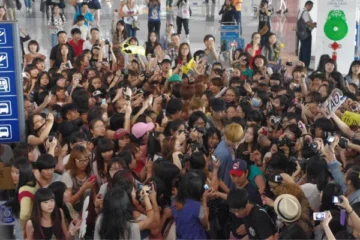
Girls’ Generation Triumphs at Inaugural YouTube Music Awards Highlighting the Global Power of K-pop Fandom
Article Editorial Team
The global music landscape underwent a seismic shift on November 3, 2013, when the South Korean girl group Girls’ Generation, also known as SNSD, was announced as the winner of the Video of the Year award at the inaugural YouTube Music Awards (YTMA). Held at Pier 36 in New York City, the event was designed to celebrate the artists and videos that had turned YouTube into a global powerhouse for music consumption. Girls’ Generation secured the evening’s most prestigious honor for their experimental hit "I Got a Boy," surpassing internationally renowned finalists including Justin Bieber, Lady Gaga, Miley Cyrus, Psy, Demi Lovato, Epic Rap Battles of History, Macklemore & Ryan Lewis, One Direction, and Selena Gomez. This victory not only solidified the group’s status as a leader in the Hallyu (Korean Wave) movement but also sparked a wider conversation regarding the changing dynamics of global popularity and the unprecedented organizational power of digital fandoms.
The Mechanism of Victory: Understanding the YouTube Metric
The YouTube Music Awards differed significantly from traditional music ceremonies like the Grammys or the MTV Video Music Awards, which often rely on a combination of committee voting and industry sales data. The YTMA winners were determined by a specific metric of engagement: social sharing. According to the criteria set by YouTube, the awards were based on videos that were shared the most frequently and quickly across social media platforms including Twitter, Facebook, and Google+.
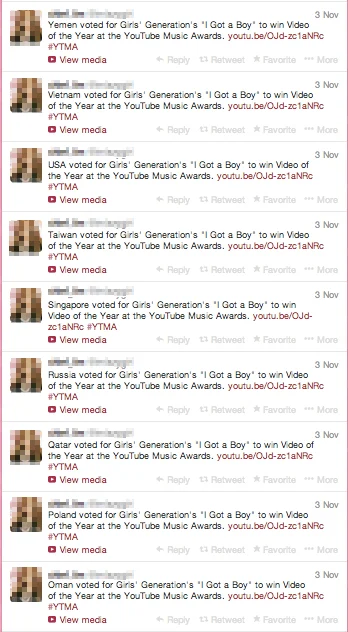
This methodology favored artists with highly active, digitally savvy fanbases. In the case of Girls’ Generation, the victory was a direct result of a massive, coordinated effort by their global fandom, known as "Sones." Unlike casual listeners of Western pop stars, K-pop fans have historically demonstrated a unique ability to mobilize for online voting and social media campaigns. Throughout the voting period, social media feeds were inundated with the phrase, “I voted for Girls’ Generation’s I Got A Boy to win Video of The Year at the YouTube Music Awards,” accompanied by the video’s URL. This systematic dissemination ensured that the "I Got a Boy" music video maintained a high velocity of engagement, which was the primary indicator used by YouTube to measure worldwide popularity.
The Strategy of the "Sone" Fandom
The organizational depth of the Girls’ Generation fandom during the YTMA voting period was extensive and highly structured. Reports from the time indicated that fans utilized "relay sessions," where specific voting periods were overseen by fan groups living in different time zones to ensure 24-hour activity. This "follow-the-sun" model allowed the voting momentum to remain constant, regardless of the time of day in South Korea or the United States.
Furthermore, fans maximized their impact by utilizing multiple digital identities and devices. On platforms like Twitter, it was observed that votes were being cast under various pseudonyms and creative identities, ranging from "Mickey Mouse" to "My Father," and even accounts seemingly originating from unexpected geographical locations like Zimbabwe. While some observers viewed this as a distortion of "organic" popularity, others argued it was simply a modern evolution of fan engagement. This "power voting" phenomenon highlighted a disparity between a majority of casual viewers and a highly dedicated minority that could influence global rankings through sheer persistence and coordination.
"I Got a Boy": A Departure in Sound and Visuals
The winning video itself, "I Got a Boy," was released on January 1, 2013, and served as the title track for the group’s fourth Korean studio album. At the time of its release, the song was noted for its highly experimental structure. Breaking away from the standard verse-chorus-verse format of pop music, "I Got a Boy" was a genre-mashing suite that combined elements of bubblegum pop, hip-hop, dubstep, and electronic dance music.
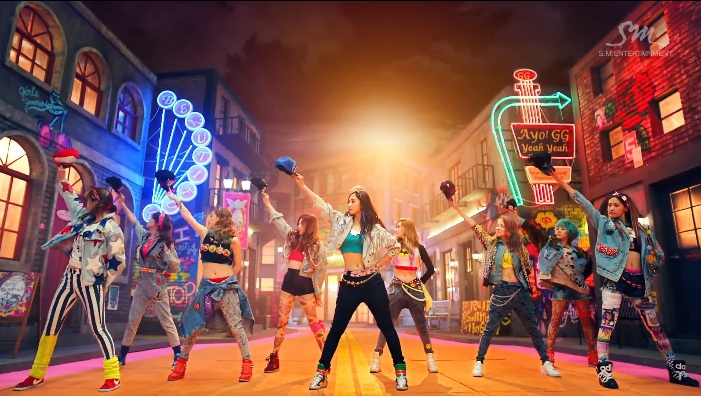
The music video was equally ambitious, featuring rapid-fire costume changes, vibrant street-style fashion, and intricate choreography. It was designed to be a visual spectacle that demanded repeat viewings—a strategy that aligned perfectly with YouTube’s platform. By the time of the awards, the video had already amassed tens of millions of views, but its victory was secured by the sheer volume of "shares," which indicated a level of fan passion that outweighed the raw view counts of competitors like Psy’s "Gentleman" or Justin Bieber’s "Beauty and a Beat."
The Ceremony and Immediate Reactions
The YouTube Music Awards ceremony was a non-traditional, often improvisational event hosted by actor Jason Schwartzman and musician Reggie Watts. When Girls’ Generation was announced as the winner of Video of the Year, Tiffany, a member of the group, took to the stage to accept the award on behalf of the nine-member ensemble. Her acceptance speech was delivered in fluent English, reflecting her American upbringing and the group’s readiness for an international stage.
"YouTube is my best friend. Is YouTube your best friend?" Tiffany asked the crowd. She expressed deep gratitude toward SM Entertainment, the group’s management agency, and their fans worldwide. "This is heavy and this is amazing. I want to thank SM Entertainment, Mr. Lee Soo-man. I want to thank my members… and I want to thank all the fans who gave this to us. Without you, this wouldn’t be possible."
Despite the celebratory mood on stage, the win was met with a mix of confusion and hostility from segments of the Western audience. On social media, fans of the losing Western artists expressed frustration, with many questioning who Girls’ Generation was. This led to a brief period of "fandom warfare," where passive-aggressive exchanges and xenophobic remarks were countered by SNSD supporters defending the group’s decade-long career and global impact. This cultural friction highlighted the growing pains of a globalizing music industry where traditional Western gatekeepers no longer held exclusive control over what was considered "mainstream."
Contextualizing the Win: K-pop in the International Spotlight
The success of Girls’ Generation at the YTMA was not an isolated incident but rather a continuation of the momentum generated by Psy’s "Gangnam Style" in 2012. While Psy had introduced the world to the viral potential of K-pop, Girls’ Generation’s win represented the genre’s institutional staying power. It proved that K-pop was not a "one-hit wonder" phenomenon but a sustainable industry backed by professional training and sophisticated marketing.
The win also validated the "Culture Technology" strategy pioneered by SM Entertainment’s founder, Lee Soo-man. This strategy involved the meticulous crafting of idol groups with global appeal, utilizing diverse musical influences and high-production-value visual content. By 2013, Girls’ Generation had already built a solid foundation through group longevity, individual branding in acting and variety shows, and a reputation for high-quality live performances.
Implications for Future Western Expansion
Following the YTMA victory, questions arose regarding the group’s future in the United States. Girls’ Generation had previously attempted a US push in late 2011 and early 2012 with the release of "The Boys," which included an appearance on The Late Show with David Letterman. While "The Boys" saw some success, the YTMA win for "I Got a Boy" suggested a much larger, albeit grassroots, demand for their music.
The victory reignited interest in the group’s partnership with Interscope Records, the American label that had handled their previous US releases. Industry analysts questioned whether the "worldwide presence" confirmed by the YouTube award would lead to a more concerted effort to dominate the American charts. While a full-scale US takeover did not materialize in the immediate years following 2013, the YTMA win served as a precursor to the massive Western success later achieved by groups like BTS and Blackpink. It demonstrated that a dedicated digital audience could bypass traditional radio play and television promotion to place an artist at the top of the global conversation.
Long-term Impact on the Music Industry
The 2013 YouTube Music Awards served as a case study for the power of the "vocal minority" in the digital age. It forced the music industry to reconsider how "popularity" is measured. Is a video with a billion passive views more valuable than a video with 100 million views that are shared and discussed by a fervent community? For YouTube, the answer was the latter, as engagement drives platform loyalty and social media integration.
For the K-pop industry, the win was a morale boost that encouraged other agencies to focus heavily on YouTube as a primary distribution channel. Today, K-pop groups regularly shatter YouTube records for most views in 24 hours, a trend that can be traced back to the digital strategies perfected by fans during the 2013 YTMA era.
Conclusion: A Milestone for Hallyu
Girls’ Generation’s Video of the Year win remains a landmark moment in the history of the Hallyu wave. It was a point in time where the "internal brouhaha" of fandom culture spilled over into the international mainstream, forcing the world to acknowledge the arrival of South Korean pop culture as a permanent fixture in the global entertainment landscape.
While critics may have argued that the win was a result of "power voting" rather than organic interest, the longevity and continued influence of Girls’ Generation and their successors suggest that the foundation was built on more than just clicks. It was built on a sophisticated synergy between artist, agency, and an unprecedentedly organized global audience. As the music industry continues to evolve, the 2013 YouTube Music Awards remain a definitive example of how digital platforms have democratized—and complicated—the path to global stardom.
Related News